Floor Speech2026-03-12
HONORING THE LIFE OF LATE OREGON STATE SENATOR AVEL GORDLY
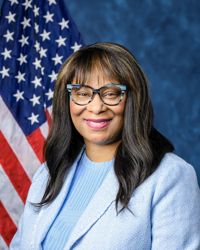
Janelle S. Bynum
DOR-5 · Representative
Full Text
HONORING THE LIFE OF LATE OREGON STATE SENATOR AVEL GORDLY

Congressional Record, Volume 172 Issue 46 (Thursday, March 12, 2026) [Congressional Record Volume 172, Number 46 (Thursday, March 12, 2026)] [Extensions of Remarks] [Pages E210-E211] From the Congressional Record Online through the Government Publishing Office [ www.gpo.gov ] HONORING THE LIFE OF LATE OREGON STATE SENATOR AVEL GORDLY ______ HON. JANELLE S. BYNUM of oregon in the house of representatives Thursday, March 12, 2026 Ms. BYNUM. Mr. Speaker, I rise today to honor the life of a mentor and true friend, Oregon State Senator Avel Gordly. Senator Gordly, the first Black woman to serve in the chamber, brought a presence that was regal and distinctive. Sadly, her tenure as an elected Black Oregonian was so rare that when she came to visit me on the House floor, many in the chamber thought she was a relative rather than the esteemed public servant who had dedicated and delivered so much to Oregon. I will miss her phone calls, her inspirational texts, and most of all, her high expectations of me. I include in the Record the following obituary as an esteemed account of Senator Gordly's impressive life: February 13, 1947-February 16, 2026 Avel Louise Gordly was born February 13, 1947, and was a daughter of Fay Lee Gordly and Beatrice Bernice Coleman Gordly, a sister to Fayetta (Faye) Burch and Tyrone Lee Gordly. She was the mother of one son, Tyrone Waters, whose loving care enabled Avel to live comfortably and peacefully at home during the last years of her life. She is also [[Page E211]] survived by her niece, Michelle Burch, and her great-nieces, Yasmin Woodard and Mikaela Woodard. Avel grew up in Northeast Portland, where the seeds of her activism were sown early by her mother and father, her grandmothers Alberta Randolph and Lessie Gordly, and by the women in her community. Avel was committed to building. serving, and celebrating the Beloved Community, a central tenet of Dr. Martin Luther King Jr's leadership. A few weeks ago, Avel said she wanted to be remembered as a Brown Girl from Northeast Portland who believed in justice, hard work, and taking care of each other. At every stage of her remarkable life of service, Avel communicated what she believed through well-chosen words and through how she showed up for others. In the Oregon Legislature, with her students at Portland State University, in her faith community, in her many mentoring relationships and friendships, Avel conveyed what a former legislative colleague described as ``a moral clarity'' and what one mentee described as ``a warm embrace.'' After graduating from her neighborhood elementary school, Avel attended Girls Polytechnic High School. As one of the few Black students, this was her first experience of being in an environment that did not welcome her presence, actively encourage her learning, or value her intellect. She felt the contrast between the warmth and affirmation of her early years in Portland's Black community and her experience in a mostly white environment. It was during these years that Avel became aware of racism and developed ways to succeed despite ever-present barriers to achievement. Although she felt like an ``alien, in unwelcome territory'' at Girls Polytechnic High School, with her mother's help, Avel resisted being steered into vocational education classes and instead enrolled in academic and business courses. Her advocacy and preparation led to her first job after high school at Pacific Northwest Bell. Even though it was a good job with benefits, Avel was eager to work for the betterment of her community. She enrolled at Portland State University, where she was active in Black Cultural Affairs and the Black Liberation movement while earning a degree in the Administration of Justice. While at Portland State, she participated in Operation Crossroads Africa, student exchange program that brought her to Nigeria, Benin, Togo, the Ivory Coast, and Ghana. This trip to Africa was transformational, broadening her horizons as she experienced life outside of the United States in countries where she was no longer a minority. This was the beginning of her a love of African history and culture. Her reverence for Black history and culture was reflected in the art and books she collected and shared throughout her life. Returning to Oregon, Avel continued her advocacy. As a member of the Oregon Chapter of the Black United Front (BUF), she coordinated the BUF's Saturday School. Working with the American Friends Service Committee (AFSC), Avel helped secure key anti-apartheid victories in Oregon and during the 1980s and ran programs for the Urban League and the House of Umoja to provide opportunities for youth in North and Northeast Portland. Avel's entry into political life came at the urging of those in her community and felt like an extension of work to which she was already committed. As someone who did not seek the limelight, she learned the power of well-prepared, respectful, and clear communication to change minds, hearts, and, importantly, laws. Initially appointed as a State representative in 1991, Ave was subsequently elected to serve three terms in the Oregon Legislature. As an elected official, she focused on building relationships with her colleagues on both sides of the aisle and statewide. As she gained confidence and realized the power of her voice, she modeled both courage and vulnerability in her leadership. These qualities made her a trustworthy and valued colleague in the Legislature and in the Black Community. In 1996, Avel was elected to the Oregon State Senate and became the first Black Woman to serve in that chamber. She was known as the ``conscience of the Senate'' because of her integrity and the mutual respect she shared with her colleagues. During her twelve years in the Senate, she made an indelible mark on Oregon. She sponsored the 2001 Senate Joint Resolution 31, which officially recognized Juneteenth in Oregon. She was the chief petitioner in 2002 for Oregon Ballot Measure 14, a constitutional amendment that removed racially discriminatory language from the Oregon Constitution, and for Measure 25, which raised Oregon's minimum wage. She brought a statewide focus on the health concerns of Oregon's Black, Indigenous, Latino, and Asian communities by forming the Racial and Ethnic Health Task Force and the Environmental Justice Committee. Her personal experiences and legislative acumen spurred her push for State Hospital Reform and to establish the Avel Gordly Center for Healing at Oregon Health and Science University to help address the gaps in access to mental health services in the Black community. After retiring from the legislature, Avel began teaching as an associate professor in the Black Studies Department at Portland State. Pouring into students' lives and curating learning opportunities that connected them to Portland's Black community and to national and international movements inspired her. In 2011, she co-authored, with Patricia A Schecter, her memoir, Remembering the Power of Words, where she courageously opened up about her experiences of depression. She received an honorary Doctor of Letters from Portland State University in 2017. Avel participated in the African American Alliance and sat on the board of the Portland African American Leadership Forum. She generously offered her thoughts on political strategy and endorsed candidates. She was committed to mentoring emerging Black leaders and encouraging them to shine. Her commitment to supporting generations of new leaders has been institutionalized in the Avel Gordly Scholarship for Black Women. She valued her lifelong friends and the close, loving relationships she nurtured with women of the next two generations, who lovingly called her ``Mama Avel.'' The love she gave and received from her community filled her heart with joy. She was a loving aunt, great-aunt, and an honorary grandmother. She was gratified to spend her final years with her son Tyrone, enjoying morning coffees, healing conversations, and prayer times together. Avel's life and legacy teach us that in alignment with one's divine purpose, ordinary people can make an extraordinary difference in changing institutions, healing lives, and making the world a better place. ____________________

Referenced legislation: SJRES31