Floor Speech2026-03-11
STATEMENTS ON INTRODUCED BILLS AND JOINT RESOLUTIONS
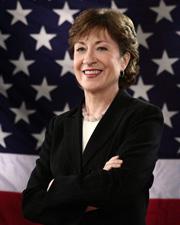
Susan M. Collins
RME · Senator
Full Text
STATEMENTS ON INTRODUCED BILLS AND JOINT RESOLUTIONS

Congressional Record, Volume 172 Issue 45 (Wednesday, March 11, 2026) [Congressional Record Volume 172, Number 45 (Wednesday, March 11, 2026)] [Senate] [Pages S1011-S1015] From the Congressional Record Online through the Government Publishing Office [ www.gpo.gov ] STATEMENTS ON INTRODUCED BILLS AND JOINT RESOLUTIONS By Ms. COLLINS (for herself, Ms. Klobuchar, Ms. Murkowski, Mr. Peters, and Ms. Lummis): S. 4051. A bill to require the Secretary of the Treasury to mint and issue coins that are emblematic of the National Fallen Firefighters Memorial and the service and sacrifice of firefighters throughout the history of the United States; to the Committee on Banking, Housing, and Urban Affairs. Ms. COLLINS. Mr. President, I rise today to introduce the National Fallen Firefighters Memorial Coin Act. Firefighters across Maine and throughout the country courageously and selflessly put their lives on the line to serve their communities, responding to emergencies at all hours to protect the lives and property of others. Tragically, some firefighters make the ultimate sacrifice in the line of duty. When a firefighter falls, the loss is felt not only by his or her family and colleagues but also by the entire community. The National Fallen Firefighters Foundation was established by Congress in 1992 to honor these heroes, to remember their service, and to provide vital support to the families they leave behind. As our Nation approaches the 25th anniversary of the September 11 attacks, we are reminded once again of the extraordinary bravery and selflessness of America's first responders who answered the call without hesitation and rushed toward danger to rescue others. On that tragic day, 343 members of the Fire Department of the city of New York died in the line of duty. Since then, firefighters and other emergency responders involved in the response, rescue, and recovery operations have fallen sick because of their service at Ground Zero. Their courage continues to inspire and humble us. Firefighters risk their lives with every assignment they take. Over the years, the NFFF has recognized the sacrifices of 41 Maine firefighters. This year, the annual event will memorialize one more Mainer, Chief Bobby Dorr of Ellsworth, whose cancer was related to his fire service. In this spirit of remembrance and gratitude, I call on my colleagues to support the National Fallen Firefighters Memorial Coin Act, which will recognize and honor our Nation's fallen firefighters with a commemorative coin program to support the National Fallen Firefighters Foundation. The commemorative coin program has long been a bipartisan way for Congress to recognize those who have made enduring contributions to our Nation. Authorizing a coin program to honor fallen firefighters and raise funds for programs to help those they leave behind, particularly as we reflect on the legacy of 9/11, is a fitting tribute and a meaningful way for Americans to show their appreciation. I urge my colleagues to support this legislation and to join me in honoring the firefighters who gave their lives in service to others on September 11 and throughout our Nation's history. Mr. President, I would like to thank my colleagues and fellow Congressional Fire Services Caucus cochairs, Senator Klobuchar, Senator Murkowski, and Senator Peters, for supporting this legislation. I urge the rest of our colleagues to join us in honoring America's bravest. ______ By Mr. PADILLA (for himself and Mr. Schiff): S. 4053. A bill to take certain land in the State of California into trust for the benefit of the Pechanga Band of Indians, and for other purposes; to the Committee on Indian Affairs. Mr. PADILLA. Mr. President, I rise today to introduce the Pechanga Band of Indians Land Transfer Act. This bill would transfer 860 acres of Federal land in Riverside County, CA, currently administered by the Bureau of Land Management and adjacent to Tribal land, to be held in trust for the Pechanga Band of Indians. The Pechanga Band of Indians have worked to acquire isolated parcels of land nearby and adjacent to Tribal land in Temecula to better protect, preserve, and restore sites sacred to the Tribe, including by fighting against the development of an open-pit mine quarry that would have caused air pollution across the valley and destroyed the sacred Pu'eska Mountain. The transfer of these 860 acres would unify the Tribe with the land near this mountain to be managed consistent with the Tribe's cultural traditions and land management practices. This legislation will support the Tribe's restoration efforts, allow for greater protection of culturally significant sites, and improve environmental monitoring and natural resource management on land that has been significant to the Tribe for over 10,000 years. I want to thank Senator Schiff for joining me in cosponsoring this legislation, and I thank Congressman Darrell Issa for introducing companion legislation in the House. ______ By Mr. DURBIN (for himself, Mr. Blumenthal, Mr. Merkley, Mr. Schiff, Ms. Smith, and Ms. Warren): S. 4056. A bill to establish the Proprietary Education Interagency Oversight Committee and to facilitate the disclosure and reporting of information regarding complaints and investigations related to proprietary institutions of higher education eligible to receive Federal education assistance; to the Committee on Health, Education, Labor, and Pensions. Mr. DURBIN. Mr. President, I ask unanimous consent that the text of the bill be printed in the Record. There being no objection, the text of the bill was ordered to be printed in the Record, as follows: S. 4056 Be it enacted by the Senate and House of Representatives of the United States of America in Congress assembled, SECTION 1. SHORT TITLE. This Act may be cited as the ``Proprietary Education Oversight Task Force Act''. SEC. 2. DEFINITIONS. In this Act: (1) Accrediting agency.--The term ``accrediting agency'' means a private educational association that acts as a reliable authority on the quality of education or training provided by an institution of higher education and is recognized by the Secretary under section 496 of the Higher Education Act of 1965 (20 U.S.C. 1099b). (2) Department.--Unless otherwise expressly provided, the term ``Department'' means the Department of Education. (3) Executive officer.--The term ``executive officer'', with respect to a proprietary institution of higher education that is a publicly traded corporation, means-- (A) the president of the corporation; (B) a vice president of the corporation who is in charge of a principal business unit, division, or function of the corporation, such as sales, administration, or finance; or (C) any other officer or person who performs a policy- making function for the corporation, including an executive officer of a [[Page S1012]] subsidiary of the corporation if the officer performs a policy making function for the corporation. (4) Federal education assistance.--The term ``Federal education assistance'' when used with respect to a proprietary institution of higher education, means Federal funds that are disbursed or delivered by the Department, the Department of Veterans Affairs, or the Department of Defense to, or on behalf of, a student to be used for tuition, fees, instruction, or any other component of the student's cost of attendance (as defined in section 472 of the Higher Education Act of 1965 (20 U.S.C. 1087ll)) to attend the institution. (5) Institutional debt.--The term ``institutional debt'' means any debt owed by a student or the parent of a student to an institution of higher education, including-- (A) debt owed through a private loan program, income-share agreement, or other financing product operated by the institution; (B) debt owed from a return of student assistance made, insured, or guaranteed under title IV of the Higher Education Act 1965 (20 U.S.C. 1070 et seq.) to the Department; and (C) debt owed from the student's nonpayment of institutional charges or fees. (6) Private education loan.--The term ``private education loan''-- (A) means a loan provided by a private educational lender (as defined in section 140(a) of the Truth in Lending Act (15 U.S.C. 1650(a))) that-- (i) is not made, insured, or guaranteed under title IV of the Higher Education Act of 1965 (20 U.S.C. 1070 et seq.); (ii) is issued expressly for postsecondary educational expenses to a borrower, regardless of whether the loan is provided through the educational institution that the subject student attends or directly to the borrower from the private educational lender (as so defined); and (iii) is not made, insured, or guaranteed under title VII or title VIII of the Public Health Service Act (42 U.S.C. 292 et seq. and 296 et seq.); and (B) does not include an extension of credit under an open- end consumer credit plan, a reverse mortgage transaction, a residential mortgage transaction, or any other loan that is secured by real property or a dwelling. (7) Proprietary institution of higher education.--The term ``proprietary institution of higher education'' has the meaning given the term in section 102(b) of the Higher Education Act of 1965 (20 U.S.C. 1002(b)). (8) Recruiting and marketing activities.-- (A) In general.--Except as provided in subparagraph (B), the term ``recruiting and marketing activities'' means activities that include any of the following: (i) Advertising and promotional activities, including paid announcements in newspapers, magazines, radio, television, billboards, electronic media, naming rights, or any other public medium of communication, including paying for displays or promotions at job fairs, military installations, or college recruiting events, that are made directly or indirectly to a student, a prospective student, the public, an accrediting agency, a State agency, or to the Secretary by a proprietary institution of higher education, one of its representatives, or any person with whom the institution has

Referenced legislation: S4051, S4051, S4053, S4056