Floor Speech2026-03-18
PROTECTING ACCESS FOR HUNTERS AND ANGLERS ACT
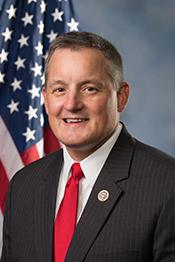
Bruce Westerman
RAR-4 · Representative
Full Text
PROTECTING ACCESS FOR HUNTERS AND ANGLERS ACT

Congressional Record, Volume 172 Issue 49 (Wednesday, March 18, 2026) [Congressional Record Volume 172, Number 49 (Wednesday, March 18, 2026)] [House] [Pages H2576-H2580] From the Congressional Record Online through the Government Publishing Office [ www.gpo.gov ] {time} 1420 PROTECTING ACCESS FOR HUNTERS AND ANGLERS ACT Mr. WESTERMAN. Mr. Speaker, pursuant to House Resolution 1115, I call up the bill (H.R. 556) to prohibit the Secretary of the Interior and the Secretary of Agriculture from prohibiting the use of lead ammunition or tackle on certain Federal land or water under the jurisdiction of the Secretary of the Interior and the Secretary of Agriculture, and for other purposes, and ask for its immediate consideration in the House. The Clerk read the title of the bill. The SPEAKER pro tempore. Pursuant to House Resolution 1115, the amendment in the nature of a substitute recommended by the Committee on Natural Resources, printed in the bill, is adopted and the bill, as amended, is considered read. The text of the bill, as amended, is as follows: H.R. 556 Be it enacted by the Senate and House of Representatives of the United States of America in Congress assembled, SECTION 1. SHORT TITLE. This Act may be cited as the ``Protecting Access for Hunters and Anglers Act''. SEC. 2. PROTECTING ACCESS FOR HUNTERS AND ANGLERS ON FEDERAL LAND AND WATER. (a) In General.--Except as provided in section 20.21 or 20.108 of title 50, Code of Federal Regulations (as in effect on the date of enactment of this Act), and subsection (b), the Secretary of the Interior, acting through the Director of the United States Fish and Wildlife Service or the Director of the Bureau of Land Management, and the Secretary of Agriculture, acting through the Chief of the Forest Service (referred to in this section as the ``applicable Secretary''), may not-- (1) prohibit the use of lead ammunition or tackle on Federal land or water that is-- (A) under the jurisdiction of the applicable Secretary; and (B) made available for hunting or fishing activities; or (2) issue regulations relating to the level of lead in ammunition or tackle to be used on Federal land or water described in paragraph (1). (b) Exception.--Subsection (a) shall not apply to a prohibition or regulations described in that subsection that are limited to a specific unit of Federal land or water, if the applicable Secretary determines that-- (1) a decline in wildlife population at the specific unit of Federal land or water is primarily caused by the use of lead in ammunition or tackle, based on the field data from the specific unit of Federal land or water; and (2) the prohibition or regulations, as applicable, are-- (A) consistent with the law of the State in which the specific Federal land or water is located; (B) consistent with an applicable policy of the fish and wildlife department of the State in which the specific Federal land or water is located; or (C) approved by the applicable fish and wildlife department of the State in which the specific Federal land or water is located. (c) Federal Register Notice.--The applicable Secretary shall include in a Federal Register notice with respect to any prohibition or regulations that meet the requirements of paragraphs (1) and (2) of subsection (b) an explanation of how the prohibition or regulations, as applicable, meet those requirements. The SPEAKER pro tempore. The bill, as amended, shall be debatable for 1 hour equally divided and controlled by the chair and ranking minority member of the Committee on Natural Resources or their respective designees. The gentleman from Arkansas (Mr. Westerman) and the gentleman from California (Mr. Huffman) each will control 30 minutes. The Chair recognizes the gentleman from Arkansas. General Leave Mr. WESTERMAN. Mr. Speaker, I ask unanimous consent that all Members may have 5 legislative days to revise and extend their remarks and include extraneous material on H.R. 556. The SPEAKER pro tempore. Is there objection to the request of the gentleman from Arkansas? There was no objection. Mr. WESTERMAN. Mr. Speaker, I yield myself such time as I may consume. Mr. Speaker, I rise in strong support of H.R. 556, sponsored by my colleague, the gentleman from Virginia (Mr. Wittman). This commonsense bill protects hunters' and anglers' ability to continue using cost-effective lead ammunition and fishing equipment on our Federal lands. At the same time, this legislation gives land management agencies the flexibility to make targeted decisions on lead usage based on sound science and in coordination with State fish and wildlife agencies. In the United States, sportsmen and -women participation is crucial to the success of wildlife conservation. The North American Model of Wildlife Conservation operates on seven interdependent principles. Embedded in these principles are sound science, active management, and access to hunting and fishing. The success of this model is best characterized by the millions of dollars that hunters and anglers pay for wildlife conservation each year, mainly through excise taxes on firearms, ammunition, and fishing tackle. In fiscal year 2026, the U.S. Fish and Wildlife Service apportioned over $800 million in receipts from excise taxes on firearms manufacturers alone. Of that, nearly $700 million was for wildlife restoration. Similarly, $442 million was generated from excise taxes on fishing equipment for fish conservation. It was with this in mind that the Trump administration changed the paradigm for hunting and fishing on Federal lands earlier this year. Historically, Federal lands were considered closed to hunting and fishing unless specific regulations were issued to allow these activities in certain places. With the signing of Secretarial Order No. 3447 by Secretary Burgum, Federal lands are now considered to be open for hunting and fishing unless existing authorities and unit purposes require an area to be closed. This change charts a path forward toward opening thousands of acres of [[Page H2577]] Federal land through responsible hunting and fishing. This new approach will result in greater economic activity for local communities surrounding our Federal lands and more funding for wildlife and habitat conservation. H.R. 556 will further these goals by ensuring that Federal land management agencies follow specific science and coordinate with State agencies when regulating the use of lead ammunition and fishing tackle. Providing these safeguards is critical, as alternatives to lead ammunition and fishing tackle are often cost prohibitive, with some costing as much as 10 times more than similar lead products. Instead of regulating hunters and anglers out of our Federal lands, the Trump administration is working with State managers, conservation organizations, and sportsmen and -women. When lead is shown to cause harm to wildlife, it will be addressed accordingly, but wide-reaching bans or even refuge-by-refuge bans, where no specific science link can be made, are the wrong approach and ultimately undermine wildlife conservation. Mr. Speaker, I urge my colleagues to support this bill, and I reserve the balance of my time. House of Representatives, Committee on Agriculture, Washington, DC, October 6, 2025. Hon. Bruce Westerman, Chairman, Committee on Natural Resources, Washington, DC. Dear Mr. Chairman: This letter confirms our mutual understanding regarding H.R. 556, the ``Protecting Access for Hunters and Anglers Act of 2025.'' Thank you for collaborating with the Committee on Agriculture on the matters within our jurisdiction. The Committee on Agriculture will forego any further consideration of this bill. However, by foregoing consideration at this time, we do not waive any jurisdiction over any subject matter contained in this or similar legislation. The Committee on Agriculture also reserves the right to seek appointment of an appropriate number of conferees, should it become necessary, and ask that you support such a request. We would appreciate a response to this letter confirming this understanding with respect to H.R. 556 and request a copy of our letters on this matter be published in the Congressional Record during Floor consideration. Sincerely, Glenn ``GT'' Thompson, Chairman. ____ House of Representatives, Committee on Natural Resources, Washington, DC, October 7, 2025. Hon. Glenn Thompson, Chairman, Committee on Agriculture, Washington, DC. Dear Chairman Thompson: I write regarding H.R. 556, the ``Protecting Access for Hunters and Anglers Act of 2025,'' which was ordered reported by the Committee on Natural Resources on July 15, 2025. I recognize that the bill contains provisions that fall within the jurisdiction of the Committee on Agriculture and appreciate your willingness to forgo further consideration of the bill. I acknowledge that the Committee on Agriculture will not formally consider H.R. 556 and agree that the inaction of your Committee with respect to the bill does not waive any jurisdiction over the subject matter contained therein. I am pleased to support your request to name members of the Committee on Agriculture to any conference committee to consider such provisions. I will ensure that our exchange of letters is included in the Congressional Record during floor consideration of the bill and will include such letters in the committee report on H.R. 556. I appreciate your cooperation regarding this legislation. Sincerely, Bruce Westerman, Chairman. Mr. HUFFMAN. Mr. Speaker, I yield myself such time as I may consume. Mr. Speaker, we are on day 19 of Trump's illegal war of choice with Iran. So far, 13 American servicemembers are dead, and 200 more are wounded. Gas prices have surged 80 cents a gallon just in the last 3 weeks. Grocery bills are climbing. Oil is over $100 a barrel. The Strait of Hormuz is effectively closed. Mr. Speaker, what is it, in the face of this chaos and calamity, that the United States House of Representatives has chosen to do

Referenced legislation: HR556, HR556, HRES1115