Floor Speech2026-03-24
RECREATIONAL DRONE EMPOWERMENT ACT
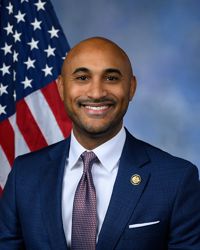
Shomari Figures
DAL-2 · Representative
Full Text
RECREATIONAL DRONE EMPOWERMENT ACT

Congressional Record, Volume 172 Issue 55 (Tuesday, March 24, 2026) [Congressional Record Volume 172, Number 55 (Tuesday, March 24, 2026)] [House] [Pages H2659-H2660] From the Congressional Record Online through the Government Publishing Office [ www.gpo.gov ] RECREATIONAL DRONE EMPOWERMENT ACT Mr. TAYLOR. Madam Speaker, I move to suspend the rules and pass the bill (H.R. 6460) to amend title 49, United States Code, to clarify exceptions for limited recreational operations of unmanned aircraft, and for other purposes. The Clerk read the title of the bill. The text of the bill is as follows: H.R. 6460 Be it enacted by the Senate and House of Representatives of the United States of America in Congress assembled, SECTION 1. SHORT TITLE. This Act may be cited as the ``Recreational Drone Empowerment Act''. SEC. 2. CLARIFYING RECREATIONAL OPERATIONS OF DRONE SYSTEMS. Section 44809(c)(2)(C) of title 49, United States Code, is amended-- (1) in the heading by inserting ``and class e'' after ``Uncontrolled''; and (2) by inserting ``, Class E airspace above Class G airspace, or a Class E airspace designated as an extension to a Class B, Class C, Class D, or Class E surface area'' after ``Class G airspace''. The SPEAKER pro tempore. Pursuant to the rule, the gentleman from Ohio (Mr. Taylor) and the gentleman from Alabama (Mr. Figures) each will control 20 minutes. The Chair recognizes the gentleman from Ohio. General Leave Mr. TAYLOR. Madam Speaker, I ask unanimous consent that Members have 5 legislative days in which to revise and extend their remarks and insert extraneous material into the Record on H.R. 6460. The SPEAKER pro tempore. Is there objection to the request of the gentleman from Ohio? There was no objection. {time} 1650 Mr. TAYLOR. Madam Speaker, I yield myself such time as I may consume. Madam Speaker, I thank the gentleman from Kansas (Mr. Mann) for his initiative and leadership on this issue. General aviation, including recreational drone operations, are the lifeblood of the American aviation ecosystem. As such, it is of the utmost importance that we protect their access to the sky. Section 928 of the FAA Reauthorization Act of 2024 established a novel process by which community-based organizations could seek administrative approval from the FAA to conduct recreational unmanned aircraft systems operations in controlled airspace from a fixed site. If approved, the community-based organization would then work with the appropriate air traffic control facility to establish mutually agreed-upon operating procedures. Unfortunately, when it came to implementing the law, the FAA's interpretation was at odds with congressional intent, and that resulted in recreational UAS clubs being unable to legally fly in certain sectors of class E airspace. H.R. 6460, the Recreational Drone Empowerment Act, represents a commonsense solution to ensure community-based organizations can seek authorization from the FAA to operate legally in all types of class E airspace, as Congress intended. Madam Speaker, I urge support of this legislation and reserve the balance of my time. Mr. FIGURES. Madam Speaker, I yield myself such time as I may consume. Madam Speaker, I rise in support of H.R. 6460, bipartisan legislation introduced by the gentleman from Kansas (Mr. Mann) and the gentlewoman from Kansas (Ms. Davids). The FAA reports there are more than 370,000 registered recreational drones in [[Page H2660]] the U.S. However, the FAA's new interpretation of language in the FAA Reauthorization Act of 2018 and 2024 has now restricted these authorized recreational drone users to only class E2 airspace, airspace designated for airports. This restriction was not the intent of Congress and leaves many lawful drone users unable to frequent the spaces that they are used to flying in and doing so safely. Without change, there will likely be significant confusion amongst recreational hobbyists who are simply trying to do what they have always been allowed to do. The bipartisan H.R. 6460 makes a technical correction to the current statute, authorizing the FAA, through its existing approval process, to permit eligible recreational drone flights in certain class E controlled airspace. To clarify, this bill would not automatically allow for recreational drone flights near airports or higher altitude operations in uncontrolled airspace. Recreational drone operators would still be required to comply with the FAA's safety requirements and to go through the agency's approval process. This bill will help reduce some confusion for recreational drone operators to ensure safety and clarifies the FAA's authorization process for these drone flights. I support this legislation and urge my colleagues to do the same. Madam Speaker, I reserve the balance of my time. Mr. TAYLOR. Madam Speaker, I yield 5 minutes to the gentleman from Kansas (Mr. Mann), the author of this legislation. Mr. MANN. Madam Speaker, I thank my friend from Ohio for yielding me the time. Madam Speaker, I rise today in support of my bill, H.R. 6460, the Recreational Drone Empowerment Act, which clarifies the ability of the FAA to authorize model aircraft operations in class E airspace. Everyone gets their start somewhere. For many folks, a lifelong passion for flight is ignited the first time they get the experience of what model aeronautics has to offer. For some, that passion leads them to ultimately pursue long and successful careers in the aviation workforce. We must do whatever we can to foster a robust recreational operational environment where individuals of all ages can experience all that aviation has to offer. In 2018, Congress classified model aircraft as recreational UASes. That legislation spelled out what classes of airspace and under what conditions recreational UASes could fly. For 7 years and on behalf of its 2,400 member clubs, of which 30 reside in the great State of Kansas, the Academy of Model Aeronautics has been collaborating with the FAA to attract the next generation of aviation professionals. Unfortunately, due to a misinterpretation of a provision of the FAA Reauthorization Act of 2024, many recreational clubs across the country found they were no longer able to legally fly in some sectors of class E airspace. The Recreational Drone Empowerment Act allows model aircraft clubs to request permission from the FAA to operate in class E2, E3, E4, and E5 airspace, as it does for all other classifications of airspace. This legislation does not require the FAA to grant such requests. It merely grants them the legal authority to approve such requests. I thank Chairman Graves, Ranking Member Larsen, and the members of the Transportation and Infrastructure Committee for their support of my legislation that would give regulatory certainty to an important part of the aviation community and continues to encourage the next generation of aviators. Madam Speaker, I urge my colleagues to support this legislation. Mr. FIGURES. Madam Speaker, recreational drone use is a rapidly growing pastime here in America, and we must put in place sufficient guardrails for safety. That is why I support H.R. 6460 and urge my colleagues to do the same. Madam Speaker, I yield back the balance of my time. Mr. TAYLOR. Madam Speaker, I yield myself the balance of my time to close. Madam Speaker, to reiterate, freedom of the skies is an inherently American ideal. This legislation does not require the FAA to approve every community- based organization request. Rather, it provides the FAA with the statutory authority to consider all applications and approve or deny at the agency's discretion. The Recreational Drone Empowerment Act represents a solution oriented to fix, ensure, and protect America's ability to access the airspace. Once again, I thank the gentleman from Kansas (Mr. Mann) for his work on this issue. Madam Speaker, I urge support of this bill, and I yield back the balance of my time. The SPEAKER pro tempore. The question is on the motion offered by the gentleman from Ohio (Mr. Taylor) that the House suspend the rules and pass the bill, H.R. 6460. The question was taken; and (two-thirds being in the affirmative) the rules were suspended and the bill was passed. A motion to reconsider was laid on the table. ____________________

Referenced legislation: HR6460, HR6460