Floor Speech2025-01-14
CALIFORNIA FIRES
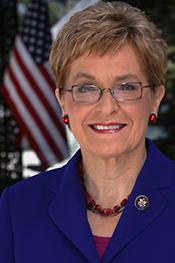
Marcy Kaptur
DOH-9 · Representative
Full Text
CALIFORNIA FIRES

Congressional Record, Volume 171 Issue 7 (Tuesday, January 14, 2025) [Congressional Record Volume 171, Number 7 (Tuesday, January 14, 2025)] [House] [Pages H123-H124] From the Congressional Record Online through the Government Publishing Office [ www.gpo.gov ] CALIFORNIA FIRES The SPEAKER pro tempore. The Chair recognizes the gentlewoman from Ohio (Ms. Kaptur) for 5 minutes. Ms. KAPTUR. Mr. Speaker, we are all watching the ferocious Palisades, Eaton, Altadena, and Hurst fires expand along California's beautiful Coast. I can recall my many trips there. Surely we all love the Tournament of Roses Parade and the magic of Hollywood. Our hearts go out today and forever to come to the thousands of displaced people, the brave, unrelenting fire and rescue crews, and the public officials trying to bring order in the midst of chaos. Let me share. Having practiced as a city and regional planner long before my election to Congress, I was awestruck when I visited there at the large number of homes built high on forested mountainsides with many sizeable mansions at their very peaks. In fact, most recently, as ranking Democrat on the House Appropriations Energy and Water Development and Related Agencies Subcommittee, I was flown on an extensive tour over Los Angeles by a U.S. Army Corps helicopter to evaluate freshwater challenges in that drought-prone region. As the granddaughter of a forester, experience led me to question how such densely developed communities with housing perched on forested ascending hillsides could be evacuated in the event of emergency. My stomach became queasy at the thought, and my premonition is now being affirmed. Last fall, I called for Congress to return to Washington to fully fund FEMA and the Small Business Administration to assist with disaster relief efforts. It took until late December to approve $28 billion in funding, well below the $40 billion the Biden administration requested, and now this horror has launched. Statistics show in Canada and the United States, whether it is along our Pacific Coast, in Vancouver, or Quebec, historic precious forests are burning to the ground during this era of prolonged drought. One estimate indicates the recent annual tree loss just in Canada equates to their forests' lost capacity to absorb the annual carbon dioxide from all jet aviation fuel spewed into the atmosphere across our globe. This chart attests to that. Just a few years ago due to major forest fires in Quebec, our southern Great Lakes region in my home State of Ohio was covered with an eerie, hazy, atmospheric soot blowing south across the border with Canada. What an out-of-body occurrence never before encountered where we live. My own rhododendron plants were smothered by it. Long ago, I learned in a forestry class there is only one way to regenerate a forest: burning it to the ground. Thus, allowing massive communities to be built in forests is always dangerous. When I was born, California's population numbered about 10 million people. Today, it has quadrupled to over 42.5 million people, and Los Angeles County's dense population alone now numbers over 10 million people, larger than 80 percent of the States in our Union. California's population is projected to reach 60 million people by 2050, and that is six times its population in 1950. Freshwater is running out. Challenges to life on a changing continent and world are daunting, and we must all ask tough questions about how to build and rebuild places that are livable and survivable. {time} 1115 It will take years to salvage the Los Angeles neighborhoods, and some will never be rebuilt. Meanwhile, other regions across our Nation can welcome fire refugees. The growing freshwater fights between communities and States that attend to life in the West are hastening. More people are demanding more freshwater when that is a physical impossibility as aquifers run dry. There is only so much freshwater. If one looks at places like the Great Lakes, we say: How does our Nation best invest in sustainable water and energy systems for the coming century and beyond? We must think forward, not backward. America must have a more comprehensive approach to build forward sustainable communities. Step one is to rescue the West, but there must be attention to resettling in freshwater regions that are more sustainable. For example, advancing freshwater settlement for our Great Lakes region will require standing up the Great Lakes Authority and infusing it with the ability to relieve bonded indebtedness of struggling freshwater communities. They must be able to financially reinvest to upgrade their freshwater systems in places like Flint, Detroit, Toledo, Cleveland, Youngstown, Milwaukee, Kenosha, Chicago, and so many more. Freshwater is life. The old expression, ``Go west or south, young man,'' still applies, but our planet is teaching us there are limits to what the Earth can sustain. Living in the past is not an option. Onward, America, together. [[Page H124]] ____________________