Floor Speech2026-03-04
HONORING THE LIFE AND LEGACY OF CARLOS SPECTOR
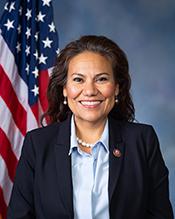
Veronica Escobar
DTX-16 · Representative
Full Text
HONORING THE LIFE AND LEGACY OF CARLOS SPECTOR

Congressional Record, Volume 172 Issue 41 (Wednesday, March 4, 2026) [Congressional Record Volume 172, Number 41 (Wednesday, March 4, 2026)] [Extensions of Remarks] [Page E188] From the Congressional Record Online through the Government Publishing Office [ www.gpo.gov ] HONORING THE LIFE AND LEGACY OF CARLOS SPECTOR ______ HON. VERONICA ESCOBAR of texas in the house of representatives Wednesday, March 4, 2026 Ms. ESCOBAR. Mr. Speaker, I rise today to honor the extraordinary and enduring legacy of Carlos Spector, an El Paso native, Air Force veteran, immigration attorney, and human rights advocate, whose work changed the lives of countless families and redefined the meaning of justice along our border. Carlos was born in El Paso; he is the son of a Jewish father whose family fled the pogroms of Russia and a mother from Mexico. Since birth, he lived the reality of a border community, moving between cultures, languages, and histories that shaped his understanding of justice and belonging. He carried his identity proudly and understood his responsibility to steward the cultural heritages of his community. That responsibility--to defend the vulnerable and stand with those facing injustice--was instilled in him early. Stories from his father about the horrors of World War II and the moral obligation to defend others left an indelible impression on him. Those lessons would ultimately guide his life's work. After serving in the United States Air Force, Carlos returned to El Paso determined to find a way to use the law in service of others. He eventually attended Texas Southern University's Thurgood Marshall School of Law, where he began to shape the philosophy that would define his career: that the law, at its highest calling, is not an instrument of power but a shield for the vulnerable. Carlos began practicing immigration law at a time when the legal system offered little hope for many seeking refuge. In 1991, Carlos won one of the first successful asylum cases for a Mexican political leader, marking a pivotal moment in U.S. immigration law and opening the door for others who faced persecution in their country of origin. But Carlos did not stop there. When the violence of the Mexican drug war intensified in the late 2000s, thousands of people fled north seeking safety. At the time, very few asylum claims from Mexican nationals succeeded in U.S. courts. Many attorneys refused to take such cases at all. Carlos did the opposite. Among those he represented were journalists threatened for exposing corruption, community activists targeted by criminal organizations, and families whose only crime was standing up for their communities. One of his clients, a community leader who had lost multiple family members to violence, later said that he and his remaining relatives were alive because of Carlos Spector's determination to defend them. Through these efforts, Carlos helped transform public understanding of the challenges unfolding along our border. He showed that the people seeking refuge were not statistics or political taking points--they were human beings whose lives, families, and futures were all at stake. Those who knew him recall that even during his battle with cancer, his first thoughts were not about himself but about the people he represented. After receiving his diagnosis, he immediately began contacting colleagues to ensure that the cases he had been working on would continue and that his clients would not be abandoned. That devotion to others defined him. Across the borderland and throughout this Nation, there are families who wake each morning in safety because one attorney refused to accept that their lives were beyond the protection of the law. Because of that belief, Carlos Spector did more than practice law. He expanded the boundaries of justice. He transformed the possibilities of asylum law. And he reminded us that we all have the power to protect our communities and shape a more just world. Mr. Speaker, I ask my colleagues to join me in honoring the life and legacy of Carlos Spector, a tireless advocate, a defender of human rights, and a proud son of El Paso whose impact will endure far beyond his lifetime. ____________________