Floor Speech2026-03-16
HOLOCAUST EXPROPRIATED ART RECOVERY ACT OF 2025
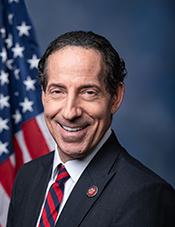
Jamie Raskin
DMD-8 · Representative
Full Text
HOLOCAUST EXPROPRIATED ART RECOVERY ACT OF 2025

Congressional Record, Volume 172 Issue 47 (Monday, March 16, 2026) [Congressional Record Volume 172, Number 47 (Monday, March 16, 2026)] [House] [Pages H2497-H2500] From the Congressional Record Online through the Government Publishing Office [ www.gpo.gov ] HOLOCAUST EXPROPRIATED ART RECOVERY ACT OF 2025 Ms. LEE of Florida. Mr. Speaker, I move to suspend the rules and pass the bill (S. 1884) to clarify the Holocaust Expropriated Art Recovery Act of 2016, to appropriately limit the application of defenses based on the passage of time and other non-merits defenses to claims under that Act. The Clerk read the title of the bill. The text of the bill is as follows: S. 1884 Be it enacted by the Senate and House of Representatives of the United States of America in Congress assembled, SECTION 1. SHORT TITLE. This Act may be cited as the ``Holocaust Expropriated Art Recovery Act of 2025''. SEC. 2. HOLOCAUST EXPROPRIATED ART RECOVERY ACT OF 2016 IMPROVEMENTS. (a) In General.--The Holocaust Expropriated Art Recovery Act of 2016 (22 U.S.C. 1621 note) is amended-- (1) in section 2-- (A) by redesignating paragraph (8) as paragraph (10); (B) by inserting after paragraph (7) the following: ``(8) The intent of this Act is to permit claims to recover Nazi-looted art to be brought, notwithstanding the passage of time since World War II. Some courts have frustrated the intent of this Act by dismissing recovery lawsuits in reliance on defenses based on the passage of time, such as laches (for example, Zuckerman v Metropolitan Museum of Art, 928 F.3d 186 (2d Cir. 2019)) or adverse possession, acquisitive prescription, or usucapion (for example, Cassirer v. Thyssen-Bornemisza Foundation, 89 F.4th 1226 (9th Cir. 2024)) or on other non-merits discretionary defenses, such as the act of state doctrine (for example, Von Saher v Norton Simon Museum of Art at Pasadena, 897 F.3d 1141 (9th Cir. 2018)), forum non conveniens, international comity, or prudential exhaustion. In order to effectuate the purpose of the Act to permit claims to recover Nazi-looted art to be resolved on the merits, these defenses must be precluded. ``(9) This Act also is intended to allow claims in accordance with the procedures under this Act for the recovery of artwork or other property lost during the covered period because, or as a result, of Nazi persecution, including by a covered government (as defined in section 1605(h)(3)(B) of title 28, United States Code) or an agent or associate of a covered government, regardless of the nationality or citizenship of the alleged victim, notwithstanding the `domestic takings' rule under Federal Republic of Germany v. Philipp, 592 U.S. 169 (2021).''; and (C) in paragraph (10), as so redesignated, by striking ``will yield just and fair resolutions in a more efficient and predictable manner'' and inserting ``may, in some circumstances, yield just and fair resolutions as well''; (2) in section 3(2), by inserting ``and other non-merits defenses'' after ``statutes of limitation''; (3) in section 5-- (A) by striking subsection (g); (B) by redesignating subsections (e) and (f) as subsections (h) and (i), respectively; (C) by redesignating subsections (b), (c), and (d) as subsections (c), (d), and (e), respectively; (D) by inserting after subsection (a) the following: ``(b) Relation to Foreign State Immunities.-- Notwithstanding any other law or prior judicial decision, any civil claim or cause of action covered by subsection (a) shall be deemed to be an action in which rights in violation of international law are in issue for purposes of section 1605(a)(3) of title 28, United States Code, without regard to the nationality or citizenship of the alleged victim.''; (E) in subsection (d), as so redesignated, in the matter preceding paragraph (1), by striking ``subsection (e)'' and inserting ``subsection (h)''; (F) in subsection (e), as so redesignated-- (i) in the matter preceding paragraph (1), by striking ``Subsection (a)'' and inserting ``Subsections (a), (b), (f), and (g)''; and (ii) in paragraph (2), by striking ``during the period'' and all that follows and inserting ``on or after the date of enactment of this Act.''; and (G) by inserting after subsection (e), as so redesignated, the following: ``(f) Defenses Based on Passage of Time and Other Non- Merits Defenses.--With respect to any claim that is otherwise timely under this Act-- ``(1) all defenses or substantive doctrines based on the passage of time, including laches, adverse possession, acquisitive prescription, and usucapion, may not be applied with respect to the claim; and ``(2) all non-merits discretionary bases for dismissal, including the act of state doctrine, international comity, forum non conveniens, prudential exhaustion, and similar doctrines unrelated to the merits, may not be applied with respect to the claim. ``(g) Nationwide Service of Process.--For a civil action brought under subsection (a) in any State or Federal court, process may be served in the judicial district where the case is brought or any other judicial district of the United States where the defendant may be found, resides, has an agent, or transacts business.''; and (4) by adding at the end the following: ``SEC. 6. SEVERABILITY. ``If any provision of this Act, or the application of a provision of this Act to any person or circumstance, is held invalid, the remainder of this Act, and the application of such provision to other persons and circumstances, shall not be affected thereby.''. (b) Applicability.--The amendments made by subsection (a) shall apply with respect to any civil claim or cause of action that is-- (1) pending in any court on the date of enactment of this Act, including any civil claim or cause of action that is pending on appeal or for which the time to file an appeal has not expired; or (2) filed on or after the date of enactment of this Act. The SPEAKER pro tempore. Pursuant to the rule, the gentlewoman from Florida (Ms. Lee) and the gentleman from New York (Mr. Nadler) each will control 20 minutes. The Chair recognizes the gentlewoman from Florida. General Leave Ms. LEE of Florida. Mr. Speaker, I ask unanimous consent that all Members may have 5 legislative days in which to revise and extend their remarks and include extraneous material on S. 1884. The SPEAKER pro tempore. Is there objection to the request of the gentlewoman from Florida? There was no objection. Ms. LEE of Florida. Mr. Speaker, I yield myself such time as I may consume. Mr. Speaker, I am grateful for the opportunity to bring this legislation before the House today. I thank my bipartisan colleagues in both Chambers who have worked to advance this important effort. In the House, I thank Ranking Member Jamie Raskin and Representatives Scott Fitzgerald, Jerry Nadler, and Maggie Goodlander. In the Senate, I thank Senators John Cornyn, Ted Cruz, Richard Blumenthal, and Chuck Schumer. The Nazi regime committed unimaginable atrocities during the Holocaust, murdering millions of Jews and destroying families, communities, and livelihoods. The regime also carried out a systematic campaign of cultural theft. Hundreds of thousands of works of art and cultural objects were confiscated or misappropriated from Jewish families and other persecuted groups across Europe. These were not simply possessions. They were pieces of family history, identity, and legacy. After World War II, the United States and our Allies attempted to return stolen artwork to their rightful owners, yet many pieces were never reunited with the families from whom they were taken. In the decades since, these works have surfaced in museums, galleries, and private collections around the world. In 1998, the United States convened the Washington Conference on Nazi-Confiscated Art with more than 40 nations. The conference produced the [[Page H2498]] Washington Principles, which called on governments and institutions to take steps to achieve just and fair solutions for families seeking return of their stolen property. Congress took an important step toward that goal in 2016 when it enacted the Holocaust Expropriated Art Recovery Act. That law was designed to ensure that Holocaust survivors and their heirs would have a fair opportunity to pursue claims in court and that those claims would be decided on their merits, not dismissed because too much time had passed. Unfortunately, courts have sometimes applied technical defenses in ways that undermine Congress' intent. This means that families who lost everything during the Holocaust can still be denied their day in court because of procedural barriers. This bill fixes that problem. This bill removes the upcoming expiration date in the original law and clarifies that these cases should be decided on the facts, not dismissed on technicalities. As someone who previously served as a judge in Florida and now serves on the Judiciary Committee, I believe deeply that Congress must speak clearly and provide judges with standards and guidance to apply in their courtrooms. Justice should not depend on procedural loopholes or arbitrary decisions when families are seeking the return of property that was stolen during one of history's greatest crimes. Behind every claim is a family story. Even today, descendants of Holocaust victims are still searching for works of art that once hung in their grandparents' homes. In some cases, families spent a generation preserving photographs, letters, and fragments of evidence in hopes of one day recovering a painting or a sculpture that represents their family's past. For many of these families, these cases are not about the monetary value of the artwork. They are about restoring a piece of history that was taken from them. The Nazi regime stole not only lives but legacies. They stole hundreds of thousands of artwork pieces in what has been termed the greatest displacement of art in human history. The Nazis looted over 600,000 works of art and artifacts. To this day, more than 100,000 o

Referenced legislation: S1884, S1884