Floor Speech2025-02-27
RETURN THE UNITED STATES TO A BALANCED BUDGET
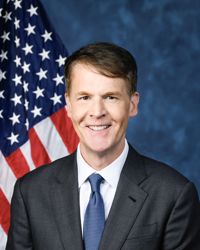
Jefferson Shreve
RIN-6 · Representative
Full Text
RETURN THE UNITED STATES TO A BALANCED BUDGET

Congressional Record, Volume 171 Issue 39 (Thursday, February 27, 2025) [Congressional Record Volume 171, Number 39 (Thursday, February 27, 2025)] [House] [Pages H895-H901] From the Congressional Record Online through the Government Publishing Office [ www.gpo.gov ] {time} 1115 RETURN THE UNITED STATES TO A BALANCED BUDGET The SPEAKER pro tempore. Under the Speaker's announced policy of January 3, 2025, the gentleman from California (Mr. LaMalfa) is recognized for 60 minutes as the designee of the majority leader. Mr. LaMALFA. Mr. Speaker, I appreciate the time and effort to make this time available so that we can communicate directly with the American public about what is going on in Congress. Mr. Speaker, I am disappointed that I sometimes hear a lot of misinformation going out, including several presentations just a few minutes ago on the distortion of what the intentions are under the budget resolution and ultimately budget reconciliation and how we are going to return the United States back in the direction of a balanced budget, which has ballooned to be so unbalanced in the last few years. At least let's get back to the pre-COVID numbers instead of $2 trillion annually. We will resolve that, and we will talk about that. We will talk about it publicly in the upcoming weeks, and the people can tune right into the committee hearings and see for themselves rather than having to believe lies made by politicians and by the media. Mr. Speaker, I also will share this time and this hour here with colleagues, including my new colleague here from Indiana (Mr. Shreve), who would like to give his comments and thoughts here. Mr. Speaker, I yield to the gentleman from Indiana (Mr. Shreve). Mr. SHREVE. Mr. Speaker, during our district workweek this past week, I had the opportunity to visit with Hoosiers across Indiana's Sixth District. I applied my first in-district workweek traveling from Indianapolis to Columbus and points in between. It was great to hear directly from Hoosiers about their priorities and listening to the issues that are important to them. Above all else, in this role, our job as Representatives is to listen to our constituents. I was honored to attend the Indiana National Guard change of command ceremony, at which Brigadier General Lawrence Muennich assumed command from Major General Dale Lyles, making General Muennich the 60th Adjutant General of Indiana's National Guard. I met with constituents from the Indiana Railroad Association and the Indiana Trucking Association. The district that I represent literally lies at the crossroads of America, and industries such as these represent key parts of the lifeblood of our economy. Indiana's Sixth continues to be home to safe and prosperous communities in which to raise families. It was highlighted by my visit with the leadership of Franklin College and a number of state of the city addresses that occur in the month of January, including Greenwood's, where I attended Mayor Mark Myers' 14th state of the city address. I visited with the leadership of Cummins Engine Company, headquartered in the district. I toured their cutting-edge engineering facility at their Cummins Engine plant. I toured Rolls Royce and their massive aircraft engine design and manufacturing facility, where they are at the leading edge of military aircraft production for our national defense. I also visited with SABIC, a company in Bartholomew County that is part of a global plastics industry. At each of these companies in my district, I witnessed the best of Indiana: highly-skilled, hardworking Hoosiers who are contributing to the success and the defense of our country. Above all, I heard a common theme as I traveled my district: Let's bring more Hoosier common sense to Washington. Mr. Speaker, that is the commitment I made, and that is what I will continue to do. Mr. LaMALFA. Mr. Speaker, I thank the gentleman for participating and letting us know what is going on in the gentleman's district. I wish the gentleman the best in his first term and new term as a Member of Congress. [[Page H896]] Mr. Speaker, just in quick review once again here, in passing the budget resolution this week, H. Con. Res. 14, it is a 60-page document, I invite people to look it up for themselves and reconcile for themselves between what they are hearing and what my colleagues on the other side of the aisle are trying to scare the public with on things that are going to be cut because of it. They are not in there. Again, Medicaid, no cuts. Medicare, no cuts. Social Security, no cuts. SNAP, none. We even heard a bit ago about veterans. No. We want to make these things better for them. We want to make them more effective. Our veterans deserve to have the best possible care and the best possible services for them. It isn't going to come from the type of rhetoric of what we are hearing here. As I mentioned before, Social Security. No one is going to reduce Social Security, but looking forward in the long term, it is going to be in big trouble in 7 or 8 years. Shouldn't we be working together in a bipartisan way to make sure that that program can sustain itself beyond that when the trust fund runs out, at such a point when more money will have to be paid in by workers or having less benefits or things like that because it just flat runs out? That is not good. Let's have an honest debate on that and how Medicaid is going to go forward, as well. All of these programs need to be looked at in order to keep them on a solid fiscal course. That doesn't happen when lies get told about what we are trying to do here in sight of running $2 trillion budget deficits. Mr. Speaker, with so many different issues for us to be looking at in Congress, we also have to revitalize our economy. A growing economy will help a lot in solving our deficit problem. Two big drivers of inflation are overspending by Federal Government and the cost of energy, which is integral to so much of our economy, to every aspect of production and transportation and delivery and what we do in our daily lives. The cost of energy, from electricity in our homes and businesses, manufacturing, and fuel for vehicles, trains, and aircraft. Those are the two main drivers. As we have seen in the last several years, when the Federal Government has basically put a giant vacuum on the available money supply, prices go up on everything. The energy to produce those things causes higher prices. I am a farmer in my real life at home. A couple of years ago, I saw the tripling of the cost of fertilizer as an input for our crops and the doubling of the cost of fuel. Where is that going to be made up? It is in the price of food. Everybody is kind of mad about the price of eggs right now. I get it. I understand that. A couple of points that factor into that is that we have California regulations, especially on how eggs are to be produced and the chickens are to be raised. We have seen all those things that drive inflation affect the egg growers and the poultry folks. Also, I believe there is an overreaction on the bird flu. The last number I saw was 160 million chickens have been exterminated because of the idea or perception on that. Yes, there is a real deal out there, but I think the Biden administration took it way too far. When you have these things going on, that is going to affect the price of eggs. The Trump administration is working diligently on that. I spoke with the Secretary of Agriculture just yesterday, and they are looking at remedies for that. We will be soon getting a handle on that and other things that are inflationary if we are allowed to have our economy thrive and be open enough to take care of these things. I am encouraged by this direction. There is a lot of talk about DOGE and what it is doing. It is, indeed, flipping over rocks and finding a lot of cockroaches scurrying away on some things that the American public cares zero about on what is being spent in foreign areas. At USAID, at the beginning, there were some good aspects of USAID, but it sure turned into something that the public doesn't care about or want. There are effects from these costs and of these actions of government. Mr. Speaker, we should then look at the regulatory side. We have had so much being expended on climate change, in my home State of California especially. What actually is climate change, and let's look at long-term trends. There is a lot of science behind that being ignored, I believe. What are the trends on temperatures? What are the trends on CO 2 ? There are so many different aspects that are a lot more scientific than politicians, me included, who are trying to expound upon that. We have seen very difficult regulations come down the pike on the regulations especially of CO 2 . My colleagues have probably seen this poster of mine in the past, where I have pointed out the makeup of CO 2 in our atmosphere, one of the greenhouse gases that are the main concern by several administrations now. The main gas is nitrogen, oxygen, and these trace gases. We put right over here, especially carbon dioxide. Look at that very narrow strip which that represents. When I actually show them this stuff, people are astounded at how little CO 2 is in the atmosphere because they have been scared and had so much fear instilled in them by media, by politicians, and by regulatory agencies who say that CO 2 is going to be the end of mankind. It is an existential threat. It is the biggest threat we have according to John Kerry and others. It is not the actions of China and others in the promoting of war and terrorism around the world. Let me show my updated chart here. This one points out the same one I just showed here. This is currently in 2025. This is what it looked like back in 1970, back when I was a kid in school and they were instilling fear in us that we were going to have an ice age. Those are the days of the ice age. Those are the days of global cooling. Look at the two charts. They are a b

Referenced legislation: HCONRES14