Floor Speech2026-03-03
TERRITORIAL STUDENT ACCESS TO HIGHER EDUCATION ACT
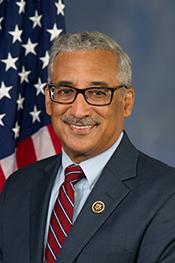
Robert C. "Bobby" Scott
DVA-3 · Representative
Full Text
TERRITORIAL STUDENT ACCESS TO HIGHER EDUCATION ACT

Congressional Record, Volume 172 Issue 40 (Tuesday, March 3, 2026) [Congressional Record Volume 172, Number 40 (Tuesday, March 3, 2026)] [House] [Pages H2366-H2367] From the Congressional Record Online through the Government Publishing Office [ www.gpo.gov ] TERRITORIAL STUDENT ACCESS TO HIGHER EDUCATION ACT Mr. WALBERG. Mr. Speaker, I move to suspend the rules and pass the bill (H.R. 6472) to amend the Higher Education Act of 1965 to provide for in-state tuition rates for certain residents of Guam, the Commonwealth of the Northern Mariana Islands, American Samoa, and the United States Virgin Islands, and for other purposes, as amended. The Clerk read the title of the bill. The text of the bill is as follows: H.R. 6472 Be it enacted by the Senate and House of Representatives of the United States of America in Congress assembled, SECTION 1. SHORT TITLE. This Act may be cited as the ``Territorial Student Access to Higher Education Act''. SECTION 2. IN-STATE TUITION FOR CERTAIN RESIDENTS OF GUAM, THE COMMONWEALTH OF THE NORTHERN MARIANA ISLANDS, AMERICAN SAMOA, AND THE UNITED STATES VIRGIN ISLANDS. (a) In-State Tuition Rates.--Part C of title I of the Higher Education Act of 1965 (20 U.S.C. 1015 et seq.) is amended by inserting after section 135 the following: ``SEC. 135A. IN-STATE TUITION RATES FOR CERTAIN RESIDENTS OF GUAM, THE COMMONWEALTH OF THE NORTHERN MARIANA ISLANDS, AMERICAN SAMOA, AND THE UNITED STATES VIRGIN ISLANDS. ``(a) In General.--A public institution of higher education that receives assistance under this Act shall not charge a covered individual tuition or fees for attendance at such institution at a rate that is greater than the rate charged for residents of the State in which such institution is located. ``(b) Covered Individual.--In this section, the term `covered individual' means an individual who-- ``(1) is a resident of Guam, the Commonwealth of the Northern Mariana Islands, American Samoa, or the United States Virgin Islands; and ``(2) is a national of the United States (as such term is defined in section 101(a) of the Immigration and Nationality Act (8 U.S.C. 1101(a))).''. (b) Program Participation Agreement.--Section 487(a) of the Higher Education Act of 1965 (20 U.S.C. 1094(a)) is amended by adding at the end the following: ``(30) The institution will comply with the requirements of section 135A, as applicable.''. The SPEAKER pro tempore. Pursuant to the rule, the gentleman from Michigan (Mr. Walberg) and the gentleman from Virginia (Mr. Scott) each will control 20 minutes. The Chair recognizes the gentleman from Michigan. {time} 1710 general leave Mr. WALBERG. Mr. Speaker, I ask unanimous consent that all Members may have 5 legislative days in which to revise and extend their remarks and include extraneous material. The SPEAKER pro tempore. Is there objection to the request of the gentleman from Michigan? There was no objection. Mr. WALBERG. Mr. Speaker, I yield myself such time as I may consume. Mr. Speaker, I rise today in support of H.R. 6472, sponsored by Congressman James Moylan of Guam, which allows residents of U.S. territories to access in-State tuition rates at public universities across the U.S. I am proud to rise in support of H.R. 6472, which ensures students of the U.S. territories of Guam, the Commonwealth of the Northern Mariana Islands, American Samoa, and the U.S. Virgin Islands receive in-State tuition at public universities across the country. I am pleased that all of the Delegates from each U.S. territory are original cosponsors of the bill and that it received strong bipartisan support in the committee markup. Under H.R. 6472, public postsecondary institutions will be required to offer in-State tuition rates to residents of U.S. territories. Through this bill, a student from Guam would pay the same tuition at a public university just as any in-State student. This isn't a novel idea. Under current law, servicemembers and their families already receive in-State tuition rates, creating new pathways for more Americans to get high-quality educations at a competitive cost. However, H.R. 6472 doesn't just help students. It helps the territories, too. After graduation, students can return home with advanced degrees and credentials they can reinvest back into their homes and local economies. This isn't just an investment in our students. It is an investment in the economic strength of American territories. Students can contribute their newfound expertise to help develop new industries and drive economic development. That investment also strengthens American national security. As competition with our adversaries, like China, intensify in the Pacific and drug trafficking continues in South and Central America, we must ensure our territories have the infrastructure and brainpower needed to promote a strong national security posture in the region. Last year, we passed the Working Families Tax Cut Act, which included some of the most conservative reforms to higher education in decades, massively lowering costs and helping create new pathways for students to chase the American Dream. We now have a chance to build off that success of the Working Families Tax Cut Act and lower postsecondary education costs for U.S. residents in U.S. territories so they can continue supporting our vital military operations. Mr. Speaker, as chairman of the House Committee on Education and the Workforce, I look forward to passing H.R. 6472 and supporting our territories. Mr. Speaker, I reserve the balance of my time. Mr. SCOTT of Virginia. Mr. Chair, I yield myself such time as I may consume. Mr. Speaker, I rise today in support of H.R. 6472, which would amend the Higher Education Act of 1965 to provide for in-State tuition rates for certain residents of Guam, the Commonwealth of Northern Mariana Islands, the American Samoa, and the United States Virgin Islands. I support this initiative in principle because we cannot ignore the needs of these States. However, we also should not ignore that States and public colleges set their own tuition rates based on State budgets and priorities. When this bill was marked up in committee, Democrats proposed an amendment to require the Federal Government to foot the bill for these costs instead of the public colleges themselves. This approach has a similar goal to the District of Columbia Tuition Assistance Grant, the DCTAG program, which provides Federal funding for D.C. residents to help pay the difference between the higher out-of-State tuition and the lower in-State tuition at public universities across the country. The DCTAG program was established because Washington, D.C., does not have an adequate number of public universities. The territories involved in this bill face a similar challenge. Most of the territories do not have a robust public university system that offers a variety of majors for students to choose from. Regrettably, the full committee did not agree to this amendment to provide Federal funding. Mr. Speaker, while I support the bill because we must ensure that all students have access to low-tuition college education, I still have concerns about the funding mechanism. It is the Federal Government's responsibility to bear the cost of this mandate rather [[Page H2367]] than shift it to the States, which are already facing financial strain. Further, while I appreciate my colleagues' interest in expanding college access and affordability for students from these territories, I would be remiss if I overlooked the fact that congressional Republicans made it harder for these same students to afford colleges. That is because of cuts to the Pell Grant Program, changes to loan limits, and elimination of affordable loan repayment plans enacted in their big ugly law. Nevertheless, I encourage my colleagues to vote ``yes'' on the bill and reserve the balance of my time. Mr. WALBERG. Mr. Speaker, I yield 2 minutes to the gentleman from Guam (Mr. Moylan), the sponsor of the bill and a great member of the Education and Workforce Committee. Mr. MOYLAN. Mr. Speaker, I thank my good friend, Chairman Walberg, for yielding to me. Mr. Speaker, I rise in support of Guam's students and strongly urge my colleagues to vote for my bill, H.R. 6472. This bill delivers a targeted approach to make college more affordable, strengthen workforce pipelines, and support critical national security efforts in the U.S. territories. H.R. 6472 provides tuition rate guarantees to U.S. nationals who live in Guam, CNMI, American Samoa, and the U.S. Virgin Islands. High costs associated with education in the States, not ability, limit educational opportunities for students in the territories. None of our islands have doctorate, law, or medical degree programs. Lack of access to these programs leads to workforce shortages in critical sectors. Lowering barriers to access will lead to greater capacity building in the territories. Some examples of past folks are: Honorable Peter C. Siguenza, who attended California State University and returned home after law school to become Guam's first Chief Justice. Then there was the late Dr. Chris Perez, who went to UC San Francisco, who came home to be a good doctor for the island. There was also our first president of the University of Guam, Dr. Antonio Yamashita, who attended the University of North Carolina. We currently have leaders on our island, such as Dr. Enriquez, who is the president of our University of Guam. She attended the University of Maryland. We also have Dr. Aguon, who attended the University of Hawaii and is now running our Guam Memorial Hospital, and our Governor ``Lou'' Leon Guerrero attended UCLA. Every doctor and lawyer in Guam studied elsewhere, returned home, and has made an incredible impact on our community. The SPEAKER pro tempore. The time of the gentleman has expired. Mr. WALBERG. Mr. Speaker, I yield an additional 30 seconds to the gentleman from Guam. Mr. MOYLAN. Mr. Speaker, this bill is about empowering our residents

Referenced legislation: HR6472, HR6472