Floor Speech2026-03-19
AMERICA MUST COME TOGETHER
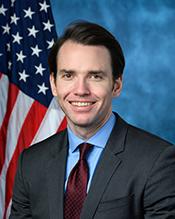
Kevin Kiley
RCA-3 · Representative
Full Text
AMERICA MUST COME TOGETHER

Congressional Record, Volume 172 Issue 50 (Thursday, March 19, 2026) [Congressional Record Volume 172, Number 50 (Thursday, March 19, 2026)] [House] [Pages H2615-H2616] From the Congressional Record Online through the Government Publishing Office [ www.gpo.gov ] {time} 1210 AMERICA MUST COME TOGETHER (Under the Speaker's announced policy of January 3, 2025, Mr. Kiley of California was recognized for 30 minutes.) Mr. KILEY of California. Mr. Speaker, I recently changed my voter registration to Independent. Accordingly, I asked the Clerk of the House to update my party designation to Independent in all official publications and databases of the U.S. House of Representatives. This reflects the way I have always approached my role as an elected Representative: to be an independent voice for the communities that I represent, to hold politicians in both Sacramento and Washington accountable, to work with both sides to find common ground, and to answer directly to my constituents and always put our district first. While it is unusual for a Member of Congress to have no party affiliation--in fact, I am now the only such Member in the House--this is the norm for most elected positions throughout the country. In California, for example, almost all offices are nonpartisan: your mayor, city councilors, school board members, county supervisors, sheriff, and district attorney. Every day, these officials work toward practical solutions to the problems affecting their communities, unencumbered by partisanship. I think we could use more of that in Congress. It is no secret that I have been critical of partisanship in Congress, from the longest government shutdown in U.S. history to an epidemic of gerrymandering that has spread from State to State. If there is one thing that Americans agree on, it is that political division has become a serious problem for our country. We need to reorient our politics toward bringing us together as Americans rather than tearing us apart as partisans. That means, for example, finding concrete ways to make life more affordable rather than each side blaming the other for why it isn't. We are also living in a moment of great uncertainty and perhaps dramatic transformation, where technological change could bring incredible opportunities along with unfamiliar risks and dislocations. The ordinary rituals of partisan politics are simply inadequate in these extraordinary times and are simply incapable of meeting this generational challenge. Our ability to work as one team serving all Americans is now more important than ever. Sequoias Provide Living Link to Past Mr. KILEY of California. Mr. Speaker, this week, I was delighted to see that a bill that I am sponsoring, the Save Our Sequoias Act, passed the House of Representatives with overwhelming bipartisan support. This act, as the name suggests, is designed to save, preserve, and protect one of the truly great marvels that we have here on Earth. The sequoia is the largest organism on the planet, and it actually continues to grow throughout its lifetime. They can live for millennia, so these trees serve as a living link to our past, a link to antiquity itself. When you see these marvels, which we have so many of in California, it truly inspires a sense of awe and humility as you contemplate both their scale here in the present and their link to our past. The bad news is that these incredible marvels are under threat. Over the last decade, we have seen 20 percent of them destroyed, largely because of the growing intensity of wildfires. The time has come for us to take urgent action to ensure that they can continue to inspire awe and serve their important ecological purpose as well for generations and millennia to come. Specifically, the Save Our Sequoias Act enhances coordination between Federal, State, Tribal, and local land managers. It creates a giant sequoia health and resiliency assessment to prioritize and inform forest management practices. It declares an emergency to expedite environmental reviews and consultations while maintaining robust scientific analysis. It establishes a comprehensive reforestation strategy to generate giant sequoias in groves destroyed by catastrophic wildfires. It directs the Secretary of the Interior to develop and implement an insect-monitoring strategy to limit potentially fatal infestations. All of this is designed to expedite forest management and wildfire prevention for the remaining giant sequoia groves. Mr. Speaker, I was speaking a moment ago about the need to find common ground and things that can bring us together, and this is a small--well, actually quite large, but in the grand scheme of things small--example, but I think it is an encouraging one. This is an example where we have been able to come together and say that this is something that is larger than any of us; this is something that transcends partisanship; and this is a way that we can be stewards of our heritage and protect a true treasure for those who will inherit it from us for generations to come. [[Page H2616]] Science-Based Approach to Literacy Mr. KILEY of California. Mr. Speaker, I rise to convey the good news that a bill that I am an original cosponsor of, the Science of Reading Act of 2026, has passed the Education and Workforce Committee with unanimous bipartisan support. This bill says something very simple, which is that funding for literacy should not be used for discredited approaches to teaching literacy. This is particularly urgent in my State. Sadly, California has the highest illiteracy rate in the entire country. A lot of that stems from the fact that we have a lot of challenges when it comes to education in California, and we have not, for a long time, in many schools, taught literacy in the right way. In fact, this has been a nationwide phenomenon where, starting in the 1970s, there was a departure from the traditional approach where students were taught to read by identifying letters and the sounds they represent. Instead, a new idea took hold called whole language, leaving behind the explicit instruction of phonics as old-fashioned. This new method, which came to be known as three-cueing or balanced literacy, encourages students to read by guessing an unknown word based on its context and structure within a sentence or even adjacent pictures in the book. This approach was at odds with the science of reading, which aims to ensure students develop strong foundational skills. In fact, it is a misapprehension of a false equivalence between spoken and written language, where the human brain is wired to learn spoken language sort of by osmosis, whereas there is this language instinct but no reading instinct. Reading has to be taught in a very explicit way. That is what the science of reading is all about. It emphasizes five core skills that every child must master: phonological awareness, phonics, fluency, vocabulary, and comprehension. Almost every State has corrected course and is returning to the science of reading, some more than others. California has been late but is now finally getting there itself. We have seen that States that embrace the science of reading, returning to the basics and a science- based approach to literacy, have seen incredible results. We saw Mississippi, for example, go from being one of the worst States in the country in literacy to one of the very best, simply by returning to the science of reading. Now that we have passed this bill through the Education Committee, I look forward to it passing the House of Representatives and the Senate and getting signed into law so that we can declare once and for all here that the reading wars are over. We can return to science-based literacy instruction throughout the country, and this will be of great benefit in my State. We can overcome having the highest illiteracy in the country, as well as the Nation as a whole, where we continue to fall behind our peer nations when it comes to academic achievement. A big, big part of that is our failure to teach reading in the right way. This is a very encouraging sign. I am glad this bill has bipartisan support. I hope that it will quickly move its way through the rest of the process and be signed into law. {time} 1220 Raising Alarm on Escalating Gas Prices in California Mr. KILEY of California. Mr. Speaker, I rise to, again, raise alarm as to the escalating gas prices that Californians are continuing to face, which at this moment is $5.56 per gallon, on average, throughout the State. Of course, some places are much higher. This is about 50 cents higher than the second place State. Even the State with the second highest gas prices in the country is paying 50 cents less than in California. It is over 50 cents higher than Hawaii, which is an island State. Mr. Speaker, while we have seen some volatility throughout the country over the course of the last month, in California, the main problem and the main source of high prices is the policies that we have at the State level. I have introduced a bill here in the House to address part of that, to put a cap on how high a State can raise its gas taxes. That will provide some relief to folks in our State, but we need to see more aggressive action from policymakers in Sacramento. Unfortunately, they have been going in the opposite direction, where, by some estimates, we could soon have $8 per gallon in California or even higher, which is something that our residents simply cannot afford when we already have the highest cost of living and the highest poverty rate in the entire country. There are a few things that we can do right now, and that our State lawmakers, the Governor and the legislature, can do right now, to spare Californians from having to pay so much more than anyone else in the country. Number one, they can suspend the gas tax in its entirety. That right there would save folks quite a bit right off the bat. Number two, they can reverse, rollback, or at least mitigate the r