Floor Speech2026-03-23
Text of Senate Amendment 4749
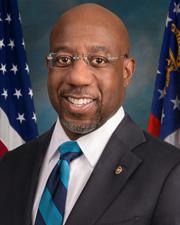
Raphael G. Warnock
DGA · Senator
Full Text
Text of Senate Amendment 4749

Congressional Record, Volume 172 Issue 54 (Monday, March 23, 2026) [Congressional Record Volume 172, Number 54 (Monday, March 23, 2026)] [Senate] [Pages S1548-S1549] From the Congressional Record Online through the Government Publishing Office [ www.gpo.gov ] SA 4749. Mr. WARNOCK submitted an amendment intended to be proposed by him to the bill S. 1383, to establish the Veterans Advisory Committee on Equal Access, and for other purposes; which was ordered to lie on the table; as follows: Strike all after the enacting clause and insert the following: SECTION 1. SHORT TITLE. This Act may be cited as the ``Preventing Election Subversion Act of 2026''. SEC. 2. RESTRICTIONS ON REMOVAL OF LOCAL ELECTION ADMINISTRATORS IN ADMINISTRATION OF ELECTIONS FOR FEDERAL OFFICE. (a) Findings.--Congress makes the following findings: (1) Congress has explicit and broad authority to regulate the time, place, and manner of Federal elections under the Elections Clause under article I, section 4, clause 1 of the Constitution of the United States, including by establishing standards for the fair, impartial, and uniform administration of Federal elections by State and local officials. (2) The Elections Clause was understood from the framing of the Constitution of the United States to contain ``words of great latitude,'' granting Congress broad power over Federal elections and a plenary right to preempt State regulation in this area. As made clear at the Constitutional Convention and the State ratification debates that followed, this grant of congressional authority was meant to ``insure free and fair elections,'' promote the uniform administration of Federal elections, and ``preserve and restore to the people their equal and sacred rights of election.''. (3) In the founding debates on the Elections Clause, many delegates also argued that a broad grant of authority to Congress over Federal elections was necessary to check any ``abuses that might be made of the discretionary power'' to regulate the time, place, and manner of elections granted the States, including attempts at partisan entrenchment, malapportionment, and the exclusion of political minorities. As the Supreme Court has recognized, the Elections Clause empowers Congress to ``protect the elections on which its existence depends,'' Ex parte Yarbrough, 110 U.S. 651, 658 (1884), and ``protect the citizen in the exercise of rights conferred by the Constitution of the United States essential to the healthy organization of the government itself,'' id. at 666. (4) The Elections Clause grants Congress ``plenary and paramount jurisdiction over the whole subject'' of Federal elections, Ex parte Siebold, 100 U.S. 371, 388 (1879), allowing Congress to implement ``a complete code for congressional elections.'' Smiley v. Holm, 285 U.S. 355, 366 (1932). The Elections Clause, unlike, for example, the Commerce Clause, has been found to grant Congress the authority to compel States to alter their regulations as to Federal elections, id. at 366-67, even if these alterations would impose additional costs on the States to execute or enforce. Association of Community Organizations for Reform Now v. Miller, 129 F.3d 833 (6th Cir. 1997). (5) The phrase ``manner of holding elections'' in the Elections Clause has been interpreted by the Supreme Court to authorize Congress to regulate all aspects of the Federal election process, including ``notices, registration, supervision of voting, protection of voters, prevention of fraud and corrupt practices, counting of votes, duties of inspectors and canvassers, and the making and publication of election returns.'' Smiley v. Holm, 285 U.S. 355, 366 (1932). (6) The Supreme Court has recognized the broad ``substantive scope'' of the Elections Clause and upheld Federal laws promulgated thereunder regulating redistricting, voter registration, campaign finance, primary elections, recounts, party affiliation rules, and balloting. (7) The authority of Congress under the Elections Clause also entails the power to ensure enforcement of its laws regulating Federal elections. ``[I]f Congress has the power to make regulations, it must have the power to enforce them.'' Ex parte Siebold, 100 U.S. 371, 387 (1879). The Supreme Court has noted that there can be no question that Congress may impose additional penalties for offenses committed by State officers in connection with Federal elections even if they differ from the penalties prescribed by State law for the same acts. id. at 387-88. (8) The fair and impartial administration of Federal elections by State and local officials is central to ``the successful working of this government,'' Ex parte Yarbrough, 110 U.S. 651, 666 (1884), and to ``protect the act of voting . . . and the election itself from corruption or fraud,'' id. at 661-62. (9) The Elections Clause thus grants Congress the authority to ensure that the administration of Federal elections is free of political bias or discrimination and that election officials are insulated from political influence or other forms of coercion in discharging their duties in connection with Federal elections. (10) In some States, oversight of local election administrators has been allocated to State Election Boards, or special commissions formed by those boards, that are appointed by the prevailing political party in a State, as opposed to nonpartisan or elected office holders. (11) In certain newly enacted State policies, these appointed statewide election administrators have been granted wide latitude to suspend or remove local election administrators in cases where the statewide election administrators identify whatever the State deems to be a violation. There is no requirement that there be a finding of intent by the local election administrator to commit the violation. (12) Local election administrators across the country can be suspended or removed according to different standards, potentially exposing them to different political pressures or biases that could result in uneven administration of Federal elections. (13) The Elections Clause grants Congress the ultimate authority to ensure that oversight of State and local election administrators is fair and impartial in order to ensure equitable and uniform administration of Federal elections. (b) Restriction.-- (1) Standard for removal of a local election administrator.--A statewide election administrator may only suspend, remove, or relieve the duties of a local election administrator in the State with respect to the administration of an election for Federal office for inefficiency, neglect of duty, or malfeasance in office. (2) Private right of action.-- (A) In general.--Any local election administrator suspended, removed, or otherwise relieved of duties in violation of paragraph (1) with respect to the administration of an election for Federal office or against whom any proceeding for suspension, removal, or relief from duty in violation of paragraph (1) with respect to the administration of an election for Federal office may be pending, may bring an action in an appropriate district court of the United States for declaratory or injunctive relief with respect to the violation. Any such action shall name as the defendant the statewide election administrator responsible for the adverse action. The district court shall, to the extent practicable, expedite any such proceeding. (B) Statute of limitations.--Any action brought under this subsection must be commenced not later than 1 year after the date of the suspension, removal, relief from duties, or commencement of the proceeding to remove, suspend, or relieve the duties of a local election administrator with respect to the administration of an election for Federal office. (3) Attorney's fees.--In any action or proceeding under this subsection, the court may allow a prevailing plaintiff, other than the United States, reasonable attorney's fees as part of the costs, and may include expert fees as part of the attorney's fee. The term ``prevailing plaintiff'' means a plaintiff that substantially prevails pursuant to a judicial or administrative judgment or order, or an enforceable written agreement. (4) Removal of state proceedings to federal court.--A local election administrator who is subject to an administrative or judicial proceeding for suspension, removal, or [[Page S1549]] relief from duty by a statewide election administrator with respect to the administration of an election for Federal office may remove the proceeding to an appropriate district court of the United States. Any order remanding a case to the State court or agency from which it was removed under this subsection shall be reviewable by appeal or otherwise. (5) Right of united states to intervene.-- (A) Notice to attorney general.--Whenever any administrative or judicial proceeding is brought to suspend, remove, or relieve the duties of any local election administrator by a statewide election administrator with respect to the administration of an election for Federal office, the statewide election administrator who initiated such proceeding shall deliver a copy of the pleadings instituting the proceeding to the Assistant Attorney General for the Civil Rights Division of the Department of Justice. The local election administrator against whom such proceeding is brought may also deliver such pleadings to the Assistant Attorney General. (B) Right to intervene.--The United States may intervene in any administrative or judicial proceeding brought to suspend, remove, or relieve the duties of any local election administrator by a statewide election administrator with respect to the administration of an election for Federal office and in any action initiated pursuant to paragraph (2) or in any removal pursuant to paragraph (4). (6) Review.--In reviewing any action brought under this section, a court of the United States shall not afford any deference to any State official, administrator, or tribunal that initiated, ap