Floor Speech2026-03-19
SAFEGUARD AMERICAN VOTER ELIGIBILITY ACT
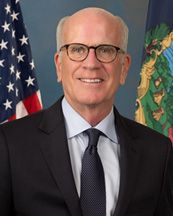
Peter Welch
DVT · Senator
Full Text
SAFEGUARD AMERICAN VOTER ELIGIBILITY ACT

Congressional Record, Volume 172 Issue 50 (Thursday, March 19, 2026) [Congressional Record Volume 172, Number 50 (Thursday, March 19, 2026)] [Senate] [Pages S1356-S1357] From the Congressional Record Online through the Government Publishing Office [ www.gpo.gov ] SAFEGUARD AMERICAN VOTER ELIGIBILITY ACT The PRESIDING OFFICER. The Senator from Vermont. Iran Mr. WELCH. Madam President, it is time to end the war that the President started with Iran on February 28--3 weeks ago. The war must stop now, not a week from now after U.S. taxpayers spend another $14 billion, another 1,000 innocent civilians are lost, another 500,000 are displaced from their homes, and more economic punishment here at home; not a month from now after U.S. taxpayers spend another $60 billion, another 4,000 innocent civilians are lost, another 2 million are displaced from their homes, and even more dire economic consequences here at home; and certainly not 3 months from now after U.S. taxpayers spend another $200 billion, another 12,000 innocent civilians are lost and the creation of a global refugee crisis affecting millions, and the possibility of a global economic recession. The time to end the war is now--right now. Today, we are heading in the opposite direction. The war is escalating. Netanyahu bombed the South Pars gasfield. Iran retaliated by bombing Qatar's natural gas hub, the Ras Laffan Industrial City. Oil prices are surging to nearly $120 a barrel. The President must act and act now. End this war. The President can end the war that he started, and if he won't, Congress must. President Trump's stated goal was to destroy Iran's nuclear capability, and in his own words, that program was ``totally obliterated.'' President Trump's stated goal was to degrade Iran's missile programs. In his own words, we have ``already destroyed 100 percent of Iran's military capability.'' By President Trump's own account, his objectives have largely been realized. We are now at a very dangerous inflection point: Do we end the war now or do we escalate? Do we escalate to achieve Netanyahu's goal--not ours--of regime change? Do we escalate with no end in sight--an escalation that will put American boots on the ground? an escalation American taxpayers will fund with a $200 billion downpayment on yet another forever war in the Middle East? We must decide. And make no mistake, indecision, not to decide, is escalation, and escalation will lead to failure. President Trump is dragging us toward escalation, and Congress must not allow it. America has been down this road before. In Iraq, Saddam presided over an evil regime. He was deposed quickly. In Afghanistan, the Taliban were an evil regime. They were deposed quickly, but what came after was devastating--trillions of dollars of taxpayer money wasted and thousands of American soldiers killed and injured. The Iraq war cost nearly $2 trillion. In the Iraq war, we lost more than 4,500 American servicemembers. The Afghanistan war cost over $2 trillion, and in Afghanistan, we lost nearly 2,500 American servicemembers. Unless this escalation is stopped, President Trump's Iran war could cost even more. And for what? A regime change war in Iran could be worse--worse than Iraq or even Afghanistan. Regime change is impossible without boots on the ground. Those boots are the boots of brave American men and women who will follow the President's order to deploy should he give it. And regime change is impossible to sustain without a permanent occupying force. Iran--make no mistake--is a proud country with proud people, and they may welcome the riddance of the ayatollahs but will fiercely reject American and Israeli occupiers. Iran is also huge. It stretches as far as the distance from Houston, TX, to New York, and it has as many people as California, Texas, and Florida combined. Iraq and Afghanistan taught us something that we must not forget, and that is the limits of military power. In the early phases of both of those wars, as in Iran now, the extraordinary skills and capabilities of our military won impressive victories, but what followed those early victories in Iraq and Afghanistan is already upon us in Iran, and that is the asymmetric response--the one where the United States, with all its military might, is at a disadvantage. Iran's drone attacks have closed the Strait of Hormuz--something that the Secretary of Energy dismissed as being something that couldn't happen. Nearly one-third of the global oil, fertilizer, [[Page S1357]] and helium supplies that we need--that the world needs--flow through the Strait of Hormuz. You know, in 1973, we had a big oil disruption that involved only 7 percent of oil supplies, but it created a global economic shock that reverberated for 10 years. This one could even be worse. Iran can keep the Strait closed as long as they have access to just enough drones or enough small boats loaded with explosives that keep international shippers, who are fearful of losing cargo and crew, from risking passage. The costs to American families and businesses from the closing of the Strait from this asymmetric warfare are staggering. Across the country, gas prices at the pump are up at least a dollar. The average American family will pay an additional $2,000 this year in gas. As a country, we are paying an additional $2 billion every day--$2 billion--for the war premium that we have to pay at the pump. In Vermont and across the country, our farmers are paying up to 35 to 40 percent more for fertilizer. More than a third of global fertilizer supplies have to come through the strait. Just ahead of spring planting season, farms are facing additional tens of thousands of dollars to do business. Vermont families are also paying a war premium to heat their homes. Heating oil prices are surging from around a little over $3 a gallon to over $4.70 a gallon. An average family is going to be facing a $1,000 additional expense to maintain heat in their homes. As the Presiding Officer knows, the Pentagon's costs are absolutely staggering. The war is costing at least $2 billion a day. The Pentagon has told Congress that the first 6 days cost $11.3 billion, not including many other undisclosed things. The Pentagon, we are told, is going to be requesting a $200 billion supplemental. That, by the way, is triple the cost of all U.S. weapons that were sent to Ukraine. We are spending $15 million apiece for THAAD interceptors to shoot down Iranian missiles. We are spending $4 million apiece for Patriot interceptors that are shooting down Shahed drones that cost $20,000. More than 1,300 civilians have already been killed, including over 100 girls by a U.S. strike that went wrong. More than 1,000 have been killed in Lebanon, where Israel, under Netanyahu, is inflicting a relentless attack. That includes more than 100 children. We have had losses, too, in the United States of brave servicemembers who responded to the call of duty, and I want to acknowledge their service and their loss: MAJ Jeffrey O'Brien, CPT Cody Khork, CW3 Robert Marzan, SFC Noah Tietjens, SFC Nicole Amor, SGT Declan Coady, SGT Benjamin Pennington, Maj. John Klinner, Capt. Ariana Savino, Capt. Seth Koval, Capt. Curtis Angst, TSgt Ashley Pruitt, and TSgt Tyler Simmons. I also want to pay respects and acknowledge the exemplary service of the Vermont Air National Guard's 158th Fighter Wing. Their critical skills were requested by name and unit. Their unique mission means they are often the first ones in. Vermonters are very proud of the Green Mountain Boys, and we pray for their safe return home. One of the great accomplishments of this American democracy for the past 250 years--a legacy the Presiding Officer and I are both proud of--is that the strong military we have serves under elected civilian leadership. Citizens volunteer to serve, accepting that they will be deployed at the will of the Commander in Chief and that they will bravely face all the perils required to defend our freedom. The citizens who serve in the military have accepted their responsibility. The U.S. Senate should do the same--accept our responsibility. Under the Constitution, it is the elected leadership, including the U.S. Senate, that has the responsibility to carefully consider when and whether to commit our citizens to the obligations of war. Our country is now very deep into this war--the biggest in a generation. Yet the U.S. Senate has not held a single hearing, has not had a single debate, and has not demanded a full account from the Executive as to the war in Iran. Now we understand the administration is preparing a $200 billion supplemental funding request for a war that has not even been explained, much less authorized. I will oppose this funding. I will oppose sleepwalking into a forever war. I will oppose funding a war wherein the President has presented no stated objectives or a coherent plan to achieve them. I will oppose funding a war wherein the President has proposed no way to pay for it other than to pile up more debt for our children and grandchildren. The question before us: Does the United States end this war or do we escalate it? I oppose a war and funding a war that will make our country less safe and our citizens economically more vulnerable. This is at the heart of our sworn obligation to uphold the Constitution and fight for the interest of our constituents, of all Americans. This war makes us less safe, less prosperous. This war must end. I yield the floor. I suggest the absence of a quorum. The PRESIDING OFFICER (Mr. McCORMICK). The clerk will call the roll. The senior assistant legislative clerk proceeded to call the roll. Mrs. MOODY. Mr. President, I ask unanimous consent that the order for the quorum call be rescinded. The PRESIDING OFFICER. Without objection, it is so ordered. ____________________