Floor Speech2025-01-16
ADDRESSING CALIFORNIA WILDFIRES
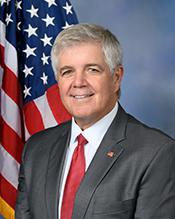
Cliff Bentz
ROR-2 · Representative
Full Text
ADDRESSING CALIFORNIA WILDFIRES

Congressional Record, Volume 171 Issue 9 (Thursday, January 16, 2025) [Congressional Record Volume 171, Number 9 (Thursday, January 16, 2025)] [House] [Pages H206-H213] From the Congressional Record Online through the Government Publishing Office [ www.gpo.gov ] ADDRESSING CALIFORNIA WILDFIRES The SPEAKER pro tempore (Mr. Haridopolos). Under the Speaker's announced policy of January 3, 2025, the gentleman from California (Mr. LaMalfa) is recognized for 60 minutes as the designee of the majority leader. General Leave Mr. LaMALFA. Mr. Speaker, I ask unanimous consent that all Members may have 5 legislative days in which to revise and extend their remarks and include extraneous material on the topic of this Special Order. The SPEAKER pro tempore. Is there objection to the request of the gentleman from California? There was no objection. Mr. LaMALFA. Mr. Speaker, I yield myself such time as I may consume. Mr. Speaker, we see it every year, especially in the West. When fire season hits, it can be very devastating. Some years were better than others. In the northern part of the State that I represent and some of my colleagues in surrounding States, we got hit pretty hard in the forested areas, some of the grassland areas, et cetera. As you know right now, southern California, the Los Angeles area, is taking it really badly with the annual Santa Ana winds. It is an extraordinary amount of wind and strength of the winds, driving the fire to a point that hasn't been seen in at least 60 years in that area. It is devastating towns and causing unmeasurable damage so far. The fires are still raging. It is by the grace of God that maybe the wind will stop. Maybe it will shift somewhat and give the firefighters a better chance to get ahead of it. We know they are valiantly fighting. As it is right now firefighters are coming from all over the State and neighboring States as well, to weigh in on that with the aircraft, the equipment, and the firefighters on the ground to make the stand. It is going to be extremely difficult until the winds die down. We pray for rain to help them out as well. It is not unfamiliar for me in my northern California district with several large fires in the last 6 years. We have had the Paradise, California, fire known as the Camp fire, which burned many acres. Importantly, 90 percent of the town was burned down, and 85 people lost their lives with that. Other towns in my own district were consumed as well in later fires in Greenville and Canyondam. In a little town called Doyle, it blew right through part of that. It happens year after year. It really boils down to: What are we doing for preparedness? What are we doing to treat the lands and have the conditions that we need to be more successful? You are not going to prevent fire completely. You are going to have it. When one occurs, you need to be able to have a fighting chance, and our firefighters have the ability to do that. {time} 1145 Mr. Speaker, joining me today during this Special Order is my colleague from Oregon (Mr. Bentz). We share that Oregon-California border, and we frequently encounter many of the same issues on fire, on forestry, on water and water issues Mr. Speaker, to tell his story about what has been going on in Oregon, I yield to the gentleman from Oregon (Mr. Bentz). Mr. BENTZ. Mr. Speaker, I thank the gentleman for allowing me to join this Special Order today and discuss this horrid and tragic situation in Southern California, truly a national emergency. Note that I call this a national emergency. Why? Because soon Congress will be sending hundreds of billions of dollars to California to help clean up this mess and rebuild. The most basic level of common sense demands that we not send billions upon billions to California without first looking carefully at the causes of this catastrophe, and when they are identified, making sure these causes will be addressed and resolved. The sad benefit that will come from understanding the cause of these southern California fires and also of understanding why California's fire protection systems failed isn't limited to California. Every State is facing hotter and dryer conditions. Every State must do a far better job adapting to these conditions. We need to look at what causes these horrific fires, what they did wrong or what we do wrong in trying to put them out, and then apply those lessons accordingly. You might ask why these questions were not asked and answered in any of the other fires that we have been suffering that were referred to by Congressman LaMalfa a few minutes ago. We have certainly had enough up in Oregon and northern California, but people in positions of authority perhaps haven't been listening. Perhaps it is because those affected didn't have the political clout or perhaps the actions that needed to be taken such as cleaning up our forests are viewed as politically incorrect. There is little doubt that this time around those who have been hurt in southern California are politically powerful, and they can do something about this, and we want them to. That means doing something about adapting to warmer, hotter, and dryer. There is a separation, I guess, in how we approach our response to changing climate. One approach is to invest billions, as California has done, in mitigation, that is reducing CO 2 , and the other is to recognize it is going to stay this way for a very long time. It was said by members of the climate commission at Oregon State University that if we stopped all CO 2 production today, our climate would not improve for between 30 and 40 years. During this period of time, we are going to see a repeat of what we are seeing in southern California unless we do something about it. What is that something? Well, the first thing to do is recognize that the money you put into mitigation is not going to be available for [[Page H207]] adaptation. When I say, ``adaptation,'' I mean protecting people from the kinds of events we are now seeing occur in southern California. We absolutely have to do this. Wishing this away or blaming it on climate change and shrugging ones' shoulders that this isn't happening will not work. California is raising literally billions, billions, of dollars through clean fuel standards, cap-and-trade devices, and other things, but they are not investing it in protecting their people. They are not. I would hope that those who are watching Congressman LaMalfa and me today would reach out to their Congress folks and say we want you to do something. We want you to not just come in and help repair and clean up, which we will do, but, also, we want you to try to stop the damage that is being done to our forests. We actually want you to do something. There will be an opportunity, I think perhaps as early as next week, to vote on Bruce Westerman's Fix Our Forests Act. It would go a long way to making our forests look like this. Why wouldn't we be doing this? What is happening now is certain folks are filing lawsuits to stop us from going into the woods and cleaning them up so that they are not destroyed by wildfire. We can do the same thing in places like southern California by working on water delivery systems and by working on storing more water and having better abilities to put out fires once they start. Even though this was a, I hope, rare event with these cataclysmically driven winds, this will happen again. This happened in Oregon over and over, it has happened in northern California over and over, and it is time for us to do something about it. The people who are listening today can do something about it. They can get on the phone and call. They can call their Congressman or - woman and say that we need your help. I thank Congressman LaMalfa again for taking the time today to bring this issue to the attention of the American people. I think it is incumbent upon the American people to step up, call their Congressman and let's do something about it. Mr. LaMALFA. Mr. Speaker, I thank Mr. Bentz' perspective on that as a neighbor, and our constituents year after year suffer some of these same issues. You were showing that poster of our forested areas in the north and in the forests in the west you have the opportunity to manage those lands to be much more fire resilient. Again, you are not going to completely prevent fire, but you can have fire where it can be a lot more manageable or simpler to put out when it is not raging so much. You have here an example, on the right of this, of an unmanaged forest. You see how crowded, how dense that is? That means you have more trees, dense trees, and the trees are competing with the limited water supply. They are then weaker; they are more prone to have insects come and drill and kill the trees and just make it a tinderbox. Over here, this is managed land. If you look at old photographs from before we started putting all the fires out Smokey Bear style 100 years ago, forested lands were a lot more--had a lot more open space in it, meadow areas, and a lot more gaps between the trees because there was more of a natural effect of natural fire going through and taking out a lot of the lower brush, the pine needles and all that, and the big trees with their thicker bark stand and go on. You had lots of fire back then too, before man intervening, but there was a balance of nature of that. We started with the Smokey Bear program and put out all fires, which is good, but we stopped doing the management in between that nature would do, thinning forests, removing brush because up until the first few decades of the Smokey Bear program and putting out the fires program we were still managing the forests. We were utilizing those wood products. What nature might have burned out we were taking out, and that is where our wood and paper products were coming from. In about the 1970s when the Endangered Species Act's efforts were kicking in more so then it got a lot harder to get timber permits. It got more difficult to