Floor Speech2025-02-25
STATEMENTS ON INTRODUCED BILLS AND JOINT RESOLUTIONS
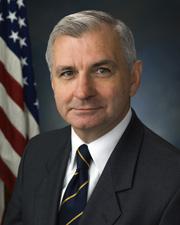
Jack Reed
DRI · Senator
Full Text
STATEMENTS ON INTRODUCED BILLS AND JOINT RESOLUTIONS

Congressional Record, Volume 171 Issue 37 (Tuesday, February 25, 2025) [Congressional Record Volume 171, Number 37 (Tuesday, February 25, 2025)] [Senate] [Pages S1347-S1352] From the Congressional Record Online through the Government Publishing Office [ www.gpo.gov ] STATEMENTS ON INTRODUCED BILLS AND JOINT RESOLUTIONS By Mr. REED (for himself and Mrs. Capito): S. 705. A bill to amend the Federal Food, Drug, and Cosmetic Act with respect to molecularly targeted pediatric cancer investigations, and for other purposes; to the Committee on Health, Education, Labor, and Pensions. Mr. REED. Mr. President, today, I am joining Senator Capito to introduce the Innovation in Pediatric Drugs Act of 2025 in order to improve access to needed therapies for children. Children are not just small adults. Drugs affect their developing bodies differently, so new treatments need to be studied carefully to ensure that they are appropriately prescribed and that dosages are properly adjusted. Additionally, drugs that are designed to treat a specific condition in adults may have enormous benefits in treating completely different illnesses in kids. But research is needed to unlock these potentially lifesaving possibilities. Unfortunately, drug development still leaves children behind. The legislation we are introducing today would help speed therapies to children who need them by making needed changes to the Best Pharmaceuticals for Children Act, BPCA, and the Pediatric Research Equity Act, PREA--two laws that encourage and require the study of drugs in children. Data resulting from BPCA and PREA studies are added to drug labels to give parents and providers essential information on the safety and efficacy of drugs used in children. I was proud to have helped author these laws when I was a member of the Health, Education, Labor, and Pensions Committee. While we have made tremendous progress in advancing treatments for children because of these laws, there are gaps. For example, there is a loophole in PREA that exempts drug companies from pediatric study requirements when the treatment would only be used for a rare pediatric condition. There are close to 7,000 rare diseases without appropriate treatments, and the vast majority of these diseases affect children as well as adults. But in developing new drugs also known as orphan drugs to treat rare diseases, pharmaceutical developers focus their research on adult patients only since they are not required to study their impact on children. Since the majority of new drugs approved by the Food and Drug Administration, FDA, are orphan drugs, this means that the majority of newly approved drugs have not been studied for their impacts on kids. This leaves doctors, parents, and sick kids in the dark about the best possible treatments. Our bill closes this loophole to require studies for children so that that they, too, can benefit from new and innovative treatments for rare diseases. In addition to this change, the Innovation in Pediatric Drugs Act would invest in pediatric studies of older, off-patent drugs. The FDA incentives and requirements under BPCA and PREA work for many newer drugs, but unfortunately cannot help encourage studies of older drugs. For this reason, in 2002, Congress authorized a program which funds the National Institutes of Health to conduct studies of off-patent drugs used in children that would never be completed otherwise. Drug studies are expensive, and costs have only increased since then, but the program has been flat-funded at $25 million since it was created more than 20 years ago. Our legislation would increase the authorization for the BPCA NIH program to ensure we have better data about older drugs to treat diseases in children. Lastly, the Innovation in Pediatric Drugs Act would give FDA the authority it needs to ensure that legally required pediatric studies are completed in a timely manner. Due dates for studies required by PREA are typically deferred by FDA until after the approval of the drug for adults, but FDA has no effective enforcement tools to ensure that these studies are completed on time--or at all. I am pleased to be working with my colleague Senator Capito again on pediatric health issues. We have worked closely for many years on pediatric cancer, first authoring the Childhood Cancer Survivorship, Treatment, Access, and Research, STAR, Act in 2015. That bill was signed into law in 2018, and we worked to fully fund the law every year since. I look forward to working with her to move the Innovation in Pediatric Drugs Act forward, to give children and their families more options for treatments. ______ By Mr. DURBIN (for himself, Mr. Blumenthal, Mr. Reed, and Mr. Welch): S. 710. A bill to amend title 31, United States Code, to prevent fraudulent transactions at virtual currency kiosks, and for other purposes; to the Committee on Banking, Housing, and Urban Affairs. Mr. DURBIN. Mr. President, now on a totally different subject, I would like to tell you about one of my constituents. He is a man from New Lenox, IL, in the suburbs of Chicago. [[Page S1348]] Late last year, he received an urgent phone call from someone claiming to be a deputy in the Will County Sheriff's Office. This self- proclaimed deputy informed my constituent that he had missed jury duty. As a result, the deputy said, there is a warrant out for your arrest. The man was stunned. Don't worry, the deputy further explained. The man could avoid arrest, put the whole matter behind him. All he had to do was pay the fine. But he couldn't pay it by check or credit card. The deputy directed the man to a local cryptocurrency ATM machine and told him to deposit $15,000 into the machine, pay the fine, and all would be forgiven. If you have been following the news, you might have guessed by now that the man on the phone wasn't a sheriff's deputy at all; he was a scammer. Once my constituent deposited his money into the crypto-ATM, it was gone--gone. There was no way to trace the transaction to the scammer and no way to get the money back. This is just one example of a growing and alarming trend of crypto- ATM fraud. There are now more than 30,000 crypto-ATMs in this country, and they are being used by criminals to cheat Americans out of their hard-earned savings, to the tune of $114 million in 2023 alone. Most of the victims are senior citizens. While these scams aren't all identical, they generally play out just like the one I described. A stranger calls and pretends to be from the government or the victim's bank. They make claims of unpaid fines, a frozen bank account, a credit card in default, or even threaten arrest. The scammer then tells their victim that they must immediately go to a crypto-ATM at a nearby grocery store, gas station, or convenience store. Often, the scammer will try to stay on the phone with the victim throughout the scam, warning of dire consequences if they don't make the payments immediately. It is a way of preventing their victim from getting a moment to take a breath and just maybe realize what is going on. Once the victim arrives at the crypto-ATM, the scammer will walk them through the process of depositing real money--cash--into the machine, buying Bitcoin or other cryptocurrency, and sending it to the scammer's digital wallet. Last summer, a small business owner in my hometown of Springfield, IL, removed a crypto-ATM from the store after witnessing senior after senior walk in, talking on their phones, looking stressed, and depositing huge sums of cash into the machine. He said: One hundred percent of the time that we saw somebody at the machine they were being scammed. This is in a small store in Springfield, IL. It wasn't just happening there. There are tragic stories of seniors losing their savings through these machines in every State in America. A South Carolina retired couple lost $390,000 over the course of several months through a scam involving crypto-ATMs. Just this month, a sheriff's office in Walton County, FL, reported a resident that was cheated out of $129,000 through a crypto-ATM. It is past time that we put some commonsense guardrails in place to stop fraud in this largely unregulated industry. That is why, today, I am joining with Senators Blumenthal, Reed, and Welch to introduce the Crypto ATM Fraud Prevention Act. This bill will require crypto-ATM operators to warn consumers about scams and take reasonable steps to prevent fraud at their machines. It will also put in place measures to limit the amount that consumers lose when they do fall victim to scams and would give law enforcement new tools to track down and fight back against criminals. I want to share a few key measures in this bill with you. First, the bill will provide special protection for consumers during the 2 weeks after they make their first transaction at a crypto-ATM, the period when a consumer is most likely to be a victim of fraud. During this time, customers will be limited to deposits of $2,000 per day and $10,000 total. While this is still a lot of money, it ensures people's entire life savings are not put at risk. The bill will also require crypto-ATM operators to obtain verbal confirmation via a live phone call for any transaction with a new customer over $500. Do you remember when I told you scammers often stay on the phone with victims until the money has been deposited in their digital wallet? Well, this requirement will break that communication, give victims a chance to think, perhaps reach out to another member of the family, and make sure crypto-ATM operators can assess whether the customer is being scammed. Next, the bill requires crypto-ATM operators to give prominent, clear warnings about the risk of fraud and tell consumers about common types of scams. While warnings alone are not enough, they are part of the key to preventing fraud. Operators also will be required to issue paper receipts to customers after each transaction. The receipt will include, among other

Referenced legislation: S705, S705, S710, S720, S723