Floor Speech2026-03-19
Text of Senate Amendment 4682
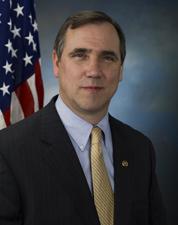
Jeff Merkley
DOR · Senator
Full Text
Text of Senate Amendment 4682

Congressional Record, Volume 172 Issue 50 (Thursday, March 19, 2026) [Congressional Record Volume 172, Number 50 (Thursday, March 19, 2026)] [Senate] [Pages S1390-S1391] From the Congressional Record Online through the Government Publishing Office [ www.gpo.gov ] SA 4682. Mr. MERKLEY submitted an amendment intended to be proposed by him to the bill S. 1383, to establish the Veterans Advisory Committee on Equal Access, and for other purposes; which was ordered to lie on the table; as follows: Strike all after the enacting clause and insert the following: SECTION 1. BAN ON TRADING EVENT CONTRACTS BY CERTAIN GOVERNMENT OFFICIALS. Section 5c of the Commodity Exchange Act (7 U.S.C. 7a-2) is amended by inserting after subsection (c) the following: ``(d) Ban on Trading Event Contracts by Certain Government Officials.-- ``(1) Definitions.--In this subsection: ``(A) Covered individual.--The term `covered individual' means-- ``(i) the President; ``(ii) the Vice President; and ``(iii) a Member of Congress. ``(B) Event contract.--The term `event contract' means an agreement, contract, transaction, or swap in an excluded commodity that is based on an occurrence, extent of an occurrence of, or contingency. ``(C) Material nonpublic information.--The term `material nonpublic information' means information-- ``(i) that a reasonable investor would consider important in making a decision regarding purchasing, selling, or otherwise exchanging an agreement or contract in a commodity or a commodity for future delivery; and ``(ii) that is not publicly available. ``(D) Member of congress.--The term `Member of Congress' has the meaning given the term in section 13101 of title 5, United States Code. ``(E) Senior executive branch official.--The term `senior executive branch official' means any officer or employee described in any of paragraphs (3) through (8) of section 13103(f) of title 5, United States Code. ``(2) Ban on trading event contracts.-- ``(A) Covered individuals.--No covered individual may purchase, sell, or otherwise exchange an event contract. ``(B) Senior executive branch officials.--No senior executive branch official may purchase, sell, or otherwise exchange an event contract the subject of which is a matter in which the senior executive branch official participates personally and substantially as a Government officer or employee, through decision, approval, disapproval, recommendation, the rendering of advice, investigation, or otherwise, in a judicial or other proceeding, application, request for a ruling or other determination, contract, claim, controversy, charge, accusation, arrest, or other particular matter. ``(3) Civil actions.-- ``(A) In general.--The Attorney General may bring a civil action in the appropriate United States district court against any individual who engages in conduct in violation of paragraph (2). ``(B) Civil penalty.--In a civil action under subparagraph (A), if it is demonstrated by a preponderance of the evidence that the individual has violated paragraph (2), the individual shall be subject to a civil penalty of not more than the greater of-- ``(i) $10,000 for each violation; and ``(ii) the amount of profit made through the purchase, sale, or exchange of the event contract in violation of paragraph (2). ``(C) No preclusion of alternative remedies.--The imposition of a civil penalty under this paragraph does not preclude any other criminal or civil statutory, common law, or administrative remedy that is available by law to the United States or any other person. ``(4) Foreign boards of trade.-- ``(A) Definition of foreign board of trade.--In this paragraph, the term `foreign board of trade' means a board of trade that-- ``(i) is organized under the laws of a non-United States jurisdiction or has its principal place of business outside the United States; and [[Page S1391]] ``(ii) avails itself of any means or instrumentality of interstate commerce in the conduct of its business as a board of trade. ``(B) Quarterly reports.--Each foreign board of trade shall submit to the Commission quarterly reports describing each purchase, sale, or other exchange on the foreign board of trade in violation of paragraph (2). ``(C) Enforcement.--A foreign board of trade that fails to submit a report required by subparagraph (B) shall be subject to revocation of the registration of the foreign board of trade by the Commission. ``(5) Insider trading.--The Commission shall issue a rule to restrict the inappropriate use of material nonpublic information, in breach of an express or implied duty not to use or disclose such material nonpublic information, as a means of making a profit through the purchase, sale, or other exchange of an event contract, including by requiring designated contract markets to prohibit the purchase, sale, or other exchange of an event contract by such individuals as the Commission determines to be appropriate in the public interest.''. ______