Floor Speech2025-02-27
REMEMBERING HISTORY AND WHY IT IS IMPORTANT
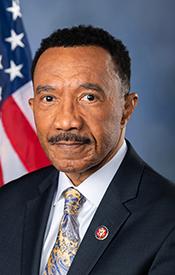
Kweisi Mfume
DMD-7 · Representative
Full Text
REMEMBERING HISTORY AND WHY IT IS IMPORTANT

Congressional Record, Volume 171 Issue 39 (Thursday, February 27, 2025) [Congressional Record Volume 171, Number 39 (Thursday, February 27, 2025)] [House] [Pages H901-H905] From the Congressional Record Online through the Government Publishing Office [ www.gpo.gov ] REMEMBERING HISTORY AND WHY IT IS IMPORTANT The SPEAKER pro tempore. Under the Speaker's announced policy of January 3, 2025, the gentleman from Maryland (Mr. Mfume) is recognized for 60 minutes as the designee of the minority leader. General Leave Mr. MFUME. Mr. Speaker, I ask unanimous consent that all Members may have 5 legislative days to revise and extend their remarks and include extraneous material on the subject of my Special Order today. The SPEAKER pro tempore (Mr. Haridopolos). Is there objection to the request of the gentleman from Maryland? There was no objection. Mr. MFUME. Mr. Speaker, I rise today to talk about two things, one particularly of import and interest, because we are exiting what we have come to know in this country as Black History Month and the other more pertinent in terms of the current news and what is going on, particularly what has been going on over the last month and a half. I begin my remarks today by talking about this whole notion of history, why it is important, why nobody owns it, why it affects all of us as Americans, and why it is important to remember. In remembering, we tend not to make the same mistake again. As we officially end the month tomorrow, I wanted to take some time today to bring to the attention of the American public something that is not highlighted and very seldom ever talked about but very important because it was a grave injustice and a mark on our Nation's history. It is referred to as the Tulsa Race Massacre which occurred in the summer of 1921 in Tulsa, Oklahoma. I want to walk us back to that summer and those three nights when the affluent Greenwood neighborhood in Tulsa, often referred to then and now as Black Wall Street, was burned to the ground. It was totally burned to the ground, and 300 African-American people--men, women, and children--were murdered. It is hard to imagine that that happened in this country in just the last century, just a little over 100 years ago. It did, and the fact that it did, I think, speaks volumes about why it is so very important that we understand the deep hurt that took place and why we understand also it is really our responsibility to remember that and to make sure that we don't allow this Nation to creep down that dark kind of road again. That Tulsa Race Massacre, again, 300 people were murdered. It started with a man being falsely accused of sexual assault, a 19-year-old kid. On May 30, 1921, Sarah Page, a young White woman operating an elevator in the Drexel Building in Tulsa, Oklahoma, encountered him. He encountered her. Dick Rowland was the name of the 19-year-old Black kid. He was a shoeshine, a delivery boy, and worked in the Drexel Building. He was in that building at that time because they had a public ``colored'' restroom facility. He came there to relieve himself, as he normally did. While there, both Rowland and Page were both in an elevator. A clerk, ironically a White clerk, claimed to have heard a scream and called the police, telling them that this kid, this 19-year-old kid, Rowland, had sexually assaulted the young lady. The police chief, whose name was John Gustafson, reported that the young lady bore no scratches, no bruises, no disarranged dress. The young woman said: No, he never made a bad remark to me of any kind. This is public record. That should be enough to negate this false claim that someone just yelled out of the clear blue. Despite that, charges were brought against the 19-year-old kid, Mr. Roland. He was arrested and then taken to the Tulsa courthouse. Later that afternoon, newspapers ran inflammatory articles hot off the press that suggested that the 19-year-old kid, Rowland, had sexually assaulted the young lady, and they ran with a story that stirred emotions at that time. {time} 1215 The story was: Headline. Headline. Read all about it. Young Negro nabbed for attacking girl in elevator. Even though the girl's testimony was: He never touched me. We never spoke. He got on the elevator. He got off. Even though there was no physical evidence to the contrary, that is what the newspaper ran at the time. Worried, as most of the residents were, that this kid was going to be lynched, approximately 300 men met at the courthouse, and an estimated 25 Black men also arrived at the scene to back up the sheriff who had sent out a plea for help. The sheriff wanted somebody there to protect the courthouse to ensure justice and to make sure that this kid he had had to take into custody was, in fact, safe. However, when the crowd of White men swelled to roughly 3,000 and the group of Black men swelled to about 75, a confrontation did not take place. There was a standoff at the courthouse, and the National Guard Armory in Tulsa opened its doors and allowed people to come in, citizens, to arm themselves. They just took whatever weapons they wanted. Then they dispersed. Now, if this sounds a little strange, it really, really is. This was 104 or so years ago. It is the sort of thing that in this month where we talk about Black history and American history, which are both intertwined, it is important to say to a lot of people that this really happened. I am not making it up. We have got court records. There are newspaper records. There are reports of all sorts by those who reported the news. This is an American fact. It is chilling. I mean, it is sad. It is very, very sad. I don't raise it today to make anybody feel bad. I just raise it to say that you can't simply close the books and act like things did not happen, call it DEI if somebody wants to talk about it, and pretend that something that did happen, that was gross and so antihuman--it is still repulsive to pretend that it did not happen. For someone just tuning in right now, these are the statistics from that day. Again, this community, Greenwood, was known as the Black Wall Street at the time. It was thriving with businesses and entrepreneurship and commerce. Eighty-five of the businesses in that town owned by the Black population were burned to the ground. One thousand of their homes were set on fire and burned to the ground. As I indicated in my opening remarks, 300 African Americans were killed that day and the next day, and there were 700 people injured, overflowing the hospitals, which in that day and time were challenged anyway. The total damage was estimated to be $1.5 million, but in today's dollars it is $32 million plus. What was left of the town? Just smoldering ashes. Again, it is important to talk about this, because this actually happened. For anybody thinking that Black History Month is just a celebration of all the great things that Africans Americans did or invented or their role in the [[Page H902]] arts or in sports or anything like that, it is. It is also about the shame of massacres in this country, the home of the free and the land of the brave, and how somehow we are just supposed to cover it over and never believe that it happened. There is importance in remembering. The importance is to remember so that it never happens again. As I indicated, there is this standoff. The sheriff has called for help. He believes that this mob of 300 White men are going to storm the small jail, take the 19-year-old kid, and lynch him. The National Guard, for some reason, opened its doors so citizens can run in and get weapons and arm themselves. We don't know who fired the first shot or what happened, but we do know that what was to happen would be the worst race massacre in American history. Gunfire broke out between the Greenwood men and the White mob, and at least 20 persons fell dead right there at that first volley. During the shoot-out--this is from published reports. This is not hearsay. During the shoot-out, White mobs prevented the ambulances from treating Black men and let them lay there and die. Around the city, racial violence ensued, including an unarmed Black man being chased into the Royal Theater and then murdered viciously on the stage. Greenwood men fled from the courthouse because they were outnumbered and because they were pursued by this crazy mob of enraged men. Most of the Black men made it back to their side of town, preparing to defend their community, their wives, their children, and their property, which caused rumors to circulate again, rumors that ginned up a response that was completely out of touch with reality. It was being said that there was a Negro uprising and, therefore, get ready to protect yourself and get ready at the same time to defend your property, even though the property was not under assault. It was the property of the Black citizens there. Throughout the night, they were engaged in gun battles at the Frisco tracks. Those were the tracks that separated Black Greenwood from the White sections of Tulsa. Interestingly, many of the Black men--and you will see some of them in some of these photographs--donned their World War I uniforms, their military uniforms, the uniforms that they had worn to protect the Nation in segregated troops in our armed services. Those uniforms had hung in their closets. They put them back on to remind the mob that they were Americans, that they were patriots, that they had offered to give their lives, and so many never returned home. I thought that was kind of fascinating that you are being besieged; you are watching scores of your neighbors be murdered, lynched, burned; you are watching businesses being destroyed; and you still love your country so much that you go and get your uniform, your military uniform, and put it on and stand in your doorway to protect your house. On that same night, the police chief, the sheriff, and a judge requested that Governor JBA Robertson send the National Guard in s