Floor Speech2025-01-13
SECURITIES AND EXCHANGE COMMISSION REAL ESTATE LEASING AUTHORITY REVOCATION ACT
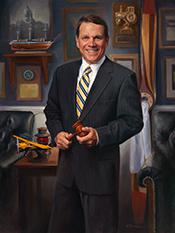
Sam Graves
RMO-6 · Representative
Full Text
SECURITIES AND EXCHANGE COMMISSION REAL ESTATE LEASING AUTHORITY REVOCATION ACT

Congressional Record, Volume 171 Issue 6 (Monday, January 13, 2025) [Congressional Record Volume 171, Number 6 (Monday, January 13, 2025)] [House] [Pages H104-H105] From the Congressional Record Online through the Government Publishing Office [ www.gpo.gov ] SECURITIES AND EXCHANGE COMMISSION REAL ESTATE LEASING AUTHORITY REVOCATION ACT Mr. GRAVES. Mr. Speaker, I move to suspend the rules and pass the bill (H.R. 189) to amend title 40, United States Code, to eliminate the leasing authority of the Securities and Exchange Commission, and for other purposes. The Clerk read the title of the bill. The text of the bill is as follows: H.R. 189 Be it enacted by the Senate and House of Representatives of the United States of America in Congress assembled, SECTION 1. SHORT TITLE. This Act may be cited as the ``Securities and Exchange Commission Real Estate Leasing Authority Revocation Act''. SEC. 2. LEASING OF SPACE FOR SECURITIES AND EXCHANGE COMMISSION. (a) In General.--Section 3304 of title 40, United States Code, is amended by adding at the end the following: ``(e) Leasing of Space for Securities and Exchange Commission.--Notwithstanding any other provision of law, on and after the date of enactment of this subsection, the Securities and Exchange Commission may not lease general purpose office space. The Administrator may lease such space for the Securities and Exchange Commission under section 585 and this chapter.''. (b) Limitation on Statutory Construction.--The amendment made by subsection (a) may not be construed to invalidate or otherwise affect a lease entered into by the Securities and Exchange Commission before the date of enactment of this Act. SEC. 3. INDEPENDENT LEASING AUTHORITIES. (a) In General.--The Comptroller General of the United States shall submit to the Committee on Transportation and Infrastructure of the House of Representatives, the Committee on Environment and Public Works of the Senate, and the Committee on Homeland Security and Governmental Affairs of the Senate a report on the review described in subsection (b). (b) Review.--The Comptroller General shall complete a review under which the Comptroller General shall update the 2016 report of the Comptroller General (GAO-16-648) with a specific focus on the following: (1) Updating the information included in Appendix II: Federal Entities That Reported Having Independent Leasing Authority for Domestic Offices and Warehouses of such report. (2) Determining to what extent Federal entities with independent leasing authorities have had such authorities rescinded or amended and the number and amount of office and warehouse space such entities lease. (3) Determining to what extent have agencies with independent leasing authority utilized the General Services Administration for leasing, including utilization of delegation of authority. (4) Identifying progress made on implementing the recommendations in such report. The SPEAKER pro tempore. Pursuant to the rule, the gentleman from Missouri (Mr. Graves) and the gentlewoman from Oregon (Ms. Hoyle) each will control 20 minutes. The Chair recognizes the gentleman from Missouri. General Leave Mr. GRAVES. Mr. Speaker, I ask unanimous consent that all Members have 5 legislative days in which to revise and extend their remarks and include extraneous material in the Record on H.R. 189. The SPEAKER pro tempore. Is there objection to the request of the gentleman from Missouri? There was no objection. Mr. GRAVES. Mr. Speaker, I yield myself such time as I may consume. Mr. Speaker, in 2012, the Securities and Exchange Commission violated Federal law by signing a lease for 1.4 million square feet that cost taxpayers over $566 million. Investigations conducted by the Transportation and Infrastructure Committee, as well as SEC's inspector general, found that the SEC had exceeded its authority with this lease. Investigations also found that the SEC had a history of mismanaging its leasing authority. Recent actions taken by the SEC seem to indicate that the agency has not learned from the past. This is why I urge support of H.R. 189, which would revoke the SEC's leasing authority for general office space and bring them in line with current leasing practices through the General Services Administration. Mr. Speaker, I urge support for the bill, and I reserve the balance of my time. {time} 1700 Ms. HOYLE of Oregon. Mr. Speaker, I yield myself such time as I may consume. Mr. Speaker, I rise in support of H.R. 189, the Securities and Exchange Commission Real Estate Leasing Authority Revocation Act. This bill revokes the independent real estate leasing authority of the Securities and Exchange Commission, or SEC. Congress granted the SEC independent leasing authority in 1990, which means the SEC does not use the GSA, the General Services Administration, for its real estate needs, as many government agencies do. While some Federal agencies have used their independent real estate leasing authority successfully, since securing their own authority, the SEC has wasted time and taxpayer dollars with failed procurements. For example, in 2010, after the SEC leased 900,000 square feet of space in the Constitution Center building in Washington, D.C., the SEC's own inspector general found that the SEC had overestimated the amount of space needed, attempted to eliminate competition among building owners, and violated the Antideficiency Act. After this incident, the SEC pledged to Congress that the agency would use the GSA to handle its real estate procurements, but the SEC has yet to follow through on that pledge and has since canceled procurements, had lawsuits, and wasted taxpayer dollars. Congresswoman Norton introduced an identical bill during the 118th Congress. That bill, H.R. 388, passed both the Committee on Transportation and Infrastructure and the House of Representatives on voice votes. Unfortunately, H.R. 388 was not even considered by the Senate. It is time for Congress to return the SEC's leasing authority to the GSA, the Federal Government's civilian real estate arm. Mr. Speaker, I urge my colleagues to support this bill, and I reserve the balance of my time. Mr. GRAVES. Mr. Speaker, I reserve the balance of my time. Ms. HOYLE of Oregon. Mr. Speaker, I yield 6 minutes to the gentlewoman from the District of Columbia (Ms. Norton). Ms. NORTON. Mr. Speaker, I rise in strong support of this bill, which the House passed in the 117th and 118th Congresses. I thank Chairman Graves and Ranking Member Larsen for bringing this bill to the floor again. This bill would revoke the independent real estate leasing authority of the Securities and Exchange Commission and direct the Government Accountability Office to update its 2016 report on independent real estate leasing authority in the Federal Government. While a number of Federal agencies have independent real estate leasing authority, the SEC has a history of egregious real estate leasing practices. In 2005, the SEC disclosed that it had underbudgeted costs of approximately $48 million for the construction of its headquarters near Union Station. In 2007, after moving into its headquarters, the SEC shuffled its employees to different office space at a cost of over $3 million without any cost-benefit analysis or justifiable explanation. In 2010, the SEC conducted a deeply flawed analysis to justify the need to lease 900,000 square feet and to commit over $500 million over 10 years, overestimating its space needs by over 300 percent. In addition, the SEC failed to provide complete and accurate information and [[Page H105]] prepared a faulty and backdated justification and approval after it had already signed the lease. In August 2016, the General Services Administration and the SEC entered into an occupancy agreement to authorize GSA to secure a new 15-year lease. In December 2016, GSA, with the approval of the SEC, submitted a prospectus to Congress for approximately 1.3 million square feet, which Congress approved in 2018. In 2019, GSA had received final bids, resolved all protests, and even selected a final bidder. A month later, the SEC canceled the occupancy agreement, citing concerns about the value of the purchase option, which the SEC refused to document to Congress. The SEC effectively vetoed the entire 3-year procurement process despite not having the authority or funding to exercise the purchase option without GSA's involvement. Finally, after much back and forth between the two agencies, GSA entered into a lease for a new SEC headquarters in September 2021, which GSA terminated in October 2024. While the SEC has said it will continue to have GSA do its leasing in the future, the SEC's history of egregious leasing conduct, squandering hundreds of millions of dollars, makes this bill necessary. The SEC's conduct risks undermining the reputation of GSA and the Federal Government among developers and building owners who participate in Federal lease procurements. The threat of uncertainty ultimately drives up the cost of all GSA real estate procurements. It is time for Congress to return the SEC's leasing authority to GSA, the Federal Government's civilian real estate arm. As the SEC has demonstrated over three decades, it is incredibly inefficient, wasteful, and redundant to have the SEC do real estate procurements when GSA exists for that very reason. Like other Federal agencies, the SEC will continue to have input into GSA's real estate decisionmaking process, but GSA would have the ultimate authority. Again, I urge my colleagues to support this bill. Mr. GRAVES. Mr. Speaker, I reserve the balance of my time. Ms. HOYLE of Oregon. Mr. Speaker, since securing its own real estate leasing authority, the SEC has wasted time and money with failed procurements. It is past time for the SEC to cede that authority back to the GSA. My colleague, Congresswoman Holmes Norton, has explained this very thoroughly and clearly. Mr. Speaker, I support H.R. 189, and I urge my colleagues to do

Referenced legislation: HR189, HR189, HR388