Floor Speech2026-03-16
CHIRICAHUA NATIONAL PARK ACT
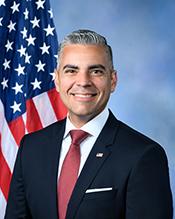
Juan Ciscomani
RAZ-6 · Representative
Full Text
CHIRICAHUA NATIONAL PARK ACT

Congressional Record, Volume 172 Issue 47 (Monday, March 16, 2026) [Congressional Record Volume 172, Number 47 (Monday, March 16, 2026)] [House] [Pages H2525-H2527] From the Congressional Record Online through the Government Publishing Office [ www.gpo.gov ] CHIRICAHUA NATIONAL PARK ACT Mr. WITTMAN. Madam Speaker, I move to suspend the rules and pass the bill (H.R. 6380) to establish the Chiricahua National Park in the State of Arizona as a unit of the National Park System, and for other purposes, as amended. The Clerk read the title of the bill. The text of the bill is as follows: H.R. 6380 Be it enacted by the Senate and House of Representatives of the United States of America in Congress assembled, SECTION 1. SHORT TITLE. This Act may be cited as the ``Chiricahua National Park Act''. SEC. 2. DESIGNATION OF CHIRICAHUA NATIONAL PARK, ARIZONA. (a) Designation.-- (1) In general.--The Chiricahua National Monument in the State of Arizona established by Presidential Proclamation 1692 (54 U.S.C. 320301 note; 43 Stat. 1946) shall be known and designated as ``Chiricahua National Park'' (referred to in this Act as the ``National Park''). (2) Boundaries.--The boundaries of the National Park shall be the boundaries of the Chiricahua National Monument as of the date of enactment of this Act, as generally depicted on the map entitled ``Chiricahua National Park Proposed Boundary'', numbered 145/156,356, and dated March 2021. (3) References.--Any reference in a law, map, regulation, document, or other record of the United States to the Chiricahua National Monument shall be considered to be a reference to the ``Chiricahua National Park''. (4) Availability of funds.--Any funds available for the Chiricahua National Monument shall be available for the National Park. (b) Administration.--The Secretary of the Interior shall administer the National Park in accordance with-- (1) Presidential Proclamation 1692 (54 U.S.C. 320301 note; 43 Stat. 1946); (2) Presidential Proclamation 2288 (54 U.S.C. 320301 note; 52 Stat. 1551); and (3) the laws generally applicable to units of the National Park System, including-- (A) section 100101(a), chapter 1003, and sections 100751(a), 100752, 100753, and 102101 of title 54, United States Code; and (B) chapter 3201 of title 54, United States Code. SEC. 3. TRADITIONAL CULTURAL AND RELIGIOUS SITES. (a) Protection of Sites.-- (1) In general.--The Secretary shall ensure the protection of traditional cultural and religious sites in the National Park in accordance with the laws (including regulations) applicable to the Secretary. (2) Consultation.--In carrying out paragraph (1), the Secretary shall consult with Indian Tribes in accordance with laws applicable to the protection of cultural and religious sites. (b) Access.-- (1) In general.--The Secretary, in accordance with Public Law 95-341 (42 U.S.C. 1996 et seq.)-- (A) shall provide access to the sites described in subsection (a)(1) by members of Indian Tribes for traditional cultural and customary uses; and (B) may, on request of an Indian Tribe, temporarily close to general public use one or more specific areas of the National Park to protect traditional cultural and customary uses in the area by members of the Indian Tribe. (2) Limitation.--In closing a portion of a designated area under paragraph (1)(B), the Secretary shall limit the closure to the smallest practicable area for the minimum period necessary for the traditional cultural and religious activities. (c) Definitions.--In this section: (1) Indian tribe.--The term ``Indian Tribe'' has the meaning given such term in section 4 of the Indian Self- Determination and Education Assistance Act (25 U.S.C. 5304). (2) Secretary.--The term ``Secretary'' means the Secretary of the Interior. The SPEAKER pro tempore. Pursuant to the rule, the gentleman from Virginia (Mr. Wittman) and the gentlewoman from Maryland (Ms. Elfreth) each will control 20 minutes. [[Page H2526]] The Chair recognizes the gentleman from Virginia. General Leave Mr. WITTMAN. Madam Speaker, I ask unanimous consent that all Members may have 5 legislative days to revise and extend their remarks and include extraneous material on H.R. 6380, the bill before us for consideration. The SPEAKER pro tempore. Is there objection to the request of the gentleman from Virginia? There was no objection. Mr. WITTMAN. Madam Speaker, I yield myself such time as I may consume. Madam Speaker, I rise today in support of H.R. 6380, the Chiricahua National Park Act, introduced by Representative Ciscomani of Arizona. This simple, bipartisan bill redesignates the Chiricahua National Monument as Chiricahua National Park. Located in southeast Arizona, Chiricahua is a remarkable place that is known as the Land of Standing-Up Rocks. It is a home to unique volcanic formations, miles of scenic trails, and a landscape shaped by both natural forces and human history. From its ancient volcanic hoodoos and pinnacles to historic sites conserving the history of prehistoric and indigenous people, early pioneers, and ranchers, there is truly no place in the country like Chiricahua. Every year, visitors to this area enjoy unique outdoor recreational activities, including hiking, stargazing, camping, bird-watching, and horseback riding. Across the country, outdoor recreation contributes $1.3 trillion to the U.S. economy. Last year, Arizona saw the second highest growth rate in its outdoor recreation activity amongst all States. By creating the Nation's 64th national park and Arizona's fourth national park, Representative Ciscomani's legislation would further boost Arizona's outdoor recreation economy, create jobs, and support small businesses in rural gateway communities. Importantly, this bipartisan bill does not expand the site's boundaries or change its management. It simply recognizes the national significance of Chiricahua by elevating it to full national park status. The change would place Chiricahua alongside other flagship parks and help raise its profile and support increased tourism. The bill has significant local support. Representative Ciscomani has worked hard with all affected stakeholders to address any potential concerns. Representative Ciscomani added new language to the bill this Congress to ensure continued access for traditional uses for Tribes in a way that respects cultural heritage while maintaining public access to the park without creating new precedents. In short, this bill honors a place of exceptional natural, historical, and cultural value without changing its footprints or management framework. I commend Representative Ciscomani for the years of hard work that he has put in to make the dream of Arizona's fourth national park a reality. I cannot think of a better time than during America's 250th anniversary to send this meaningful legislation to the President's desk, and I urge my colleagues to support this bipartisan bill. Madam Speaker, I reserve the balance of my time. Ms. ELFRETH. Madam Speaker, I rise today in support of H.R. 6380, offered by my colleague, Representative Ciscomani of Arizona, which would redesignate the Chiricahua National Monument as the Chiricahua National Park. Located in the unique Sky Island ecosystem of southeastern Arizona, Chiricahua National Monument is known as the Wonderland of Rocks, which sounds magical. This unique and stunning landscape is filled with pinnacles, spires, and balancing rocks that inspire a sense of awe and wonder. Chiricahua's rock formations are also a biodiversity hotspot that supports a variety of wildlife amid the flowering desert environment. This includes Apache foxes, javelinas, black bears, mountain lions, white-tailed deer, and over 200 bird species. The monument is truly a special place that protects beautiful and important ecosystems, but that is only a part of its story. Tribal communities have deep ties and connections to the landscape. Justine Jimmie, the deputy attorney general of the San Carlos Apache Tribe, testified on this proposal during the 2024 hearing before the House Committee on Natural Resources. Her written statement noted: ``The land that is now Chiricahua National Monument has been our homeland since time immemorial--long before the formation of the United States and before the U.S. Cavalry took our land to give to settlers, pioneers, and miners.'' This history is a history that cannot be ignored, which is why Tribal engagement has been such a critical component in building support for this bill, and I thank the bill sponsor for doing that. The bill ensures Tribes can continue to access important and sacred sites, even permitting temporary closure of areas of the park for Tribal ceremonies. That is a key part of upholding our trust obligations and ensuring Tribal support for this redesignation. The National Park Service itself has noted that the wealth of cultural and natural resources across Chiricahua's landscape makes it a strong candidate for national park status. I am excited about the prospect of designating our Nation's next national park, but I also want to be very clear about what comes next. Our parks and public lands have been short-staffed and underresourced by the current administration, with nearly a quarter of the National Park Service staff departing the agency, some voluntarily and many others involuntarily, since the beginning of last year. Madam Speaker, after approving the designation of this new national park, I urge for full resources and full staffing so that it can meet its mission. As Congress continues to come together to create new national parks to protect our Nation's most special places, we must continue to do everything in our power to make sure our national parks have the staffing and resources they need for the next 250 years and beyond. Madam Speaker, I reserve the balance of my time. Mr. WITTMAN. Madam Speaker, I yield 3 minutes to the gentleman from Arizona (Mr. Ciscomani), the lead sponsor of the bill. Mr. CISCOMANI. Madam Speaker

Referenced legislation: HR6380, HR6380