Floor Speech2026-03-18
Text of Senate Amendment 4492
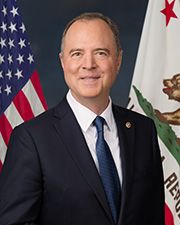
Adam B. Schiff
DCA · Senator
Full Text
Text of Senate Amendment 4492

Congressional Record, Volume 172 Issue 49 (Wednesday, March 18, 2026) [Congressional Record Volume 172, Number 49 (Wednesday, March 18, 2026)] [Senate] [Page S1232] From the Congressional Record Online through the Government Publishing Office [ www.gpo.gov ] SA 4492. Mr. SCHIFF submitted an amendment intended to be proposed by him to the bill S. 1383, to establish the Veterans Advisory Committee on Equal Access, and for other purposes; which was ordered to lie on the table; as follows: At the appropriate place, insert the following: SEC. _____. CORRUPTION CLAWBACK. (a) Short Title.--This section may be cited as the ``Corruption Clawback Act''. (b) Definition.--In this section, the term ``covered payment'' means any portion of any monetary settlement, administrative award, including an award made under section 2672 of title 28, United States Code, or a court-ordered judgment-- (1) paid from the United States Treasury or in accordance with section 1304 of title 31, United States Code; (2) paid to an individual when they served as President; (3) that would not have been paid but for the individual holding the status, authority, or duties associated with their position as President; and (4) relating to an administrative claim filed or settlement reached on or after January 20, 2025. (c) Recovery of Payments Made to the President.-- (1) In general.--The Attorney General shall bring a civil action in the United States Court of Federal Claims or the United States Court of Appeals for the District of Columbia Circuit to recover any covered payment. (2) Considerations.--In determining whether a payment described in subsection (b) would not have been made but for the individual holding the status, authority, or duties associated with their position as President, the court should consider-- (A) whether the officials who authorized or negotiated the covered payment on behalf of the Government were appointed by, or previously served as personal counsel to, the President; (B) whether the amount of the covered payment exceeds typical payouts for similar claims by private citizens; and (C) whether the settlement bypassed standard legal defenses (such as statutes of limitations or sovereign immunity) that career Government lawyers would typically assert. (3) Use of recovered payments.--Any covered payment that is recovered under this section shall be used by the Public Integrity Section of the Criminal Division of the Department of Justice. (d) Report.--Not later than 180 days after the date on which a covered payment that is greater than $1,000,000 is made, the Comptroller General shall submit to Congress a report that includes the considerations described in subsection (c)(2). ______