Floor Speech2025-01-13
Text of Senate Amendment 6
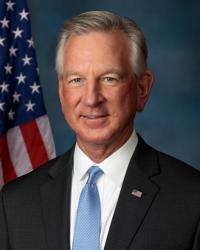
Tommy Tuberville
RAL · Senator
Full Text
Text of Senate Amendment 6

Congressional Record, Volume 171 Issue 6 (Monday, January 13, 2025) [Congressional Record Volume 171, Number 6 (Monday, January 13, 2025)] [Senate] [Pages S94-S95] From the Congressional Record Online through the Government Publishing Office [ www.gpo.gov ] SA 6. Mr. TUBERVILLE submitted an amendment intended to be proposed by him to the bill S. 5, to require the Secretary of Homeland Security to take into custody aliens who have been charged in the United States with theft, and for other purposes; which was ordered to lie on the table; as follows: At the end of the bill, add the following: SEC. 4. SUSPENSION OF ENTRY OF ALIENS. (a) Short Title.--This section may be cited as the ``Border Safety and Security Act of 2025''. (b) Definitions.--In this section: (1) In general.--Except as otherwise provided, the terms used in this section have the meanings given such terms in section 101 of the Immigration and Nationality Act (8 U.S.C. 1101). (2) Covered alien.--The term ``covered alien'' means an alien seeking entry to the United States who is inadmissible under paragraph (6) or (7) of section 212(a) of the [[Page S95]] Immigration and Nationality Act (8 U.S.C. 1182(a)). (3) Operational control.--The term ``operational control'' has the meaning given such term in section 2(b) of the Secure Fence Act of 2006 (8 U.S.C. 1701 note). (c) Authority To Suspend Entry of Aliens at Borders of the United States.--Notwithstanding any other provision of law, if the Secretary of Homeland Security determines, in the discretion of the Secretary, that the suspension of the entry of covered aliens at an international land or maritime border of the United States is necessary in order to achieve operational control over such border, the Secretary may prohibit, in whole or in part, the entry of covered aliens at such border for such period as the Secretary determines is necessary for such purpose. (d) Required Suspension of Entry of Aliens.-- Notwithstanding any other provision of law, the Secretary of Homeland Security shall prohibit the entry of covered aliens for any period during which the Secretary cannot-- (1) detain such covered aliens in accordance with section 235(b)(1)(B) of the Immigration and Nationality Act (8 U.S.C. 1225(b)(1)(B)); or (2) place such covered aliens in a program consistent with section 235(b)(2)(C) of the Immigration and Nationality Act (8 U.S.C. 1225(b)(2)(C)). (e) Enforcement by State Attorneys General.--The attorney general of a State, or another authorized State officer, alleging a violation of a subsection (d) that affects such State or its residents, may bring an action against the Secretary of Homeland Security on behalf of the residents of such State in an appropriate United States district court to obtain appropriate injunctive relief. ______