Floor Speech2026-03-19
ATTENTION MUST BE PAID
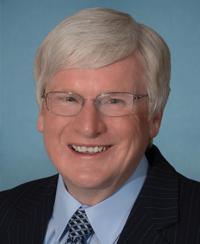
Glenn Grothman
RWI-6 · Representative
Full Text
ATTENTION MUST BE PAID

Congressional Record, Volume 172 Issue 50 (Thursday, March 19, 2026) [Congressional Record Volume 172, Number 50 (Thursday, March 19, 2026)] [House] [Pages H2610-H2612] From the Congressional Record Online through the Government Publishing Office [ www.gpo.gov ] {time} 1120 ATTENTION MUST BE PAID (Under the Speaker's announced policy of January 3, 2025, Mr. Grothman of Wisconsin was recognized for 60 minutes as the designee of the majority leader.) [[Page H2611]] Mr. GROTHMAN. Mr. Speaker, on today, the day when Members fly out, I want to leave the body with some thoughts regarding some issues that I don't think enough attention has been paid to. The first issue I want to talk about is the issue regarding sheltered workshops or community rehabilitation providers. Maybe some of my colleagues have taken tours of these wonderful facilities. They are largely places in which people who have different abilities work, perhaps they have Down syndrome, perhaps they have spina bifida, perhaps they are even quadriplegic. These facilities, however, offer opportunities of employment for people. These are people who years ago had no employment and were stuck, sitting at home, perhaps with their parents, perhaps in a group home, without the opportunity to share in the satisfaction of work and without the ability to supplement their other income. Frequently, that other income amounts to some sort of Social Security disability payment. In any event, I have a bill introduced, which I hope becomes part of the WIOA package in the Education Committee. Under that bill, we are going to try to stop the current trend of closing down these facilities. People who want to close down these facilities do it, in part, by saying people have to try and fail and work three times and get fired three times in the community before they are allowed to work at these facilities. That is really just a horrible thing. As a practical matter, it makes it very difficult for people to work in these sorts of facilities. Secondly, right now, it creates a situation in which these folks do not have the ability to get outside of what I will refer to as day services. Right now--and I encourage all my colleagues to tour facilities like this--right now, if a person works in a facility like this, they have the joy and satisfaction of getting a paycheck just like perhaps the siblings of these people do. There is a great deal of satisfaction in buying your own clothes and in buying gifts for your relatives, which is why it is so important we keep the facilities open and stop the attack of the people who are trying to shut down these facilities. We might ask: Why would anybody shut down these facilities? First of all, people don't like the fact that in these facilities people are frequently making minimum wage, which is true. However, people with some abilities, if we look at the light work they are doing, it is hard to imagine that a profit-making business or any sort of business could operate paying some folks like this over $7.50 an hour. Upon touring them, we immediately see why some of these folks make $6 an hour, $4 an hour, or $3 an hour. The other criticism of them is they feel it is segregating people to put them in a facility with other people who have handicaps. That, of course, is ridiculous. First of all, sitting in facilities like this, we have what I will refer to as management or sometimes people working part time so that they can ramp up the amount of production in these facilities. In any event, they may get to know these folks for 10 or 20 or 30 years. They get to know not only the people with disabilities themselves but, again, people in management. That is much less turnover than if these folks got a job in the community for 5 or 6 hours a week at a fast-food enterprise where there is a great deal of turnover. Like I said, it would be very difficult to find anybody in the community that frequently can provide a 30-hour-a-week or 35-hour-a- week job that you really need if you are going to feel like a working member of the community. Mr. Speaker, I strongly encourage this body, when we pass the WIOA Act out of the Education Committee, we pass a bill with it strengthening these facilities and stopping the foolish regulations that right now are causing, sadly, many of these facilities to close. One more time I ask my colleagues, even if they are doing it to get reelected, why don't they take a tour of these community rehabilitation providers and watch the enjoyment that these employees get in working just like everybody else in society and the huge social benefits they get by establishing lifelong friends in these facilities, who they enjoy spending time with. After all, for these folks, it is even more important than other people to socialize with people they work with. All of us to a degree socialize with our fellow employees. Again, people who have Down syndrome or spina bifida, I think their parents frequently worry what type of friends they will have when they are gone. These facilities provide those lifelong friendships that are so important. Budget Requests and Excessive Employees Mr. GROTHMAN. Mr. Speaker, the next thing I would like to address is soon we are going to take up a budget and begin to take up appropriation bills for the year beginning September 1. We also may be taking up some sort of bill dealing with the hostilities in Iran. Given that, I want to remind people we recently hit $39 trillion in debt in this country. We are borrowing about 25 or 26 percent of our budget. I think all of the folks back home ought to stop and think. Can you imagine what it is like borrowing 26 percent of your budget? It is utterly reckless for anyone to do that in their life or their business, but that is what we are doing right now. Right now, about 14 percent of our tax dollars sent to Washington already go to interest. Obviously, that is the beginning of the downward spiral toward bankruptcy when 14 percent of our budget is on interest. What I will ask--I am sure we will be asked to spend money on a supplemental for the war in Iran, and I am prepared to do that. I do ask leadership to step up to the plate and pass a reconciliation bill or appropriation bills that are a little more responsible than the irresponsible ones in the past. After all, if it is worthwhile to spend billions of dollars, tens of billions, maybe hundreds of billions of dollars in Iran, it is certainly worthwhile that maybe we don't reduce spending to cover all of that but reduce spending to a degree. DOGE, which people begin to forget about, pointed out the huge number of excessive employees in all government agencies. In the Department of Defense right now, we still have just under 700,000 people who are nonuniformed personnel. In other words, people are sitting in front of a computer for the Department of Defense. Mr. Speaker, I don't think anybody can argue that that number is high. We reduced the number mildly by providing buyouts for people. We reduced the number by putting in hiring freezes so if that people retire, they don't get replaced. That only reduced the employment by 60,000 or 70,000 people. Mr. Speaker, I think if you ask around, you will find people who know through their relatives or people in their apartment building or people in their church that there are still probably hundreds of thousands of people who are working there unnecessarily. Before the Department of Defense comes back with or at the same time they come back with requests for a supplemental to spend more money, I think it is important for the Department of Defense to come back and explain to us what they have done to reduce the number of employees there and for the administration overall to look at the number of employees in all other agencies, as well as programs in other agencies, and say this is what we have to cut if we are going to begin to fund the Iran war. {time} 1130 I am not even asking for $1 for $1 or $1 cut for every $2 spent. Maybe $1 reduction for every $3 spent would be appropriate, but I hope they don't insult the next generation by just asking for additional spending. No Funding for Early Transgender Surgeries Mr. GROTHMAN. Mr. Speaker, the next issue I would like to address is one that Dr. Oz got in the paper for, and that is the transgender situation in this country. I frequently hear conservative commentators, FOX News in particular, who talk about boys in girls' sports. We shouldn't have boys in girls' sports. However, I think that kind of implies that if we solve that problem, we solve the transgender problem. That is not true. Recent studies have shown a dramatic reduction in the number of people who claim to be [[Page H2612]] transgender. I think for people like me, that is not a surprise at all because I think a lot of people who are being transgender are being transgender because they are egged on by psychiatrists or egged on by school counselors, or even more, egged on by popular culture as a way to find a peer group and as way to kind of be, you know, the cool rebel. Yet, Dr. Oz has taken on the medical groups, including the American Psychiatric Association, who have been in favor of identifying people as transgender and even giving them puberty blockers and, worse, giving them surgeries before age 18. Now, I don't know how anybody, any medical professional, anybody with a wit of common sense, would give anybody surgery before 25 years old because you know that people change their minds about things, and obviously if you have one of these dramatic surgeries and realize later that you made a mistake, it is going to result in huge psychiatric problems. So I strongly encourage Dr. Oz to get more involved in this. I strongly encourage this body to lower their opinion of the American Psychiatric Association because these people who have spent a long period of time in school apparently have a complete and utter lack of common sense, and one wonders why we are listening t