Floor Speech2026-03-18
Text of Senate Amendment 4630
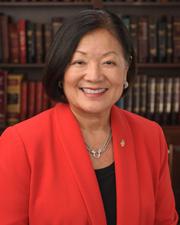
Mazie K. Hirono
DHI · Senator
Full Text
Text of Senate Amendment 4630

Congressional Record, Volume 172 Issue 49 (Wednesday, March 18, 2026) [Congressional Record Volume 172, Number 49 (Wednesday, March 18, 2026)] [Senate] [Pages S1278-S1279] From the Congressional Record Online through the Government Publishing Office [ www.gpo.gov ] SA 4630. Ms. HIRONO submitted an amendment intended to be proposed by her to the bill S. 1383, to establish the Veterans Advisory Committee on Equal Access, and for other purposes; which was ordered to lie on the table; as follows: Strike all after the enacting clause and insert the following: SECTION 1. SHORT TITLE. This Act may be cited as the ``Right to Contraception Act''. SEC. 2. DEFINITIONS. In this Act: (1) Contraception.--The term ``contraception'' means an action taken to prevent pregnancy, including the use of contraceptives or fertility-awareness-based methods and sterilization procedures. (2) Contraceptive.--The term ``contraceptive'' means any drug, device, or biological product intended for use in the prevention of pregnancy, whether specifically intended to prevent pregnancy or for other health needs, that is approved, cleared, authorized, or licensed under section 505, 510(k), 513(f)(2), 515, or 564 of the Federal Food, Drug, and Cosmetic Act (21 U.S.C. 355, 360(k), 360c(f)(2), 360e, 360bbb-3) or section 351 of the Public Health Service Act (42 U.S.C. 262). (3) Government.--The term ``government'' includes each branch, department, agency, instrumentality, and official of the United States or a State. (4) Health care provider.--The term ``health care provider'' means any entity or individual (including any physician, certified nurse-midwife, nurse, nurse practitioner, physician assistant, and pharmacist) that is licensed or otherwise authorized by a State to provide health care services. (5) State.--The term ``State'' includes each of the 50 States, the District of Columbia, the Commonwealth of Puerto Rico, each territory and possession of the United States, and each Indian Tribe (as defined in section 4 of the Indian Self-Determination and Education Assistance Act (25 U.S.C. 5304)), and any political subdivision of any of the foregoing, including any unit of local government, such as a county, city, town, village, or other general purpose political subdivision of a State. SEC. 3. FINDINGS. Congress finds the following: (1) The right to contraception is a fundamental right, central to an individual's privacy, health, well-being, dignity, liberty, equality, and ability to participate in the social and economic life of the Nation. (2) The Supreme Court has repeatedly recognized the constitutional right to contraception. (3) In Griswold v. Connecticut (381 U.S. 479 (1965)), the Supreme Court first recognized the constitutional right for married people to use contraceptives. (4) In Eisenstadt v. Baird (405 U.S. 438 (1972)), the Supreme Court confirmed the constitutional right of all people to legally access contraceptives regardless of marital status. (5) In Carey v. Population Services International (431 U.S. 678 (1977)), the Supreme Court affirmed the constitutional right to contraceptives for minors. (6) The right to contraception has been repeatedly recognized internationally as a human right. The United Nations Population Fund has published several reports outlining family planning as a basic human right that advances women's health, economic empowerment, and equality. (7) Access to contraceptives is internationally recognized by the World Health Organization as advancing other human rights such as the right to life, liberty, expression, health, work, and education. (8) Contraception is safe, essential health care, and access to contraceptive products and services is central to people's ability to participate equally in economic and social life in the United States and globally. Contraception allows people to make decisions about their families and their lives. (9) Contraception is key to sexual and reproductive health. Contraception is critical to preventing unintended pregnancy, and many contraceptives are highly effective in preventing and treating a wide array of medical conditions and decrease the risk of certain cancers. (10) Contraception has been associated with improved health outcomes for women, their families, and their communities and reduces rates of maternal and infant mortality and morbidity. (11) The United States has a long history of reproductive coercion, including the childbearing forced upon enslaved women, as well as the forced sterilization of Black women, Puerto Rican women, indigenous women, immigrant women, and disabled women, and reproductive coercion continues to occur. This history also includes the coercive testing of contraceptive pills on women and girls in Puerto Rico. (12) The right to make personal decisions about contraceptive use is important for all Americans, and is especially critical for historically marginalized groups, including-- (A) Black, indigenous, and other people of color; (B) immigrants; (C) LGBTQ+ people; (D) people with disabilities; (E) people paid low wages; and (F) people living in rural and underserved areas. (13) Many people who are part of the marginalized groups described in paragraph (12) already face barriers, exacerbated by social, political, economic, and environmental inequities, to comprehensive health care, including reproductive health care, that reduce their ability to make decisions about their health, families, and lives. (14) State and Federal policies governing pharmaceutical and insurance policies affect the accessibility of contraceptives and the settings in which contraception services are delivered. (15) People engage in interstate commerce to access contraception services. (16) To provide contraception services, health care providers employ and obtain commercial services from doctors, nurses, and other personnel who engage in interstate commerce and travel across State lines. (17) Congress has the authority to enact this Act to protect access to contraception pursuant to-- (A) its powers under the Commerce Clause of section 8 of article I of the Constitution of the United States; (B) its powers under section 5 of the Fourteenth Amendment to the Constitution of the United States to enforce the provisions of section 1 of the Fourteenth Amendment; and (C) its powers under the necessary and proper clause of section 8 of article I of the Constitution of the United States. (18) Congress has used its authority in the past to protect and expand access to contraception information, products, and services. (19) In 1970, Congress established the family planning program under title X of the Public Health Service Act (42 U.S.C. 300 et seq.), the only Federal grant program dedicated to family planning and related services, providing access to information, products, and services for contraception. (20) In 1972, Congress required the Medicaid program to cover family planning services and supplies and the Medicaid program currently accounts for 75 percent of Federal funds spent on family planning. (21) In 2010, Congress enacted the Patient Protection and Affordable Care Act (Public Law 111-148) (referred to in this section as the ``ACA''). Among other provisions, the ACA included provisions to expand the affordability and accessibility of contraception by requiring health insurance plans to provide coverage for preventive services with no patient cost-sharing. (22) States have tried to ban access to some or all contraceptives by restricting access to public funding for these products and services. Furthermore, Arkansas, Mississippi, Missouri, and Texas have infringed on people's ability to access their contraceptive care by violating the free choice of provider requirement under the Medicaid program. (23) Providers' refusals to offer contraceptives and information related to contraception based on their own personal beliefs impede patients from obtaining their preferred method of contraception, with laws in 12 States as of the date of introduction of this Act specifically allowing health care providers to refuse to provide services related to contraception. (24) States have attempted to define abortion expansively so as to include contraceptives in State bans on abortion and have also restricted access to emergency contraception. (25) Justice Thomas, in his concurring opinion in Dobbs v. Jackson Women's Health Organization (142 S. Ct. 2228 (2022)), stated that the Supreme Court ``should reconsider all of this Court's substantive due process precedents, including Griswold, Lawrence, and Obergefell'' and that the Court has ``a duty to correct the error established in those precedents'' by overruling them. (26) In order to further public health and to combat efforts to restrict access to reproductive health care, congressional action is necessary to protect access to contraceptives, contraception, and information related to contraception for everyone, regardless of actual or perceived race, ethnicity, sex (including gender identity and sexual orientation), income, disability, national origin, immigration status, or geography. SEC. 4. PURPOSES. The purposes of this Act are-- (1) to provide a clear and comprehensive right to contraception; (2) to permit individuals to seek and obtain contraceptives and engage in contraception, [[Page S1279]] and to permit health care providers to facilitate that care; and (3) to protect an individual's ability to make decisions about their body, medical care, family, and life's course, and thereby protect the individual's ability to participate equally in the economic and social life of the United States. SEC. 5. PERMITTED SERVICES. (a) In General.--An individual has a statutory right under this Act to obtain contraceptives and to voluntarily engage in contraception, free from coercion, and a health care provider has a corresponding right to provide contraceptives, contraception, and information, referrals, and services related to contraception