Floor Speech2026-03-24
WOMEN'S HISTORY MONTH
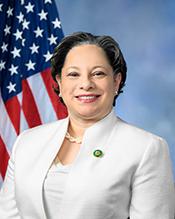
Jennifer L. McClellan
DVA-4 · Representative
Full Text
WOMEN'S HISTORY MONTH

Congressional Record, Volume 172 Issue 55 (Tuesday, March 24, 2026) [Congressional Record Volume 172, Number 55 (Tuesday, March 24, 2026)] [House] [Pages H2669-H2672] From the Congressional Record Online through the Government Publishing Office [ www.gpo.gov ] WOMEN'S HISTORY MONTH Under the Speaker's announced policy of January 3, 2025, Ms. McClellan of Virginia was recognized for 60 minutes as the designee of the minority leader. General Leave Ms. McCLELLAN. Mr. Speaker, I ask unanimous consent that all Members may have 5 legislative days to revise and extend their remarks and include extraneous material on the subject matter of this Special Order. The SPEAKER pro tempore (Mr. Kennedy of Utah). Is there objection to the request of the gentlewoman from Virginia? There was no objection. Ms. McCLELLAN. Mr. Speaker, it is Women's History Month. For centuries, Black women have led our country through social evolutions, critical periods of growth, and eras of innovation. From the civil rights movement to consistently serving as the foundation for our community success, Black women continue to push the needle. Women's History Month offers us the opportunity to uplift these monumental achievements and highlight every pivotal moment in history in which Black women have tipped the scales toward progress and singlehandedly moved our country forward. For the past year, the actions of the Trump administration have brought consequences to every vulnerable community but have specifically attacked the foundation of Black women's economic success and social impact. Hundreds of thousands of Black women have lost their jobs under President Trump's leadership, and the administration remains committed to eliminating critical programs that build a strong foundation and a pathway to economic opportunities for Black women across the Nation. During a time when Black women are under attack, the Congressional Black Caucus takes the floor tonight so that our Members can lift them up. As we commemorate Women's History Month and look back on the achievements of Black women throughout the history of our Nation, I think back to the roots of our Nation, the birthplace of American democracy and American slavery, none other than my home, Virginia. Established on July 30, 1619, Virginia boasts the oldest, continuous lawmaking body in the Western Hemisphere, the first legislative assembly in the New World, the Virginia General Assembly. One month later, a Dutch privateer arrived on the shores of Virginia with ``20 and odd'' Africans captured by Portuguese slavers in west- central Africa that were traded for provisions. Among them, there was at least one woman that we know of. Three months after that, Virginia took steps toward a permanent colony with the recruitment of English women to Jamestown to make wives to the inhabitants. Those women arrived with no right to vote, no right to hold public office, and no right to control their own property. Since 1619, Black women in America have sat at the intersection of racism and sexism. Tonight, we will uplift their stories, how we did overcome, but we still have a long way to go to truly be equal under the law, to truly take part in the American Dream. Tonight, you will hear our Members talk about the good, the bad, the ugly, the inspiring, and much, much more. Mr. Speaker, to start that conversation, I yield to the gentlewoman from New York (Ms. Clarke), our chair. {time} 1930 Ms. CLARKE of New York. Mr. Speaker, I thank the gentlewoman from Virginia for anchoring this evening's Congressional Black Caucus Special Order hour and for her diligence and commitment to sending the message of the CBC throughout this Nation. Mr. Speaker, I rise today as chair of the Congressional Black Caucus and co-chair of the Congressional Caucus on Black Women & Girls to recognize Women's History Month and the countless contributions women have made to our Nation and to the world. These 31 days offer a vital opportunity to honor women of every background for their achievements, which have too often been overlooked, celebrating the progress and rights secured by those who have paved the way. Even as we celebrate, we must confront a difficult truth: many of the same barriers that our mothers and grandmothers fought to dismantle unfortunately persist today. Disparities in access to capital, education, opportunity, and power remain far too wide. We cannot ignore the growing efforts to roll back hard-won rights. We cannot yield to forces that would usher in a future where the next generation of women has fewer freedoms than those who came before them. This is not an exaggeration or hyperbole. Policies that undermine diversity, equity, and inclusion already having real consequences, including the displacement of over 300,000 Black women from the workforce on the basis of DEI dog whistles. Let's be clear. These are not statistics. These are our mothers, daughters, entrepreneurs, and essential workers whose contributions are being shoved aside and whitewashed. We know when Black women thrive, our communities thrive, our Nation thrives. Women's History Month must also be a call to action and a moment to speak plainly about the threats to women's voting rights, bodily autonomy, and economic opportunities to support their families. Mr. Speaker, we are not going back. We owe it to those who came before us and those who will follow to stand firm in defense of that progress. Ms. McCLELLAN. Mr. Speaker, I now yield to the gentlewoman from New Jersey, Representative LaMonica McIver. Mrs. McIVER. Mr. Speaker, I thank the fine gentlewoman of Virginia (Ms. McClellan) for anchoring tonight's Special Order hour to celebrate Women's History Month and to celebrate and speak truth tonight. I am glad to be standing here during Women's History Month right after Black History Month to celebrate specifically Black women. [[Page H2670]] Black women have always looked at this country and thought and asked: How can I make it better? They then fought for that ``better.'' When we weren't given a seat at the table, we made it our mission to bring a folding chair. We have always stood in the gaps. We have a long history of being first to take on the fights that others would not take on. Looking at the pain and suffering among our families, neighbors, and friends, and deciding to step in to protect the vulnerable and speak out for the voiceless, especially when those in power won't fight for us. We fight for us. We know our liberation is tied to the liberation of others: Black, Brown, immigrant, citizens, every race, every gender, all of us. We know that truth, and that is why there is continually so much effort put toward stopping us. Even if this very body in this very Chamber, Black women are under attack. We are currently witnessing a coordinated and vicious assault on the foundations of our freedom and history. We are seeing the effects of reckless economic policies, forcing hundreds of thousands of Black women out of the workforce. We are watching Black women stripped of our healthcare and maternal care. With every statistic, there are real human costs behind them. There are mornings that I wake up feeling exactly how they want us to feel: powerless, hopeless, angry, and tired. It is the example of the Black women leaders that came before me that remind me that we cannot back down. There is no progress through comfort. Now is not the time to become complacent. Yes, we are tired. We are being pushed, but now is the moment for neck-deep courage. Just last month I was in Selma for the remembrance of Bloody Sunday. A speaker referenced how in Exodus, Moses went neck-deep into the Red Sea before it was parted. He took the first step toward a raging ocean because he knew that his prayer to be liberated would manifest. She spoke of how Harriet Tubman went neck-deep to wade in the water, facing the threat of death, because she knew that freedom was worth fighting for. Mr. Speaker, the toughest fights to freedom require you to go neck- deep. Every generation must step up and ask: Are we neck-deep people? And one thing I know is that is who Black women truly are. I am saying it plain: Black women are under attack, but we are not going to be silenced or scared--not now, not ever. Ms. McCLELLAN. Mr. Speaker, I thank the gentlewoman (Mrs. McIver) for her comments, and I am proud to be in this fight with her. As a Virginian, I am keenly cognizant of the fact that Virginia was both the birthplace of American slavery and the birthplace of American democracy. That dichotomy I have always found both ironic and inspiring. This year we celebrate 250 years of a document written by Thomas Jefferson, the Declaration of Independence, which wrote that all men are created equal and endowed by their creator with certain inalienable rights; that among these are life, liberty, and the pursuit of happiness. Yet Jefferson didn't include the men and women--he didn't include women at all in that decree, and he certainly didn't include the men, women, and children that he owned in bondage at Monticello, including the mother of his children. That ideal upon which our country was founded sparked the imagination of the men, women, and children in bondage across this young Nation. When Abigail Adams' husband was on his way to the Constitutional Convention, she said: Remember the ladies and be kinder to them than our ancestors were. The men at that convention ignored her advice. They wrote a constitution creating a government by, of, and for we the people. They didn't include women. They didn't include the men, women, and children enslaved at the home of James Madison, the architect of The Virginia Plan that led to the Constitution. In fact, those men, women, and children weren't counted as people at all. They were counted as three- fifths of a person for purposes of identifying how many Members of Congress would serve in this body. Many of those women were viewed as broodmares. Many of