Floor Speech2025-01-16
HONORING AND CELEBRATING THE BIRTH OF CIVIL RIGHTS ICON, REVEREND DR. MARTIN LUTHER KING, JR.
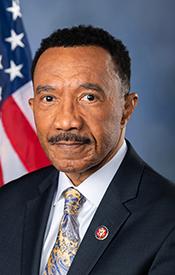
Kweisi Mfume
DMD-7 · Representative
Full Text
HONORING AND CELEBRATING THE BIRTH OF CIVIL RIGHTS ICON, REVEREND DR. MARTIN LUTHER KING, JR.

Congressional Record, Volume 171 Issue 9 (Thursday, January 16, 2025) [Congressional Record Volume 171, Number 9 (Thursday, January 16, 2025)] [House] [Pages H213-H215] From the Congressional Record Online through the Government Publishing Office [ www.gpo.gov ] HONORING AND CELEBRATING THE BIRTH OF CIVIL RIGHTS ICON, REVEREND DR. MARTIN LUTHER KING, JR. The SPEAKER pro tempore. Under the Speaker's announced policy of January 3, 2025, the gentleman from Maryland (Mr. Mfume) is recognized for 60 minutes as the designee of the minority leader. Mr. MFUME. Mr. Speaker, I may not use the entire 60 minutes, but I appreciate the opportunity. I would encourage other Members of the House, who are still in town, to certainly come over and to seek recognition on this as I try to talk a bit about Dr. Martin Luther King, Jr., and why it is so very important that we, at least here in the House, take a moment or two or, in this case an hour or less, to reflect on the life, the legacy, and even some of the myths that have circulated over the years. Mr. Speaker, I am honored today to rise to really celebrate the birth of civil rights icon and leader, Dr. Martin Luther King, Jr., who, had he lived, would have been 96 years of age yesterday, and to talk a bit about the dream that he tried to put forward in his short 39 years of life, a dream that he felt would be the North Star and the beacon for our country with respect to human rights and human dignity. As I thought about that and I thought about his dream, I am reminded of a passage in Scripture, Mr. Speaker, in the book of Genesis, chapter 37 and verse 18, where it says, ``And when they saw him afar off, even before he came near unto them, they conspired against him to slay him. And they said one to another: Behold, this dreamer cometh. Come now therefore, and let us slay him, and cast him into some pit, and we will say some evil beast hath devoured him and we shall see what will become of his dreams.'' Well, that dream, despite the bullet of a lone assassin on April 4, 1968, did very much grow, thrive, and replicate itself as a dream not just for a race of people or group of people but as a dream for an entire Nation. I remember in 1980, as a young member of the Baltimore City Council, petitioning the council to join with other local governments around the Nation to push for the establishment of a Martin Luther King, Jr., holiday in our respective towns, cities, and hamlets. For years, every January 15, I, along with so many others, would drive from Baltimore to Washington to join civil rights leaders and recording artists like Gil Scott-Heron, The Last Poets, Stevie Wonder, Diana Ross, Jesse Jackson, Congressman John Conyers, and thousands of others, and we would rally right here on the steps of this Capitol, in the cold, in January, on the 15th of each year, again, to petition for the establishment of a Martin Luther King, Jr., holiday. {time} 1245 I, like many others, recognize that that in and of itself was a beginning. The real beginning, however, has to go back to the Federal legislation that recognizes Martin Luther King Jr. Day as the bill introduced first by Congressman John Conyers of Michigan just days after the assassination of Dr. King. Unfortunately, it would take 15 years of those protests, perseverance, attempts, tenacity, and pure resolve by civil rights leaders and others across this Nation for the holiday to become recognized, and then finally signed into law by President Ronald Reagan in 1983. Then, unfortunately, it would take an additional 17 years for it to be recognized in all 50 States across the country. Fittingly, Martin Luther King Jr. Day was designed to intentionally inspire all Americans to volunteer and to give back to their communities. In fact, it is the only Federal holiday classified as a national day of service. Like so many others, I feel personally driven out of my respect for the life and legacy of Dr. King to find a way to celebrate this observance through acts of service, for it is only through reflecting the values and the morals and the principles of Dr. King into our lives that we will enact the dream that he has so often been associated with, where justice is the supreme ruler, freedom is the dominant creed, and equity the common practice. I would urge us to take a moment in this discussion or any other discussion, a moment of remembrance to really talk about Dr. Martin Luther King, Jr., the man, the myth, and the legacy. I think it is important to point out that Dr. King was born, as I said before, on January 15, 1929, in the segregated south in Atlanta, Georgia, where his grandfather began the family's tenure many, many years ago in another State as the pastor of the Ebenezer Baptist Church. After graduating from Morehouse College and Crozer Theological Seminary, Dr. King then enrolled in graduate studies at Boston University. It was in Boston where Dr. King would meet Coretta Scott, who was also a student at the nearby New England Conservatory. As we all know and as history has taught us, the two would ultimately marry, and Coretta Scott would become Coretta Scott King, and together they would be a formidable force in their own right, in their own time, and in joint pursuit of equality and justice for all. This remarkable partnership between Dr. King and Coretta Scott King also brought forth four children who grew up to embrace, uphold, and protect the values that their parents had devoted their lives to. I would be remiss if I did not uplift the names of Martin Luther King III, Bernice Albertine King, Yolanda Denise King, and Dexter Scott King, who we unfortunately lost last January. In 1954, as I indicated, their father became the pastor of the Dexter Avenue Baptist Church in Montgomery, Alabama. Dr. King, by this time, was a member of the Executive Committee of the NAACP and would join also the Montgomery Improvement Association. He would also help to create the Southern Christian Leadership Conference, an organization that was formed to provide leadership for a growing and sustaining civil rights movement. Dr. King rose to prominence as a revered leader of that movement in 1955, when a young woman, a seamstress by the name of Rosa Parks, refused to move to the back of the bus in Montgomery because of the color of her skin. Inspired by one woman's act of moral courage, in the face of an immoral systemic system of law, Dr. King led the Montgomery Bus Boycott that lasted 381 days and is heralded as the catalyst, that one act that began the modern civil rights movement. Now, in order to understand it, you have to keep it in its proper context. Citizens of Montgomery were so outraged that they could pay and were forced like everyone else to pay their taxes, that they could contribute to the economy, that they could find a way to sustain families, and that they could find a way, as all citizens did, to support the government there, only to be told that they could not ride a bus to get to work unless they sat in the back of the bus because of the color of their skin. It might be difficult to understand, but it is important to point out that those men and women who wanted to maintain and hold onto their dignity decided that they would walk to work, walk to the store, walk to church as opposed to sitting in the back of that bus any longer. Mr. Speaker, 381 days is a lot of days, and it takes a lot of resolve to get through something like that. It is one thing to see it in a history book. It is another thing if you are living it and you are walking all those miles every day, through summer, winter, fall, and spring, back and forth, to do the things that you had to do, like get to your job, the things you needed to do, to shop for groceries, and to be able to do anything else, but they did it for 381 days. They did it because of the inspiration that they got from Rosa Parks, and they did it also because of the inspiration that they got from this young preacher by the name of Martin Luther King, Jr. During that boycott, Dr. King was arrested. His home was bombed, and he was subjected to personal abuse over and over again. Now, he was arrested. No one else that did anything else to stop him was arrested, but he was arrested simply for articulating the problem, supporting the efforts of Ms. Parks, and encouraging a community to stand up and to speak for itself. As I said, his home was bombed. He was subjected to all kinds of insults and personal abuse. By the way, Dr. King was locked up in jail 29 times for standing up for fairness and fair play. [[Page H214]] Yet, he never matched the violence he got with violence of his own. On June 5, 1956, a Federal District Court ruled that the State of Alabama's segregation policy on public buses was, in fact, unconstitutional. When the United States Supreme Court upheld that ruling, it was affirmed that the Montgomery Bus Boycott, led by Dr. King as a result of the efforts of Rosa Parks, was a true story of triumph, and it was, in fact, for many, year after year, a focal point on what civil disobedience can look like and what success can be born of it. Dr. Martin Luther King, Jr., would go on to travel for over 6 million miles, speaking over 2,500 times to launch his nonviolent protest movement that spanned the Nation. It began to grow, and it began to unfurl, and it found its way, reaching and touching the hearts of a lot of people who never even gave a thought about civil rights, but when they thought about their own selves, their own families, and their own desire to live and grow up in a country that many of whom had fought for overseas and defended with their lives, people then realized that this was not just about Martin Luther King or Rosa Parks, but it was, in fact, about the moral consciousness of our Nation. After that successful boycott, Dr. King was arrested again, this time in Birmingham. It was in Birmingham when he wrote and declared from a cell a number of things that America mu