Floor Speech2026-03-24
SUPERSONIC AVIATION MODERNIZATION ACT
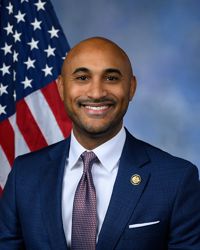
Shomari Figures
DAL-2 · Representative
Full Text
SUPERSONIC AVIATION MODERNIZATION ACT

Congressional Record, Volume 172 Issue 55 (Tuesday, March 24, 2026) [Congressional Record Volume 172, Number 55 (Tuesday, March 24, 2026)] [House] [Pages H2661-H2662] From the Congressional Record Online through the Government Publishing Office [ www.gpo.gov ] SUPERSONIC AVIATION MODERNIZATION ACT Mr. TAYLOR. Madam Speaker, I move to suspend the rules and pass the bill (H.R. 3410) to allow for the operation of civil supersonic flight in the national airspace system under certain conditions, and for other purposes, as amended. The Clerk read the title of the bill. The text of the bill is as follows: H.R. 3410 Be it enacted by the Senate and House of Representatives of the United States of America in Congress assembled, SECTION 1. SHORT TITLE. This Act may be cited as the ``Supersonic Aviation Modernization Act''. SEC. 2. ALLOWING FOR THE OPERATION OF CIVIL SUPERSONIC FLIGHT. (a) In General.--Not later than 1 year after the date of enactment of this section, the Administrator of the Federal Aviation Administration shall issue or revise such regulations, such as section 91.817 of part 14, Code of Federal Regulations, as are necessary to allow for the operation of civil aircraft (as defined in section 40102(16) of title 49, United States Code) without special authorization within the national airspace system at a Mach number greater than 1 so long as the aircraft is operated in such a manner that no sonic boom reaches the ground in the United States. (b) Compliance With Noise Standards.--Not later than April 1, 2027, the Administrator shall issue a final rule establishing noise standards under part 36 of title 14, Code of Federal Regulations, requiring civil aircraft granted authority to operate pursuant to subsection (a) not to exceed the most recent takeoff and landing noise levels required for subsonic aircraft currently in operation on the date of enactment. (c) Periodic Review.--In issuing the final rule issued under subsection (b), the Administrator shall further specify a process for periodic review and update of the rule to reflect future advances in aircraft noise reduction technology and relevant regulatory changes, as determined by the Administrator. The SPEAKER pro tempore. Pursuant to the rule, the gentleman from Ohio (Mr. Taylor) and the gentleman from Alabama (Mr. Figures) each will control 20 minutes. The Chair recognizes the gentleman from Ohio. General Leave Mr. TAYLOR. Madam Speaker, I ask unanimous consent that all Members may have 5 legislative days in which to revise and extend their remarks and include extraneous material into the Record on H.R. 3410. The SPEAKER pro tempore. Is there objection to the request of the gentleman from Ohio? There was no objection. Mr. TAYLOR. Madam Speaker, I yield myself such time as I may consume. Madam Speaker, H.R. 3410, the Supersonic Aviation Modernization Act, or the SAM Act, lays the preliminary framework for a return to civil supersonic aircraft operations in the United States. The SAM Act directs the administrator of the Federal Aviation Administration to issue or revise current regulations that are outdated and, in some cases, to create an artificial speed limit that hampers American innovation. Despite these restrictions, engine technology has continued to mature and successfully demonstrate that it is feasible to conduct supersonic operations in the National Airspace System [[Page H2662]] without generating a sonic boom that reaches the ground. Furthermore, the SAM Act builds on key work done in the FAA Reauthorization Act of 2024 to usher in a new age of American innovation in the skies. President Trump's executive order titled: ``Leading the World in Supersonic Flight'' documented the importance of American leadership in this reemerging sector of aviation. To that end, the time is now. Let's come together and support American business and innovation. Madam Speaker, I urge support for this legislation, and I reserve the balance of my time. Mr. FIGURES. Madam Speaker, I yield myself such time as I may consume. Madam Speaker, I rise in support of H.R. 3410, the Supersonic Aviation Modernization Act, as amended, bipartisan legislation introduced by Representative Nehls and Representative Davids. One of the priorities of the Transportation and Infrastructure Committee, which I have the privilege of sitting on with my colleague from Ohio, Representative Taylor, is to look for new ways to help our constituents have a better flying experience. Supersonic flight is poised to be another paradigm shift in the aviation industry, especially if it can be done in ways that maintain safety and limit noise and sonic booms. However, currently supersonic aircraft are prohibited from operating in the U.S. without a special authorization from the FAA. H.R. 3410, as amended, is the first step to eventually allowing Americans to safely travel across the country at almost half the time it takes now, providing more time for being productive or spending the time with family and not on a plane. The bill would require the FAA to revise current regulations to ensure supersonic aircraft could fly in the U.S. as long as these operations do not create a supersonic boom that reaches the ground. It would also help ensure these aircraft would not create noise levels any higher than traditional aircraft that are currently in operation. This bipartisan bill also calls for future updates to the standard by the FAA to ensure supersonic aircraft become even quieter in the future. Furthermore, the bill ensures that these noise standards are periodically reviewed and further updated to reflect the latest advances in aircraft technology. While Congress and the FAA should continue working to make supersonic flight more sustainable, I am greatly encouraged that the industry stakeholders are designing their supersonic aircraft to fly completely on sustainable aviation fuel. The potential benefits to consumers are promising: less time on the aircraft and more time building that new business or spending time with friends and family. Madam Speaker, I thank the Aviation Subcommittee Chairman Nehls and Representative Davids from Kansas for their leadership on this legislation. I support this legislation and urge my colleagues to do the same. Madam Speaker, in closing we should have been here a long time ago in terms of being able to build on the supersonic technology that has been out for years. It has been over two decades now since a supersonic aircraft has been used in a commercial context, and we have the technological advances to be able to do so and do so safely and efficiently. This legislation is common sense. It pushes back or guards against the things that had the most worries in previous iterations of this type of technology, particularly sonic booms reaching the ground and noise levels. The flying public deserves a better flying experience, and this bill is a step in the right direction of being able to provide that. That is why I support it, and I urge my colleagues to do the same. Madam Speaker, I yield back the balance of my time. Mr. TAYLOR. Madam Speaker, I yield myself the balance of my time. Madam Speaker, in closing, I thank Aviation Subcommittee Chairman Representative Nehls for his leadership on this issue. A return of civil supersonic operations within the National Airspace System will reimagine how Americans travel and commute, opening new possibilities for people and commerce to traverse this great Nation. Think of the possibilities: DC to Los Angeles in just 2 hours. While this may seem far-fetched, it is closer to reality than many would believe. In fact, several U.S. airlines already have preorders of supersonic jets. To reiterate, the SAM Act will revise current outdated regulations and place the United States in a prime position to be the global leader in civil supersonic technologies. Madam Speaker, I urge support of this bill, and I yield back the balance of my time. Mr. NEHLS. Madam Speaker, I rise in strong support of H.R. 3410, the Supersonic Aviation Modernization Act, which will help unlock the next era of American aviation innovation. My bill directs the Federal Aviation Administration (FAA) to update its regulations to allow civil supersonic flight within the National Airspace System, provided that no audible sonic boom reaches the ground. It is a balanced, commonsense approach that prioritizes both technological advancement and the protection of communities on the ground. Current FAA restrictions, which have remained unchanged since 1973, broadly prohibit commercial supersonic flight over land without special authorization. While these rules were appropriate for their time, they no longer reflect the state of modern aerospace technology. Today, advancements in engine design, aerodynamics, and materials have made it possible to achieve speeds above Mach I without generating audible sonic booms at ground level. American companies are already demonstrating that quieter supersonic flight is not only feasible, but safe and reliable. It is essential that the FAA modernize its regulatory framework to reflect these technological realities. By establishing clear, science and evidence-based standards, we can provide certainty to innovations while ensuring the highest safety standards. This legislation also reinforces key provisions outlined in President Trump's executive order aimed at ensuring U.S. leadership in civil supersonic aviation, making clear that outdated regulations should not stand in the way of American ingenuity. H.R. 3410 represents an opportunity for the United States to reclaim and strengthen its leadership in global aviation. By embracing innovation while maintaining rigorous safety and noise standards, we can accelerate the development of future-generation air travel, create high-skilled jobs, and ensure that American companies, not foreign competitors, set the pace for the future of flight. I urge my colleagues to support this legislation and hel

Referenced legislation: HR3410, HR3410