Floor Speech2026-03-19
SPEAKING TRUTH ABOUT CRYPTO AND CONGRESS
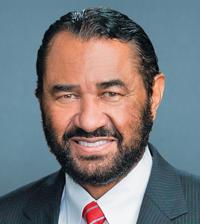
Al Green
DTX-9 · Representative
Full Text
SPEAKING TRUTH ABOUT CRYPTO AND CONGRESS

Congressional Record, Volume 172 Issue 50 (Thursday, March 19, 2026) [Congressional Record Volume 172, Number 50 (Thursday, March 19, 2026)] [House] [Pages H2612-H2615] From the Congressional Record Online through the Government Publishing Office [ www.gpo.gov ] {time} 1140 SPEAKING TRUTH ABOUT CRYPTO AND CONGRESS (Under the Speaker's announced policy of January 3, 2025, Mr. Green of Texas was recognized for 30 minutes.) Mr. GREEN of Texas. Mr. Speaker, and still I rise. I rise today, Mr. Speaker, with a very special topic. I rise today, Mr. Speaker, because I am a liberated, unbought, unbossed Democrat. I not only speak the truth to power; I speak truth about power. You speak truth to power by simply saying: ``Power, there is a problem. Let's solve it.'' It is a great thing to do. When you speak truth about power, you say: ``Power, there is a problem, and you are it.'' Today, I am going to speak truth about power. I am going to do so because I will not allow the power that I am to speak about to intimidate me. I insist on having the full benefit of my [[Page H2613]] free speech rights, and I will take advantage of them. If it should cost me, I will pay the price. I plan to speak truth, not only to power, but also speak truth about power. Today, I am going to embrace the topic that has caused a good deal of consternation in this Congress, a topic that many people would say that it would be injudicious to embrace because of the consequences, but there comes a time when you have to take a stand. Consequences are things that have to be considered, but when it comes to my country and when it comes to the American consumer, I am willing to take on those consequences. I am willing to do what I believe to be not only the right thing but the righteous thing. Today, I will embrace the topic: Why the crypto industry is spending mega-millions of dollars to control Congress. Why is the crypto industry spending mega-millions of dollars to control Congress, not to have debates in Congress, not to allow the American people to hear all sides of issues, but to control Congress to the extent that but one side is going to be presented? Today, I stand and I speak for all of those people who agree with me. I don't speak for people associated with any party. I don't speak for people associated with any caucus. I speak for everybody who agrees with me, and there are a good many. Not all will say what I say, but they agree with me. By the way, I say what I say, and I don't expect others to say what I say because I think I am uniquely qualified to say what I say. I sit on the Committee on Financial Services. I have chaired the Subcommittee on Oversight and Investigations for the Committee on Financial Services. I am proud to say that I have lived under the leadership of the Honorable Barney Frank and the Honorable Maxine Waters, and I am proud to say that at some point, I believe that we will have the leadership on that committee again. This is why the crypto industry is so concerned about Members who might take the position that I take. The topic again: Why the crypto industry is spending mega-millions of dollars to control Congress. Let's start with what is actually happening right now in Congress. The Congress is the House and the Senate. We are in the House of Representatives, but it is the House and the Senate. The Senate has passed a piece of legislation that deals with housing. It is styled the 21st Century ROAD to Housing Act. I have a section-by-section breakdown. I am not going to go through every section, but I can tell you that there is language in here that, if implemented, will be of great benefit to people in the area of housing, people who are in need of housing, people who are in need of a place to call home. There is language in here that I support. I also want you to know that in this bill that deals with housing, the crypto industry decided that something was germane that I totally, absolutely, and completely disagree with. The crypto industry decided that near the very end of the bill, on the last page of the document that I have, after having topics styled ``Rental Assistance Demonstration program,'' ``Increasing Housing in Opportunity Zones,'' ``Whole-Home Repairs Act,'' and many other things that are beneficial, the crypto industry--this is on the very last page of the summary that I have--found reason to believe that what I am about to articulate is germane. I don't think it is germane, but it is in the bill. The crypto industry has included language in section 1001, section 1001, styled ``Central bank digital currency,'' crypto industry, central bank legislation in a housing bill. Here is what it would do. This section pauses the Federal Reserve from issuing a central bank digital currency, pauses, pauses for approximately 5 years. It pauses it. That pause is not good enough for some people. There are some people who want a permanent ban on a central bank issuing a digital currency. Now, I have to give some edification to many people who are listening. Let's start with this. Right now, if you desire to, you can transfer with crypto dollars--cryptocurrency, I should say--money from one person to another without it going through any other entity or going to any other person, one person to another without going to any other person, friends. That kind of transference is beneficial in many ways to many people. Some people who would do dastardly deeds are indeed enthralled with this methodology. They are enthralled with it because, when they can transfer from one person to another, if they want to transfer funds to someone engaging in some sort of illicit activity, they can make that transfer and remain anonymous. There is something called pseudonymous. They are pseudonymous. They have pseudonymous positions that allow them to be secretive within the transaction. It is called pseudonymity. They have pseudonymity. This pseudonymity allows people to do dastardly things and not be recognized for their dastardly deeds. It makes it very difficult to catch them. For example, someone who wants to send money to a terrorist organization, you can do this anonymously. You have pseudonymity. Also, you might recall some time ago not so long ago, there was a group of people, maybe one person--I am not sure--who wanted to extort money from a very notable family. They wanted that money to be transferred in crypto dollars, crypto fashion, digital currency. They wanted it to be transferred digitally because they knew that it would prevent them from being caught. Now, maybe they would be caught. Maybe there is some super means of spying and finding out, but their chances of being caught were very slim if they could have the money transferred from one person to another, not go through a central bank, and, as a result, claim their ill-gotten gains and go off into the world unknown to people as the criminals they would be. {time} 1150 It is great for those persons who want to extort money, this direct transfer of money from one person to another. Now, it would be against the law to do this, but it would also be up to the law to find some means by which you can prevent this or you can at least arrest the people who do this. But with this pseudonymity, they have the ability to do this and not be caught. If they are caught, it would be very difficult to accomplish the actual act of catching them after they committed the crime. So extortion is one means by which this kind of direct transfer can be used. But there is another means. This means is something that applies to people who have large sums of money but don't want to pay taxes. Some things bear repeating. There are people who have large sums of money who do not want to pay their fair share of taxes. With this direct ability to transfer dollars from one person to another, transfer them digitally, transfer them at a later point into a currency that is tangible, this ability to do this also opens the door for them to not only avoid taxes, which is legal, but to evade taxes, which is illegal. It is lawful to avoid; illegal to evade. Many people in this country--I know it is a surprise to some people to know that there are some people who would evade taxes. My dear friends, my dear brothers and sisters, there are people in this country who, if given the opportunity to pay zero taxes, they would pay zero taxes, notwithstanding the fact that they have large sums of money. Well, I believe that taxation is something that is necessary. If I want the roads that I traverse, if I want the bridges that I cross, if I want the infrastructure that we have, taxation is necessary. You don't pass an offertory. You don't pass an offertory for infrastructure. We need taxation to help us with hospitals. Sometimes we have to build the infrastructure with tax dollars to aid and abet people who are sick. Aid and abet might not be the best choice of words. Sometimes my diction is less than superb. The point is, we need tax dollars to do things to help people in this country that we have concluded are in need of help, and it is necessary to do so. That is what we do here in Congress. We pass legislation quite regularly to help people, and we decided that this is a good thing to do. But you can't get the tax dollars from people who are evading because you don't know that they are actually in the business of evading until you [[Page H2614]] can prove it, you can't prove it if you can't catch them, and you can't catch them if they are making these direct transfers from one person to another, one entity to another. They are anonymous. I am not saying that all of my colleagues had this in mind when they say they want privacy. Privacy is a big issue. They are saying that the government ought not know that I am moving my money from one place to another, that that's my personal business. Well, it is your personal business until you break the law. Then the question becomes if your position is to break the law, how do we