Floor Speech2025-01-16
REINING IN CALIFORNIA COASTAL COMMISSION
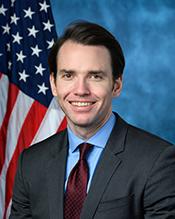
Kevin Kiley
RCA-3 · Representative
Full Text
REINING IN CALIFORNIA COASTAL COMMISSION

Congressional Record, Volume 171 Issue 9 (Thursday, January 16, 2025) [Congressional Record Volume 171, Number 9 (Thursday, January 16, 2025)] [House] [Pages H215-H216] From the Congressional Record Online through the Government Publishing Office [ www.gpo.gov ] REINING IN CALIFORNIA COASTAL COMMISSION The SPEAKER pro tempore (Mr. Harrigan). Under the Speaker's announced policy of January 3, 2025, the Chair recognizes the gentleman from California (Mr. Kiley) for 30 minutes. Mr. KILEY of California. Mr. Speaker, this week, I announced legislation to rein in the California Coastal Commission, to strip the California Coastal Commission of the powers that it has been granted by Federal law. The undeniable reality is that the commission is completely out of control and has veered far from its purpose of protecting the coast. Mike Stoker, the former Southwest administrator of the U.S. Environmental Protection Agency, said this: ``The California Coastal Commission was created in 1972. For over 50 years, it has been one of if not the most overzealous, overreaching, and self-important regulatory agency I have ever dealt with at the local, State, or Federal level.'' This legislation has become all the more necessary in light of the tragedy that continues to unfold in Los Angeles. The task of rebuilding those communities, the imperative of recovery, is going to be difficult enough as it is, but it will be impossible as long as the California Coastal Commission continues to exercise its powers in such irresponsible ways. My bill, specifically, will amend the Coastal Zone Management Act to remove the commission's authority to block national security-related activities, critical infrastructure projects, and activities with high economic impact, including post-disaster recovery and rebuilding. We all got a very clear window into the manifest irrationality of this agency just a couple of months ago when there was a proposal by SpaceX, together with the Air Force, to increase the launch cadence out of Vandenberg Space Force Base to allow for more launches that are launching satellites for important national security purposes and launching other payloads, such as Starlink satellites. I will note, by the way, that Starlink is right now, as we speak, being used by first responders in the L.A. area who have lost connectivity and would otherwise not be able to have the necessary communications for emergency response. This was all known, by the way, at the time that this sort of use case for Starlink was part of its potential. I wrote a letter, at the time, supporting the request for more launches, and we specifically cited the use in fighting wildfires as one reason why this is important. Nevertheless, at the time, just a couple of months ago, with this very clear bipartisan proposal supported by the military to allow SpaceX to do more launches, the California Coastal Commission rejected it and tried to stop SpaceX from increasing its launches, increasing its capacity to support our national security, to improve connectivity. The reason that they gave was this--this is not just me sort of speculating about their reasons--this is literally what the commissioners said in a public meeting. They said that they do not like Elon Musk's political posts on X on completely unrelated topics, and so to punish him, they were going to reject the proposal that wasn't just from SpaceX but from the U.S. military itself in order to do more launches. That told us everything about what the California Coastal Commission is all about. That was very recent, but this agency has a long history of decisions that defy all rationality, defy all measures of public interest, and that don't actually serve the purpose of protecting the environment and protecting the coast. Indeed, when you look at the specific most problematic causes of the catastrophe in L.A., forest management and the water supply, the California Coastal Commission has been a major hindrance in both areas. In 2019, for example, there was an ongoing project by the L.A. Department of Water and Power, where, through Topanga State Park, they were replacing these aging wooden power line poles that were almost 100 years old. They were in an area that had been identified as having an elevated fire risk. As a very important project, these wooden poles, 100 years old in a high-risk area, they were replacing them with steel and with more fire-resistant materials. As the New York Post explained, the goal of the project was to improve fire safety for the Pacific Palisades area by replacing those wooden poles with steel. Also, they were installing wind- and fire- resistant power lines. Again, this is all in a high fire-risk area. The California Coastal Commission caught wind of this, and they learned that there was a particular rare plant, a few of the Brauton's milkvetch, in the area, so they rushed in and said to stop. They brought the project to an immediate halt. It didn't get done, and then, in the process, they, in fact, collected $2 million in fines. This is the sort of action that the California Coastal Commission has taken. Consider just a decision from just 2 years ago, when the commission blocked a desalination plant in Huntington Beach that would have increased L.A.'s water supply. The commission denied a permit for Poseidon Water's proposed $1.4 billion desalination plant in Huntington Beach. Of course, we have all seen how the lack of a sufficient water supply is one of the things that allowed the fires in L.A. to grow unchecked. We had an empty reservoir, for example. Here, just 2 years ago, you had the California Coastal Commission rejecting a major augmentation in the region's supply. {time} 1315 Mr. Speaker, I mentioned the issue related to SpaceX also undermined our national security, in addition to our ability to innovate and the ability to launch Starlink satellites. The CCC, the California Coastal Commission, has also on several occasions rejected proposals from the U.S. Navy. For example, it rejected the U.S. Navy's proposal to increase sonar and underwater explosives training off of southern California. In another instance, it filed a lawsuit against the Navy for proceeding with 14 major training exercises off of southern California, again harming U.S. national security. Then, finally, there is the issue of housing because it is going to be a major undertaking in order to rebuild these beautiful communities. The California Coastal Commission is most assuredly going to stand in the way of that process. It has a long history of denying project after project. California has a massive housing shortage. Yet, even when we have projects that have gotten all the necessary approvals, which have met all the very stringent requirements set out by the State, the California Coastal Commission will come in and spike the project. They have done this so much that a group called Circulate San Diego issued a report recently highlighting how the California Coastal Commission has consistently taken actions that worsen California's housing crisis. They highlighted examples of how even these very, what some would call, left-leaning set of requirements for [[Page H216]] housing that the legislature has set, even projects that have met all of those things, they said: The California Coastal Commission ``has resisted, opposed, and delayed the construction of deed-restricted affordable homes that use programs like Density Bonus Law.'' They noted this is true even when all of the zoning approvals have been obtained. The report documents examples where the California Coastal Commission opposes projects that the legislature encourages as part of California's efforts to combat climate change. Crosswalks, bicycle lanes, and infill development near projects, the report states, are all goals of recent statewide legislation, yet the California Coastal Commission opposes or delays many of these projects. Mr. Speaker, the process of rebuilding and recovery in L.A. is going to be a long and difficult one. There are some things that we know we need to do right off the bat. Perhaps the easiest thing, the most obvious thing is to assure that the California Coastal Commission does not stand in the way. That is why I urge my colleagues on both sides of the aisle and both Houses of Congress to move on this legislation as quickly as possible. This will be an important first step towards rebuilding Los Angeles and towards restoring some common sense in California. Congratulating Blue Origin on Successful Orbit of New Glenn Rocket Mr. KILEY of California. Mr. Speaker, I would like to congratulate Blue Origin on successfully reaching orbit in the first flight of its New Glenn rocket. New Glenn is a 320-foot rocket that is taller than the Statute of Liberty. It has 7 engines, and it can carry 45 metric tons to low Earth orbit. According to a report from Blue Origin, in the flight that left at, I believe, 2:03 a.m. this morning, the first stage burned for more than 3 minutes before the second stage separated at an altitude of 70 kilometers. Then the report states the upper stage's two engines appeared to perform flawlessly, pushing what is called the Blue Ring Pathfinder payload toward orbit. This is an apparatus that is going to allow for the adjustment of other payloads that are in orbit and bring them into different orbits, adjusted orbits, from using that device. Apparently, it is now working properly and is registering data. So far so good is the report. It goes on to state that the engines burned for nearly 10 minutes before shutting down, having reached an orbital velocity of 28,800 kilometers per hour. As a spokesperson for Blue Origin states: ``The vehicle underpins our efforts to establish sustained human presence on the Moon, harness in- space resources, provide multi-mission, multi-orbit mobility through Blue Ring, and establish destinations in low Earth orbit. Future New Glenn missions will carry the Blue Moon Mark 1