Floor Speech2025-02-06
BLACK HISTORY IS AMERICAN HISTORY
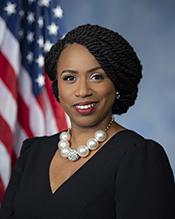
Ayanna Pressley
DMA-7 · Representative
Full Text
BLACK HISTORY IS AMERICAN HISTORY

Congressional Record, Volume 171 Issue 25 (Thursday, February 6, 2025) [Congressional Record Volume 171, Number 25 (Thursday, February 6, 2025)] [House] [Pages H515-H516] From the Congressional Record Online through the Government Publishing Office [ www.gpo.gov ] {time} 1100 BLACK HISTORY IS AMERICAN HISTORY The SPEAKER pro tempore. The Chair recognizes the gentlewoman from Massachusetts (Ms. Pressley) for 5 minutes. Ms. PRESSLEY. Madam Speaker, good morning and happy Black History Month. Black history is American history, so I rise today to give a history lesson. I think, at moments of inflection for our country, history provides a critical contextualizing. In order to go forward, we need to look back, especially when the White House is working overtime, as laid out in their playbook, Project 2025, to ban our history and to dismantle our Department of Education. Let's start at the beginning. Why did we establish a Federal Department of Education? In the early days of this Nation, education was left entirely to the States, and schools were run by a patchwork of religious schools and one-room schoolhouses, leaving many children excluded based on their race, gender, or poverty. Madam Speaker, there is much I disagree with our Founding Fathers on, but they knew that preserving democracy required an educated population, one that could participate in civic issues, understand social and political issues, vote, and resist tyrants. In the late 1700s and early 1800s, the concept of free public education began to take hold, but not for everyone. Enslavement ruled the day. Black and Native American families faced State-sponsored violence and systemic exclusion from education. [[Page H516]] In the 1830s, it was the Commonwealth of Massachusetts and a legislator named Horace Mann who established the common school movement, pushing to extend free public education to poor and middle- class children. Yet, Black children across the Nation were still barred from learning and faced severe punishment and abuse if they tried. By the 1870s, Reconstruction in the South gave way to Jim Crow laws that segregated public spaces, explicitly including our schools. Additionally, child-labor exploitation was rampant; education for girls lagged far behind; and children with disabilities were far too often institutionalized and not educated at all. A little more than 100 years later, our Department of Education in its modern-day form was championed by none other than the late, great President James Earl Carter. May he rest in peace and power. He knew that fully implementing the civil rights legislation of the 1960s and fighting Jim Crow would require a well-resourced Federal role in education. This agency had existed for over a century in many iterations, but Carter explicitly understood that at the core of education was a vision of opportunity and access for every child in America. He and Congress resourced the Department accordingly, and this Department was tasked with implementing core tenets of the Civil Rights Act and the Individuals with Disabilities Education Act. Federal funding through the Department of Education became integral to addressing disparities, hiring and training teachers, building accessible school facilities, enforcing civil rights protections, heating and powering those buildings, and, finally, living up to our ideals of education as a pathway to opportunity in America. Madam Speaker, today, that progress is under attack. The Trump administration's attack on education is a fundamental attack on democracy and on every child who calls this country home. Let's call it what it is: resegregation and a full-scale attack on civil rights. Dictating what can be taught is shameful. Madam Speaker, I stand firmly on the side of our public school babies and our educators and families today and always. ____________________