Floor Speech2026-03-04
NEW CENTURY OF WESTERN STRENGTH AND POLITICAL FREEDOM
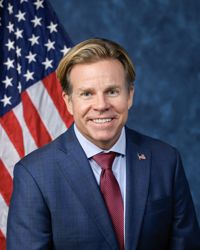
Mike Haridopolos
RFL-8 · Representative
Full Text
NEW CENTURY OF WESTERN STRENGTH AND POLITICAL FREEDOM

Congressional Record, Volume 172 Issue 41 (Wednesday, March 4, 2026) [Congressional Record Volume 172, Number 41 (Wednesday, March 4, 2026)] [House] [Pages H2417-H2419] From the Congressional Record Online through the Government Publishing Office [ www.gpo.gov ] NEW CENTURY OF WESTERN STRENGTH AND POLITICAL FREEDOM (Under the Speaker's announced policy of January 3, 2025, Mr. Haridopolos of Florida was recognized for 30 minutes.) Mr. HARIDOPOLOS. Mr. Speaker, I rise today to reflect on the recent speech given by our Secretary of State, Marco Rubio, a fellow Floridian, who spoke to the world in Munich about the path for freedom in the 21st century. He spoke with clarity, strength, and even at times humor to paint a vision that we can all embrace. Our transatlantic alliance faces both strain and opportunity. The United States and Europe are not merely strategic partners. As Secretary Rubio said so well, we are bound by history, culture, sacrifice, and a shared belief in liberty. Ours is not a temporary arrangement of convenience but a partnership of a shared civilization that has shaped the modern world. History teaches us something important. Alliances endure not through sentiment but through seriousness. They thrive when nations are confident, self-reliant, and clear-eyed about the future challenges before them. Today, I want to speak about the renewal of the West and how that renewal reflects the best traditions of American diplomacy and traditions embodied by some of our greatest Secretaries of State: John Quincy Adams, William Seward, George Marshall, and James Baker. Each faced a fractured world, each acted boldly, and each understood that American strength, wisely applied, could shape a more stable international order. The United States is a nation born in the European political tradition. Our constitutional order, our philosophy of rights, and our understanding of sovereignty all trace their roots back to this continent. When we say America and Europe belong together, we are not describing a temporary security arrangement. We are acknowledging a shared inheritance. However, shared heritage does not excuse complacency. The lesson of the last several decades is clear: Alliances weaken when economic foundations erode, when clear defense burdens fall unevenly, and when world leaders avoid hard conversations. A renewal of our alliance requires candid, honest conversations. In what form will those conversations take? Secretary Rubio started that conversation in Munich. As a history teacher myself, I trust we will look to actions taken by some of our finest Secretaries of State when they served both their President and our Nation. John Quincy Adams: After the War of 1812, John Quincy Adams recognized that America was fragile. The great powers of Europe were reorganizing themselves at the Congress of Vienna. It would have been easy for the young [[Page H2418]] United States to be pulled into European alliances, and, unfortunately, European rivalries. However, John Quincy Adams, a former Massachusetts Senator and diplomat, who helped negotiate the Treaty of Ghent that ended the War of 1812, understood something profound: American strength depended first on national independence and economic resilience, and, as George Washington warned in his Farewell Address, away from entangling alliances. As Secretary of State of our fifth President, James Monroe, Adams negotiated the Adams-Onis Treaty, securing Florida, my home State, from Spain and clarifying the American borders along the Atlantic Ocean. Later in 1823, he crafted what became known as the Monroe Doctrine, a declaration that the Western Hemisphere would not be subject to European recolonization. The lesson was that America should not go abroad in search of monsters to destroy, but neither should it allow others to define our destiny. That balance, strength without recklessness, independence without isolation, is deeply relevant today. When we insist on fair trade, secure supply chains, and reciprocal defense commitments, we are not retreating from the world. We are doing what Adams did: ensuring that American sovereignty underwrites American diplomacy. William Seward, a former Governor and United States Senator from the State of New York, was appointed Secretary of State by his own political rival, President Abraham Lincoln. There Seward guided the United States foreign policy during the Civil War and adroitly kept Great Britain out of our tragic conflict. After the war in 1867, Seward approved the purchase of Alaska. While his critics in the press mocked this as Seward's Folly, those critics would soon be proven wrong. Today, we know that acquisition was strategic brilliance. Seward saw beyond immediate criticism. He understood geography, trade routes, and long-term power competition. He expanded America's footprint in ways that would matter for generations to come. He believed deeply in commercial expansion as a tool of diplomacy. The lesson here is that great statesmanship requires the courage to invest in long-term national power. Today, securing critical supply chains, revitalizing domestic industry, and preventing adversaries from dominating strategic industries is not economic nationalism for its own sake. It is modern statecraft. Seward understood that economic strength is strategic strength. General George Marshall led our American military during World War II as the United States Army Chief of Staff. Though not in the direct field of battle and thus not as well-known as some of the famous generals and admirals of World War II, it was Marshall whose strategic leadership in concert with Franklin Delano Roosevelt proved decisive in defeating both the Japanese and the Germans in World War II. Two years after the conclusion of the war, President Harry Truman appointed this wartime leader as Secretary of State, our chief diplomat. As Europe lay in ruins, the United States could have turned inward. Instead, Marshall proposed the European Recovery Program, what we know today as the Marshall Plan. The genius of Marshall was not charity. It was clarity. He recognized that American prosperity required European stability. He understood that free societies require functioning economies, and he insisted that the European nations take responsibility for designing their own recovery. The Marshall Plan was not a blank check. It was a partnership. Marshall demanded coordination, reform, and seriousness from Europe. In return, the United States invested heavily. Due to these actions, nations on the brink, like Greece, my home country, stayed free, and NATO proved to be the alliance that blocked the evil of communism. {time} 1840 The lesson? Strength begets strength. When we call today for greater European defense spending, for fairer trade balances, and to bring industry home, we are echoing Marshall's insistence that a partnership must be reciprocated. Secretary of State James Baker. In the final years of the Cold War, James Baker navigated one of the most delicate diplomatic transformations in modern history. After serving as chief of staff and later Secretary of the Treasury under Ronald Reagan, Baker served as Secretary of State under George H.W. Bush. During this time when the Berlin Wall fell, Germany reunified, and the Soviet Union collapsed, these circumstances, these changes could have triggered chaos. Instead, through disciplined diplomacy, Baker helped manage NATO expansion, reassured allies, and negotiated arms control arrangements that prevented instability. Baker's approach was pragmatic, not ideological. He listened. He negotiated firmly. He protected American interests while recognizing the dignity of other nations. The lesson here? Diplomacy must adapt to new realities. The institutions built after World War II were vital, but institutions cannot become frozen monuments. They must evolve to address new forms of economic competition, technological disruption, and geopolitical rivalries. Reform is not rejection, it is preservation through adaptation. Today, in conclusion, we confront the issues highlighted by our Secretary of State, Marco Rubio: economic fragmentation, technological competition, supply chain vulnerability, military imbalances, and political polarization. The temptation too often is denial or even an overreaction, but the better path, the Adams path, the Seward path, the Marshall path, the Baker path, and hopefully the Rubio path that we can follow is disciplined renewal. That means restoring industrial capacity, ensuring defense reciprocity, reforming global institutions rather than abandoning them, and maintaining alliance unity grounded in sovereignty. When we call on Europe to invest more in its own defense, we are not weakening NATO, we are strengthening NATO. When we insist on true fair trade that does not hollow out our middle class, we are strengthening democratic legitimacy. When we call for reform in global institutions, we are ensuring that they reflect the realities of 2026, not 1945. Each of these Secretaries of State that I have highlighted understood something enduring: America must be strong at home to be credible abroad. Adams secured borders, Seward expanded territory, Marshall built alliances, and Baker managed transition. None confused cooperation with dependency. None confused sovereignty with isolation. The United States remained committed to Europe, but commitment does not mean complacency. It means candid conversations about defense spending. It means honest assessments about economic policy. It means joint responsibility for the future of Western civilization. We stand at the threshold of what can be the new century of Western strength if we choose seriousness, not political correctness. The West succeeded in the 20th century because it combined economic dynamism, military preparedness, cultural confidence, and institutional flexibility. Those traits must define us again. The path forward is not nostalgia, it is