Floor Speech2026-03-24
FEDERAL BUILDING THREAT NOTIFICATION ACT
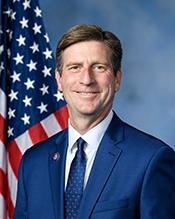
Greg Stanton
DAZ-4 · Representative
Full Text
FEDERAL BUILDING THREAT NOTIFICATION ACT

Congressional Record, Volume 172 Issue 55 (Tuesday, March 24, 2026) [Congressional Record Volume 172, Number 55 (Tuesday, March 24, 2026)] [House] [Pages H2649-H2650] From the Congressional Record Online through the Government Publishing Office [ www.gpo.gov ] FEDERAL BUILDING THREAT NOTIFICATION ACT Mr. TAYLOR. Mr. Speaker, I move to suspend the rules and pass the bill (H.R. 6481) to direct the Administrator of General Services and the Director of the Federal Protective Service to establish guidance relating to emergency communication protocols for public buildings, and for other purposes. The Clerk read the title of the bill. The text of the bill is as follows: H.R. 6481 Be it enacted by the Senate and House of Representatives of the United States of America in Congress assembled, SECTION 1. SHORT TITLE. This Act may be cited as the ``Federal Building Threat Notification Act''. SEC. 2. GUIDANCE FOR BUILDINGS. (a) Life Safety Events Defined.--In this section, the term ``life safety events'' means events to which first responders, including law enforcement, fire and emergency rescue, and natural disaster experts, deploy. (b) Guidance.-- (1) In general.--Not later than 1 year after the date of enactment of this Act, the Administrator of General Services and the Director of the Federal Protective Service shall develop and disseminate emergency communication guidance for building facility security committees to execute in any case in which life safety events threaten Federal buildings owned and operated by the Administrator of General Services under the protection of the Federal Protective Service. (2) Contents.--The guidance developed under paragraph (1) shall include best practices and protocols relating to-- (A) standard operating procedures to inform building tenants of threats to the buildings or occupants of the buildings; and (B) instructions for safety practices in response to threats or a heightened risk to the building and the occupants of the building. (c) Security Officials.--The designated official of the facility security committee for each Federal building that is owned or operated by the General Services Administration under the protection of the Federal Protective Service shall be responsible for implementing the guidance at the respective building. (d) Report.--Not later than 18 months after the date of enactment of this Act, the Administrator of General Services shall electronically submit to Congress a report on the best practices and protocols implemented under this Act. The SPEAKER pro tempore. Pursuant to the rule, the gentleman from Ohio (Mr. Taylor) and the gentleman from Arizona (Mr. Stanton) each will control 20 minutes. The Chair recognizes the gentleman from Ohio. General Leave Mr. TAYLOR. Mr. Speaker, I ask unanimous consent that Members have 5 legislative days in which to revise and extend their remarks and insert extraneous material into the Record on H.R. 6481. The SPEAKER pro tempore. Is there objection to the request of the gentleman from Ohio? There was no objection. Mr. TAYLOR. Mr. Speaker, I yield myself such time as I may consume. Mr. Speaker, the Federal Building Threat Notification Act directs the Administrator of General Services and the Director of the Federal Protective Service to establish guidance on emergency communication protocols for public buildings. This legislation was developed after the committee received a report detailing crime that occurs in and around Federal buildings. The report detailed that in fiscal year 2024, there were over 3,500 incidents of crime in and around Federal buildings recorded nationwide. This data paints a clear picture of the current system in which the safety of Federal workers and visitors to GSA buildings is not a guarantee. It is even more critical today, given the heightened security threats, to ensure there are clear communication protocols for occupants and visitors to Federal facilities. Mr. Speaker, I thank the Subcommittee on Economic Development, Public Buildings, and Emergency Management ranking member, Mr. Stanton, along with subcommittee chairman, Mr. Perry, for their work on this very important piece of legislation. Mr. Speaker, I urge support of this legislation, and I reserve the balance of my time. Mr. STANTON. Mr. Speaker, I yield myself such time as I may consume. Mr. Speaker, Federal employees deserve to work in safety and security, and the Americans who go to Federal buildings to access essential services deserve to do so with the same assurances. A 2025 GAO report found that in fiscal year 2024 alone, there were over 3,500 incidents, recorded incidents, at Federal facilities across this country: 763 threats, 142 weapons violations, 9 arson attacks, 3 homicides, and 1 kidnapping. These are attacks on the women and men who show up every day to serve the American people. Right now, in this political climate, Federal employees are being targeted, online, in person, and in the buildings where they work. The hostility directed at our civil servants has reached a boiling point, and Congress must act to keep people safe. However, threats don't only come from people. When Hurricane Katrina struck the Gulf Coast on August 29, 2005, 83 Federal facilities in Louisiana, Mississippi, and Alabama were significantly damaged. Back- to-back hurricanes, Irma and Maria, severely damaged Puerto Rico's Federal buildings and Federal courthouses in 2017. Storms are getting stronger and more destructive. It is critical that workers and visitors to Federal buildings know what to do in case of an emergency. H.R. 6481, the Federal Building Threat Notification Act, introduced by myself and cosponsored by Congressman Perry, directs the Administrator [[Page H2650]] of General Services and the Director of the Federal Protective Service to develop and disseminate a clear, actionable emergency communication protocol for public buildings. The guidance will include best practices and protocols to inform building tenants of threats to the buildings or their occupants and instructions for safety practices in response to threats or heightened risk. The Federal Building Threat Notification Act is common sense and good policy. Mr. Speaker, I support H.R. 6481, the Federal Building Threat Notification Act, and I urge my colleagues to join me in supporting this important bill. Mr. Speaker, I yield back the balance of my time. Mr. TAYLOR. Mr. Speaker, I yield myself the balance of my time to close. Mr. Speaker, this legislation will ensure that the GSA and FPS establish standard operating procedures that will help keep agency tenants better informed when there are threats to the building or its occupants. This is an important step Congress can take to increase safety in Federal buildings for both Federal employees and visitors. I urge support of H.R. 6481, and I yield back the balance of my time. The SPEAKER pro tempore. The question is on the motion offered by the gentleman from Ohio (Mr. Taylor) that the House suspend the rules and pass the bill, H.R. 6481. The question was taken; and (two-thirds being in the affirmative) the rules were suspended and the bill was passed. A motion to reconsider was laid on the table. ____________________

Referenced legislation: HR6481, HR6481