Floor Speech2025-02-13
STATEMENTS ON INTRODUCED BILLS AND JOINT RESOLUTIONS
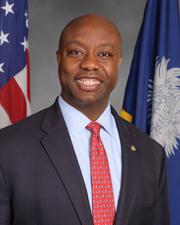
Tim Scott
RSC · Senator
Full Text
STATEMENTS ON INTRODUCED BILLS AND JOINT RESOLUTIONS

Congressional Record, Volume 171 Issue 30 (Thursday, February 13, 2025) [Congressional Record Volume 171, Number 30 (Thursday, February 13, 2025)] [Senate] [Pages S973-S979] From the Congressional Record Online through the Government Publishing Office [ www.gpo.gov ] STATEMENTS ON INTRODUCED BILLS AND JOINT RESOLUTIONS By Mr. SCOTT of South Carolina (for himself, Ms. Rosen, Mr. Lankford, Mr. Schumer, Mr. Graham, Mr. Blumenthal, Mr. Scott of Florida, Ms. Hassan, Ms. Collins, Mrs. Gillibrand, Mrs. Capito, Mr. Gallego, Mr. Barrasso, Mr. Hickenlooper, Mr. Crapo, Mr. Wyden, Mrs. Britt, Mr. Coons, Mr. Cornyn, Ms. Cortez Masto, Mr. Cotton, Mr. Bennet, Mr. Boozman, Ms. Cantwell, Mr. Ricketts, Mr. Fetterman, Mr. Grassley, Mr. Schiff, Mr. Cramer, Ms. Slotkin, Mrs. Hyde-Smith, Mr. Warner, Mrs. Fischer, Mr. Peters, Mr. Daines, and Mr. Booker): S. 558. A bill to provide for the consideration of a definition of antisemitism set forth by the International Holocaust Rembrance Alliance for the enforcement of Federal antidiscrimination laws concerning education programs or activities, and for other purposes; to the Committee on Health, Education, Labor, and Pensions. Mr. SCOTT of South Carolina. Mr. President, I ask unanimous consent that the text of the bill be printed in the Record. There being no objection, the text of the bill was ordered to be printed in the Record, as follows: S. 558 Be it enacted by the Senate and House of Representatives of the United States of America in Congress assembled, SECTION 1. SHORT TITLE. This Act may be cited as the ``Antisemitism Awareness Act of 2025''. SEC. 2. SENSE OF CONGRESS. It is the sense of Congress that-- (1) title VI of the Civil Rights Act of 1964 (42 U.S.C. 2000d et seq.), prohibits discrimination on the basis of race, color, and national origin in programs and activities receiving Federal financial assistance; (2) while such title does not cover discrimination based solely on religion, individuals who face discrimination based on actual or perceived shared ancestry or ethnic characteristics do not lose protection under such title for also being members of a group that share a common religion; (3) discrimination against Jews may give rise to a violation of such title when the discrimination is based on race, color, or national origin, which can include discrimination based on actual or perceived shared ancestry or ethnic characteristics; (4) it is the policy of the United States to enforce such title against prohibited forms of discrimination rooted in antisemitism as vigorously as against all other forms of discrimination prohibited by such title; and (5) as noted in the U.S. National Strategy to Counter Antisemitism issued by the White House on May 25, 2023, it is critical to-- (A) increase awareness and understanding of antisemitism, including its threat to America; (B) improve safety and security for Jewish communities; (C) reverse the normalization of antisemitism and counter antisemitic discrimination; and (D) expand communication and collaboration between communities. SEC. 3. FINDINGS. Congress finds the following: (1) Antisemitism is on the rise in the United States and is impacting Jewish students in K-12 schools, colleges, and universities. (2) The International Holocaust Remembrance Alliance (referred to in this Act as the ``IHRA'') Working Definition of Antisemitism is a vital tool which helps individuals understand and identify the various manifestations of antisemitism. (3) On December 11, 2019, Executive Order 13899 extended protections against discrimination under the Civil Rights Act of 1964 to individuals subjected to antisemitism on college and university campuses and tasked Federal agencies to consider the IHRA Working Definition of Antisemitism when enforcing title VI of such Act. (4) Since 2018, the Department of Education has used the IHRA Working Definition of Antisemitism when investigating violations of that title VI. (5) The use of alternative definitions of antisemitism impairs enforcement efforts by adding multiple standards and may fail to identify many of the modern manifestations of antisemitism. (6) The White House released the first-ever United States National Strategy to Counter Antisemitism on May 25, 2023, making clear that the fight against this hate is a national, bipartisan priority that must be successfully conducted through a whole-of-government-and-society approach. SEC. 4. DEFINITIONS. For purposes of this Act, the term ``definition of antisemitism''-- [[Page S974]] (1) means the definition of antisemitism adopted on May 26, 2016, by the IHRA, of which the United States is a member, which definition has been adopted by the Department of State; and (2) includes the ``[c]ontemporary examples of antisemitism'' identified in the IHRA definition. SEC. 5. RULE OF CONSTRUCTION FOR TITLE VI OF THE CIVIL RIGHTS ACT OF 1964. In reviewing, investigating, or deciding whether there has been a violation of title VI of the Civil Rights Act of 1964 (42 U.S.C. 2000d et seq.) on the basis of race, color, or national origin, based on an individual's actual or perceived shared Jewish ancestry or Jewish ethnic characteristics, the Department of Education shall take into consideration the definition of antisemitism as part of the Department's assessment of whether the practice was motivated by antisemitic intent. SEC. 6. OTHER RULES OF CONSTRUCTION. (a) General Rule of Construction.--Nothing in this Act shall be construed-- (1) to expand the authority of the Secretary of Education; (2) to alter the standards pursuant to which the Department of Education makes a determination that harassing conduct amounts to actionable discrimination; or (3) to diminish or infringe upon the rights protected under any other provision of law that is in effect as of the date of enactment of this Act. (b) Constitutional Protections.--Nothing in this Act shall be construed to diminish or infringe upon any right protected under the First Amendment to the Constitution of the United States. ______ By Ms. MURKOWSKI (for herself and Mr. Sullivan): S. 573. A bill to designate a mountain in the State of Alaska as Denali; to the Committee on Energy and Natural Resources. Ms. MURKOWSKI. Mr. President, I rise today to speak about a century- long dispute. A hundred years plus, there has been a dispute about the Federal designation of North America's tallest mountain. It is a pretty majestic picture, but it does nothing to really convey the amazing grandeur of Denali. It is majestic. It is breathtaking. It is something that as Alaskans and as a lifelong Alaskan, there is not a day when I am able to see Denali and just say--just kind of breathe deep, because it is that extraordinary. And in my hometown of Anchorage, we are about 250 miles away from Denali, and on clear days, when you are on the road, just about a mile from my house, just a little bit of elevation, you can see the mountain. And we talk about it that way. We say: She is out. The mountain is out today. The big one is out today. It is an extraordinary gift from God, really. Snow-blanketed crevasses, the ridges are just gleaming in the sun. How this mountain connects earth to sky beyond, it is just extraordinary. And, again, this picture is beautiful--obviously, on a summer day. There is never a time when she is not covered in snow, but Denali can also be one of the coldest, most treacherous places on Earth. It has storms in the middle of winter. You expect that. But it has storms in the middle of July that obey no rules. It has its own rules. Denali creates its own weather. It literally creates its own weather. I had an opportunity to go up on Ruth Glacier on my birthday. My birthday happens to be the end of May. It was going to be an extraordinary big-ticket item--it was a big-ticket item, but we were chased off that mountain after about 40 minutes because the weather which, when we had arrived at the mountain, was pretty great, and in 40 minutes, she was shutting down, and we were either going to be spending the night there, which was not prime condition to do, or we were getting off in order to get out safely. You respect her. But it is a place where you respect the nature around you because what can be that perfect day can descend with wind and snow into chaos. It falls on you so quickly, you can't see your own footprints in the snow. The lives that have been lost and the legends of the stories told remain, but no matter what happens with the weather, as transitory as all that is, Denali stands resilient and true. For centuries, the Koyukon Athabascans have lived, they have hunted, they have foraged, they have loved, they have died, they have survived in the shadow of this great mountain. They have been on the waterways, in the valleys, on the hills, and in the ridges. Alaska Natives have persevered in one of the most challenging climates, and they have done so in harmony with the food supply and the surroundings around them. Denali is Koyukon for ``the Great One,'' for ``the Great One.'' This is how Native people have always known it, and as the great witness of untold stories from their ancestors. The very first-ever map to label the mountain read ``Tenada,'' and this is a transcription of Denali--again, the Great One. The first mountaineers to summit the peak called it Denali. It is interesting to note that the first individual to actually summit was not the mountaineers who had paid for the climb, but it was the Alaskan Native guide who took them safely and successfully to the top. But it is the same Native people, those same mountaineers that were baffled that anyone would dare to modify the original Native name. And yet, in 1917, the mountain was not named Denali. And there is a fair amount of legend that comes with that as well, that there was a trapper who came out of the woods--this was during the early days of the President McKinley administration--and he said: Out of respect, let's honor the new President. But mu

Referenced legislation: S558, S558, S573, S579, S587, S597, S602, S603