Floor Speech2025-02-25
Introductory Statement on S. 705
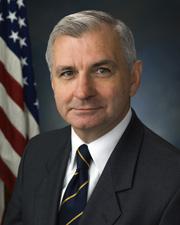
Jack Reed
DRI · Senator
Full Text
Introductory Statement on S. 705

Congressional Record, Volume 171 Issue 37 (Tuesday, February 25, 2025) [Congressional Record Volume 171, Number 37 (Tuesday, February 25, 2025)] [Senate] [Page S1347] From the Congressional Record Online through the Government Publishing Office [ www.gpo.gov ] By Mr. REED (for himself and Mrs. Capito): S. 705. A bill to amend the Federal Food, Drug, and Cosmetic Act with respect to molecularly targeted pediatric cancer investigations, and for other purposes; to the Committee on Health, Education, Labor, and Pensions. Mr. REED. Mr. President, today, I am joining Senator Capito to introduce the Innovation in Pediatric Drugs Act of 2025 in order to improve access to needed therapies for children. Children are not just small adults. Drugs affect their developing bodies differently, so new treatments need to be studied carefully to ensure that they are appropriately prescribed and that dosages are properly adjusted. Additionally, drugs that are designed to treat a specific condition in adults may have enormous benefits in treating completely different illnesses in kids. But research is needed to unlock these potentially lifesaving possibilities. Unfortunately, drug development still leaves children behind. The legislation we are introducing today would help speed therapies to children who need them by making needed changes to the Best Pharmaceuticals for Children Act, BPCA, and the Pediatric Research Equity Act, PREA--two laws that encourage and require the study of drugs in children. Data resulting from BPCA and PREA studies are added to drug labels to give parents and providers essential information on the safety and efficacy of drugs used in children. I was proud to have helped author these laws when I was a member of the Health, Education, Labor, and Pensions Committee. While we have made tremendous progress in advancing treatments for children because of these laws, there are gaps. For example, there is a loophole in PREA that exempts drug companies from pediatric study requirements when the treatment would only be used for a rare pediatric condition. There are close to 7,000 rare diseases without appropriate treatments, and the vast majority of these diseases affect children as well as adults. But in developing new drugs also known as orphan drugs to treat rare diseases, pharmaceutical developers focus their research on adult patients only since they are not required to study their impact on children. Since the majority of new drugs approved by the Food and Drug Administration, FDA, are orphan drugs, this means that the majority of newly approved drugs have not been studied for their impacts on kids. This leaves doctors, parents, and sick kids in the dark about the best possible treatments. Our bill closes this loophole to require studies for children so that that they, too, can benefit from new and innovative treatments for rare diseases. In addition to this change, the Innovation in Pediatric Drugs Act would invest in pediatric studies of older, off-patent drugs. The FDA incentives and requirements under BPCA and PREA work for many newer drugs, but unfortunately cannot help encourage studies of older drugs. For this reason, in 2002, Congress authorized a program which funds the National Institutes of Health to conduct studies of off-patent drugs used in children that would never be completed otherwise. Drug studies are expensive, and costs have only increased since then, but the program has been flat-funded at $25 million since it was created more than 20 years ago. Our legislation would increase the authorization for the BPCA NIH program to ensure we have better data about older drugs to treat diseases in children. Lastly, the Innovation in Pediatric Drugs Act would give FDA the authority it needs to ensure that legally required pediatric studies are completed in a timely manner. Due dates for studies required by PREA are typically deferred by FDA until after the approval of the drug for adults, but FDA has no effective enforcement tools to ensure that these studies are completed on time--or at all. I am pleased to be working with my colleague Senator Capito again on pediatric health issues. We have worked closely for many years on pediatric cancer, first authoring the Childhood Cancer Survivorship, Treatment, Access, and Research, STAR, Act in 2015. That bill was signed into law in 2018, and we worked to fully fund the law every year since. I look forward to working with her to move the Innovation in Pediatric Drugs Act forward, to give children and their families more options for treatments. ______

Referenced legislation: S705