Floor Speech2026-03-26
Introductory Statement on S.J. Res. 152
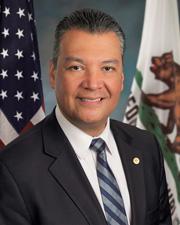
Alex Padilla
DCA · Senator
Full Text
Introductory Statement on S.J. Res. 152

Congressional Record, Volume 172 Issue 57 (Thursday, March 26, 2026) [Congressional Record Volume 172, Number 57 (Thursday, March 26, 2026)] [Senate] [Page S1673] From the Congressional Record Online through the Government Publishing Office [ www.gpo.gov ] By Mr. PADILLA: S.J. Res. 152. A joint resolution providing for congressional disapproval under chapter 8 of title 5, United States Code, of the rule submitted by the Department of Labor relating to the Adverse Effect Wage Rate Methodology; to the Committee on the Judiciary. Mr. PADILLA. Mr. President, I rise today in support of the Congressional Review Act resolution to overturn the Department of Labor's recent rule that cuts wages for farmworkers across this country. We are very fortunate here in the United States because many of us are used to grocery stores stocked with fresh food. But far too little thought gets paid to where that food comes from or to the millions of farmworkers whose grueling labor gets it there. Every day, millions of women and men wake up before dawn and head to the fields to feed this Nation. Through heat waves, storms, wildfire smoke--even pandemics--they show up so we can eat. These are some of the hardest jobs in America. Trust me, I know from experience. A few years back, I became the first Senator to join farmworkers in the fields for a day--cutting parsley and radishes alongside them in Southern California. many of the workers I met were older than me and had done this work for decades. Together, we spent hours on our hands and knees filling crates with produce. And let me tell you--I couldn't keep up. I was a whole lot slower than the highly skilled farmworkers who helped me out that day. Because while most people don't think twice about where their food comes from, farmworkers bring extraordinary skill, discipline, and pride to their work. They deserve our gratitude, they deserve our respect, and they deserve to be paid fairly, because if they miss a day, there is no safety net for them to fall back on. Yet, knowing all that, folks at the Labor Department who created this rule decided to go ahead and attack them anyway. They decided to go ahead and slash farmworker wages by as much as $5 to $7 an hour. By the Labor Department's own estimate, this rule would transfer more than $2 billion out of workers' pockets and into employers' hands every year, and it does so in a way that undercuts both U.S. farmworkers and the very purpose of the H-2A Program, which is supposed to protect, not depress, domestic wages. This is not a technical adjustment. It is one of the largest wealth transfers from workers to employers in the history of American agriculture, and the consequences are both very real and immediate. In California, farmworker wages could drop from nearly $20 an hour to under $17. In Michigan, it could go from over $18 to under $14, and from $16 to under $11 an hour in Georgia. Let's be clear: Farmworkers are not asking for special treatment; they are asking for fair pay for hard work. Instead, this rule rigs the system against them. It incentivizes hiring lower-paid guestworkers while making it easier to displace U.S. workers. All that does is accelerate a race to the bottom in agricultural labor standards. But just as troubling as the rule itself is the fact that it was issued without providing a meaningful opportunity for public comment, without good cause. That is not a minor procedural error or technicality; that is a clear violation of the Administrative Procedure Act. It is a fundamental breach of the law governing how Agencies make decisions in a democracy that significantly impact the public. The Administrative Procedure Act exists for a reason--to ensure transparency, accountability, and public participation. Farmworkers, advocates, employers, and communities deserved to have a voice in a rule that so directly affects their livelihoods. Instead, the Department rushed it through as an interim final rule, cutting wages first and asking questions later. This is an example of exactly why the Congressional Review Act exists--so that Congress can step in when an agency overreaches, when it ignores the law and harms the very people it's supposed to protect. This resolution sets out to make things right by restoring fairness and restoring the rule of law. I urge all of my colleagues to support this resolution by standing with the farmworkers who put food on our tables, not the powerful interests looking to cut their wages. ____________________

Referenced legislation: SJRES152