Floor Speech2026-03-23
TEXT OF AMENDMENTS
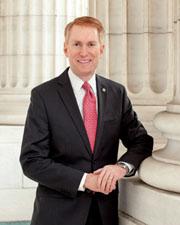
James Lankford
ROK · Senator
Full Text
TEXT OF AMENDMENTS

Congressional Record, Volume 172 Issue 54 (Monday, March 23, 2026) [Congressional Record Volume 172, Number 54 (Monday, March 23, 2026)] [Senate] [Pages S1547-S1559] From the Congressional Record Online through the Government Publishing Office [ www.gpo.gov ] TEXT OF AMENDMENTS SA 4745. Mr. WARNOCK submitted an amendment intended to be proposed by him to the bill S. 1383, to establish the Veterans Advisory Committee on Equal Access, and for other purposes; which was ordered to lie on the table; as follows: Strike all after the enacting clause and insert the following: SECTION 1. LIMITATIONS ON THE ACQUISITION, CONSTRUCTION, RENOVATION, OR EXPANSION OF AN IMMIGRANT DETENTION CENTER IN GEORGIA. None of the funds appropriated or otherwise made available to the Department of Homeland Security under Public Law 119- 21, or under any other Act, may be used for the acquisition, construction, renovation, or expansion of any U.S. Immigration and Enforcement detention center located in Social Circle, Georgia or Oakwood, Georgia unless such action in either such location is explicitly authorized by Mayor of the City of Social Circle or the Mayor of the City of Oakwood, as applicable. ______ SA 4746. Mr. WARNOCK submitted an amendment intended to be proposed to amendment SA 4420 proposed by Mr. Thune (for Mr. Schmitt) to the bill S. 1383, to establish the Veterans Advisory Committee on Equal Access, and for other purposes; which was ordered to lie on the table; as follows: At the end of title I, insert the following: Subtitle D--Application Only to Certain States SEC. 131. APPLICATION ONLY TO CERTAIN STATES. Notwithstanding any other provision of this title, the provisions of and amendments made by this title shall only apply to a State with respect to an election for Federal office if more than 100 noncitizens were convicted of, or entered a plea of guilty or no contest to, an offense under section 611 of title 18, United States Code, with respect to the preceding election for Federal office held in the State. ______ SA 4747. Mr. WARNOCK submitted an amendment intended to be proposed by him to the bill S. 1383, to establish the Veterans Advisory Committee on Equal Access, and for other purposes; which was ordered to lie on the table; as follows: Strike all after the enacting clause and insert the following: [[Page S1548]] SECTION 1. LIMITATIONS ON THE ACQUISITION, CONSTRUCTION, RENOVATION, OR EXPANSION OF AN IMMIGRANT DETENTION CENTER IN GEORGIA. (a) Congressional Authorization Required.--No Federal funds may be expended by the Department of Homeland Security for the acquisition, construction, renovation, or expansion of any U.S. Immigration and Enforcement detention center located in Social Circle, Georgia or Oakwood, Georgia unless such action in either such location is explicitly authorized by an Act of Congress. (b) Compliance With Applicable Environmental Laws and Inspection Requirements.--Any acquisition, construction, or expansion by U.S. Immigration and Customs Enforcement of a facility intended to be used for the detention of noncitizens in Social Circle, Georgia or Oakwood, Georgia shall be subject to all applicable environmental laws and inspection requirements, including-- (1) the completion of an environmental impact statement required under the National Environmental Policy Act of 1969 (42 U.S.C. 4321 et seq.); and (2) site assessments required under the Comprehensive Environmental Response, Compensation, and Liability Act of 1980 (42 U.S.C. 9601 et seq.). ______ SA 4748. Mr. WARNOCK submitted an amendment intended to be proposed by him to the bill S. 1383, to establish the Veterans Advisory Committee on Equal Access, and for other purposes; which was ordered to lie on the table; as follows: Strike all after the enacting clause and insert the following: SECTION 1. REQUIREMENTS FOR HANDLING VOTER DATA. The Attorney General, the Director of the Federal Bureau of Investigation, and the head of any other Federal agency that obtains material relating to a Federal election, including voter rolls and data, from a State or local government shall maintain and publish written procedures for, with respect to that material-- (1) the chain of custody; (2) physical storage and environmental protections; (3) digital access controls; (4) the logging of every access, transfer, duplication, or testing event; (5) the return or certified destruction timelines; and (6) a notice of the obtainment to the State or local government. ______ SA 4749. Mr. WARNOCK submitted an amendment intended to be proposed by him to the bill S. 1383, to establish the Veterans Advisory Committee on Equal Access, and for other purposes; which was ordered to lie on the table; as follows: Strike all after the enacting clause and insert the following: SECTION 1. SHORT TITLE. This Act may be cited as the ``Preventing Election Subversion Act of 2026''. SEC. 2. RESTRICTIONS ON REMOVAL OF LOCAL ELECTION ADMINISTRATORS IN ADMINISTRATION OF ELECTIONS FOR FEDERAL OFFICE. (a) Findings.--Congress makes the following findings: (1) Congress has explicit and broad authority to regulate the time, place, and manner of Federal elections under the Elections Clause under article I, section 4, clause 1 of the Constitution of the United States, including by establishing standards for the fair, impartial, and uniform administration of Federal elections by State and local officials. (2) The Elections Clause was understood from the framing of the Constitution of the United States to contain ``words of great latitude,'' granting Congress broad power over Federal elections and a plenary right to preempt State regulation in this area. As made clear at the Constitutional Convention and the State ratification debates that followed, this grant of congressional authority was meant to ``insure free and fair elections,'' promote the uniform administration of Federal elections, and ``preserve and restore to the people their equal and sacred rights of election.''. (3) In the founding debates on the Elections Clause, many delegates also argued that a broad grant of authority to Congress over Federal elections was necessary to check any ``abuses that might be made of the discretionary power'' to regulate the time, place, and manner of elections granted the States, including attempts at partisan entrenchment, malapportionment, and the exclusion of political minorities. As the Supreme Court has recognized, the Elections Clause empowers Congress to ``protect the elections on which its existence depends,'' Ex parte Yarbrough, 110 U.S. 651, 658 (1884), and ``protect the citizen in the exercise of rights conferred by the Constitution of the United States essential to the healthy organization of the government itself,'' id. at 666. (4) The Elections Clause grants Congress ``plenary and paramount jurisdiction over the whole subject'' of Federal elections, Ex parte Siebold, 100 U.S. 371, 388 (1879), allowing Congress to implement ``a complete code for congressional elections.'' Smiley v. Holm, 285 U.S. 355, 366 (1932). The Elections Clause, unlike, for example, the Commerce Clause, has been found to grant Congress the authority to compel States to alter their regulations as to Federal elections, id. at 366-67, even if these alterations would impose additional costs on the States to execute or enforce. Association of Community Organizations for Reform Now v. Miller, 129 F.3d 833 (6th Cir. 1997). (5) The phrase ``manner of holding elections'' in the Elections Clause has been interpreted by the Supreme Court to authorize Congress to regulate all aspects of the Federal election process, including ``notices, registration, supervision of voting, protection of voters, prevention of fraud and corrupt practices, counting of votes, duties of inspectors and canvassers, and the making and publication of election returns.'' Smiley v. Holm, 285 U.S. 355, 366 (1932). (6) The Supreme Court has recognized the broad ``substantive scope'' of the Elections Clause and upheld Federal laws promulgated thereunder regulating redistricting, voter registration, campaign finance, primary elections, recounts, party affiliation rules, and balloting. (7) The authority of Congress under the Elections Clause also entails the power to ensure enforcement of its laws regulating Federal elections. ``[I]f Congress has the power to make regulations, it must have the power to enforce them.'' Ex parte Siebold, 100 U.S. 371, 387 (1879). The Supreme Court has noted that there can be no question that Congress may impose additional penalties for offenses committed by State officers in connection with Federal elections even if they differ from the penalties prescribed by State law for the same acts. id. at 387-88. (8) The fair and impartial administration of Federal elections by State and local officials is central to ``the successful working of this government,'' Ex parte Yarbrough, 110 U.S. 651, 666 (1884), and to ``protect the act of voting . . . and the election itself from corruption or fraud,'' id. at 661-62. (9) The Elections Clause thus grants Congress the authority to ensure that the administration of Federal elections is free of political bias or discrimination and that election officials are insulated from political influence or other forms of coercion in discharging their duties in connection with Federal elections. (10) In some States, oversight of local election administrators has been allocated to State Election Boards, or special commissions formed by those boards, that are appointed by the prevailing political party in a State, as opposed to nonpartisan or elected office holders. (11) In certain newly enacted State policies, these appointed statewide election administrators have been granted wide latitude to suspend or remove local election administrators in cases where the statewide election administrators identify whatever the State deems to be a violation. There is no requirement that there be a finding of intent by the l

Referenced legislation: S1383, S1383