Floor Speech2026-03-18
Text of Senate Amendment 4632
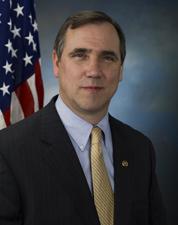
Jeff Merkley
DOR · Senator
Full Text
Text of Senate Amendment 4632

Congressional Record, Volume 172 Issue 49 (Wednesday, March 18, 2026) [Congressional Record Volume 172, Number 49 (Wednesday, March 18, 2026)] [Senate] [Pages S1279-S1283] From the Congressional Record Online through the Government Publishing Office [ www.gpo.gov ] SA 4632. Mr. MERKLEY (for himself, Ms. Baldwin, and Mr. Booker) submitted an amendment intended to be proposed by him to the bill S. 1383, to establish the Veterans Advisory Committee on Equal Access, and for other purposes; which was ordered to lie on the table; as follows: Strike all after the enacting clause and insert the following: SECTION 1. SHORT TITLE. This Act may be cited as the ``Equality Act''. SEC. 2. FINDINGS AND PURPOSE. (a) Findings.--Congress finds the following: [[Page S1280]] (1) Discrimination can occur on the basis of the sex, sexual orientation, gender identity, pregnancy, childbirth, or a related medical condition of an individual, as well as because of sex-based stereotypes. Each of these factors alone can serve as the basis for discrimination, and each is a form of sex discrimination. (2) A single instance of discrimination may have more than one basis. For example, discrimination against a married same-sex couple could be based on the sex stereotype that marriage should only be between heterosexual couples, the sexual orientation of the two individuals in the couple, or both. In addition, some persons are subjected to discrimination based on a combination or the intersection of multiple protected characteristics. Discrimination against a pregnant lesbian could be based on her sex, her sexual orientation, her pregnancy, or on the basis of multiple factors. (3) Lesbian, gay, bisexual, transgender, and queer (referred to as ``LGBTQ'') people commonly experience discrimination in securing access to public accommodations-- including restaurants, senior centers, stores, places of or establishments that provide entertainment, health care facilities, shelters, government offices, youth service providers including adoption and foster care providers, and transportation. Forms of discrimination include the exclusion and denial of entry, unequal or unfair treatment, harassment, and violence. This discrimination prevents the full participation of LGBTQ people in society and disrupts the free flow of commerce. (4) Women also have faced discrimination in many establishments such as stores and restaurants, and places or establishments that provide other goods or services, such as entertainment or transportation, including sexual harassment, differential pricing for substantially similar products and services, and denial of services because they are pregnant or breastfeeding. (5) Many employers already and continue to take proactive steps, beyond those required by some States and localities, to ensure they are fostering positive and respectful cultures for all employees. Many places of public accommodation also recognize the economic imperative to offer goods and services to as many consumers as possible. (6) Regular and ongoing discrimination against LGBTQ people, as well as women, in accessing public accommodations contributes to negative social and economic outcomes, and in the case of public accommodations operated by State and local governments, abridges individuals' constitutional rights. (7) The discredited practice known as ``conversion therapy'' is a form of discrimination that harms LGBTQ people by undermining individuals' sense of self worth, increasing suicide ideation and substance abuse, exacerbating family conflict, and contributing to second-class status. (8) Both LGBTQ people and women face widespread discrimination in employment and various services, including by entities that receive Federal financial assistance. Such discrimination-- (A) is particularly troubling and inappropriate for programs and services funded wholly or in part by the Federal Government; (B) undermines national progress toward equal treatment regardless of sex, sexual orientation, or gender identity; and (C) is inconsistent with the constitutional principle of equal protection under the Fourteenth Amendment to the Constitution of the United States. (9) Federal courts have widely recognized that, in enacting the Civil Rights Act of 1964, Congress validly invoked its powers under the Fourteenth Amendment to provide a full range of remedies in response to persistent, widespread, and pervasive discrimination by both private and government actors. (10) Discrimination by State and local governments on the basis of sexual orientation or gender identity in employment, housing, and public accommodations, and in programs and activities receiving Federal financial assistance, violates the Equal Protection Clause of the Fourteenth Amendment to the Constitution of the United States. In many circumstances, such discrimination also violates other constitutional rights such as those of liberty and privacy under the due process clause of the Fourteenth Amendment. (11) Individuals who are LGBTQ, or are perceived to be LGBTQ, have been subjected to a history and pattern of persistent, widespread, and pervasive discrimination on the bases of sexual orientation and gender identity by both private sector and Federal, State, and local government actors, including in employment, housing, and public accommodations, and in programs and activities receiving Federal financial assistance. This discrimination inflicts a range of tangible and intangible harms, sometimes even including serious physical injury or death. An explicit and comprehensive national solution is needed to address this discrimination, including the full range of remedies available under the Civil Rights Act of 1964. (12) Discrimination based on sexual orientation includes discrimination based on an individual's actual or perceived romantic, emotional, physical, or sexual attraction to other persons, or lack thereof, on the basis of gender. LGBTQ people, including gender nonbinary people, also commonly experience discrimination because of sex-based stereotypes. Many people are subjected to discrimination because of others' perceptions or beliefs regarding their sexual orientation. Even if these perceptions are incorrect, the identity imputed by others forms the basis of discrimination. (13) Numerous provisions of Federal law expressly prohibit discrimination on the basis of sex, and Federal courts and agencies have correctly interpreted these prohibitions on sex discrimination to include discrimination based on sexual orientation, gender identity, and sex stereotypes. In particular, the Supreme Court of the United States correctly held in Bostock v. Clayton County, 140 S. Ct. 1731 (2020) that the prohibition on employment discrimination because of sex under title VII of the Civil Rights Act of 1964 inherently includes discrimination because of sexual orientation or transgender status. (14) This Act makes explicit that existing Federal statutes prohibiting sex discrimination in employment (including in access to benefits), healthcare, housing, education, credit, and jury service also prohibit sexual orientation and gender identity discrimination. (15) LGBTQ people often face discrimination when seeking to rent or purchase housing, as well as in every other aspect of obtaining and maintaining housing. LGBTQ people in same-sex relationships are often discriminated against when two names associated with one gender appear on a housing application, and transgender people often encounter discrimination when credit checks or inquiries reveal a former name. (16) National surveys, including a study commissioned by the Department of Housing and Urban Development, show that housing discrimination against LGBTQ people is very prevalent. For instance, when same-sex couples inquire about housing that is available for rent, they are less likely to receive positive responses from landlords. A national matched-pair testing investigation found that nearly one-half of same-sex couples had encountered adverse, differential treatment when seeking elder housing. According to other studies, transgender people have half the homeownership rate of non-transgender people and about 1 in 5 transgender people experience homelessness. Another survey found that 82 percent of gender nonbinary people experiencing homelessness lacked access to shelter. (17) As a result of the absence of explicit prohibitions against discrimination on the basis of sexual orientation and gender identity, credit applicants who are LGBTQ, or are perceived to be LGBTQ, have unequal opportunities to establish credit. LGBTQ people can experience being denied a mortgage, credit card, student loan, or many other types of credit simply because of their sexual orientation or gender identity. (18) Numerous studies demonstrate that LGBTQ people, especially transgender people and women, are economically disadvantaged and at a higher risk for poverty compared with other groups of people. For example, the poverty rate for older women in same-sex couples is twice that of older different-sex couples. (19) The right to an impartial jury of one's peers and the reciprocal right to jury service are fundamental to the free and democratic system of justice in the United States and are based in the Bill of Rights. There is, however, an unfortunate and long-documented history in the United States of attorneys discriminating against LGBTQ individuals, or those perceived to be LGBTQ, in jury selection. Failure to bar peremptory challenges based on the actual or perceived sexual orientation or gender identity of an individual not only erodes a fundamental right, duty, and obligation of being a citizen of the United States, but also unfairly creates a second class of citizenship for LGBTQ victims, witnesses, plaintiffs, and defendants. (20) Numerous studies document the shortage of qualified and available homes for the approximately 424,000 youth in the child welfare system and the negative