Floor Speech2026-03-05
CHILDREN AND TEENS' ONLINE PRIVACY PROTECTION ACT
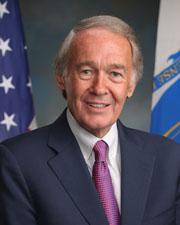
Edward J. Markey
DMA · Senator
Full Text
CHILDREN AND TEENS' ONLINE PRIVACY PROTECTION ACT

Congressional Record, Volume 172 Issue 42 (Thursday, March 5, 2026) [Congressional Record Volume 172, Number 42 (Thursday, March 5, 2026)] [Senate] [Pages S860-S869] From the Congressional Record Online through the Government Publishing Office [ www.gpo.gov ] CHILDREN AND TEENS' ONLINE PRIVACY PROTECTION ACT Mr. MARKEY. Mr. President, in a moment, I will ask unanimous consent that the Senate pass the Children and Teens' Online Privacy Protection Act, or COPPA 2.0, bipartisan legislation that would finally update our children's online privacy law for the modern internet age. More than 25 years ago, I passed the original Children's Online Privacy Protection Act. At that time, the internet looked very different than it does today. Only birds tweeted 25 years ago. TikTok was the sound that a clock made. But one thing that has not changed, children and teens deserve privacy, they deserve safety, and they deserve protection online. Unfortunately, Big Tech's business model has evolved far faster than our laws. Today, the largest online platforms collect enormous amounts of personal data from the users, including from children and from teenagers. That data fuels an advertising machine designed to keep young people clicking, swiping, and scrolling for as long as possible. These ads are big business for Big Tech. In 2022, the major Big Tech platforms earned nearly $11 billion from U.S. users 17 and under. This model has real consequences for the well-being of our young people--$11 billion. And we are facing a youth mental health crisis in this country, driven in part by social media platforms. I have said these statistics on the floor before, but they bear repeating. According to the Centers for Disease Control, one in four teenage high school girls in the United States seriously considered suicide in 2023. At least one in eight high school girls in the United States in 2023 attempted suicide. Among LGBTQ+ youth, the number is more than one in five who attempted suicide in 2023. Congress has a responsibility to respond. COPPA 2.0 does exactly that. It brings our children's privacy law into the 21st century and gives young people and their families meaningful control over their personal information. First, COPPA 2.0 bans targeted advertising to children and teenagers. The days of building detailed behavioral profiles on young people in order to serve them manipulative, hyperpersonalized ads--that era must come to an end. That is what we are talking about in this legislation here today--ending that era in our country. Second, the legislation creates an ``eraser'' button, allowing children and teens and their parents to delete the personal data that platforms have collected about them. Third, COPPA 2.0, the Children's Online Privacy Protection Act 2.0, establishes strong limits on the collection of personal information from minors. If a platform, for example, does not need a child's or a teen's data to provide the service, it should not be collecting that data in the first place. These are simple, commonsense protections, and they have broad bipartisan support. I am very, very proud to have worked over the last 3 years with my friend Senator Cassidy from Louisiana on constructing this legislation and moving it to the floor here today. He is a physician, and he is someone who believes in preventive care. That is what this bill is today. It just avoids much of the harm that otherwise will be imposed upon teenagers and children in our country. I also want to thank Chairman Cruz, Ranking Member Cantwell, and many other Members in this body who have helped move this legislation forward. This effort has also been driven by parents, by advocates, by young people themselves--families who have experienced firsthand the harms that can result when online platforms prioritize profit over the safety of children. Passing COPPA 2.0 today would represent the single most significant update to children's online privacy protections in a quarter of a century. It is long overdue. We know there is a crisis, and it would send a clear message that Congress is prepared to stand up to Big Tech and put the interests of kids and families first. I would be remiss if I did not note what is happening across the Capitol [[Page S861]] today. Even as the Senate works in a bipartisan manner to strengthen protections for children and teens online, the House Energy and Commerce Committee is marking up a weaker partisan version of this legislation. That proposal strips away key protections and undermines the strong bipartisan compromise that Members of this Chamber have worked for years to develop. The children in our country deserve better than a watered-down privacy bill in this online era. For kids in our country right now, online access is like oxygen for them. It is all day. It is every day. Yet we haven't updated the safety protections in 25 years. I urge my colleagues in the House to set aside partisan differences and take up the Senate's bipartisan bill so that we can finally deliver meaningful online privacy protections for children and teenagers across our country. Young people and their families have waited long enough. That is what we will be voting on right now. With that, I yield to my partner and my friend in this effort, the Senator from Louisiana, Senator Cassidy. The PRESIDING OFFICER. The Senator from Louisiana. Mr. CASSIDY. Mr. President, I thank Senator Markey. Let me just point out that this continues Senator Markey's decades- long work on protecting children in this sort of environment, work which I have been privileged to join for the last couple of years. Every parent should know that their child can go online without being tracked, targeted, or taken advantage of. Now every child, it seems, is using the internet for school, for connections, and just to look things up, but they shouldn't have to pay for that access with their personal information, particularly when the child doesn't understand the value of their personal information. They should not have their data collected, shared, or sold without their knowledge and consent and without the knowledge and consent of their parents. That is why the Children and Teens' Online Privacy Protection Act, COPPA 2.0, matters. It updates the rules for today's digital world and places protections where they belong--around our children. This bill gives families the confidence that their child can learn and connect and explore online safely. Again, I thank Senator Markey for his collaboration on this. Mr. MARKEY. I thank my friend for his consistent support in protecting teenagers and children in our country. With that, Mr. President, I ask unanimous consent that the Senate proceed to the immediate consideration of Calendar No. 304, S. 836. The PRESIDING OFFICER. The clerk will report the bill by title. The senior assistant legislative clerk read as follows: A bill (S. 836) to amend the Children's Online Privacy Protection Act of 1998 to strengthen protections relating to the online collection, use, and disclosure of personal information of children and teens, and for other purposes. There being no objection, the Senate proceeded to consider the bill, which had been reported from the Committee on Commerce, Science, and Transportation, with amendments, as follows: (The parts of the bill intended to be stricken are in boldfaced brackets, and the parts of the bill intended to be inserted are in italic.) S. 836 Be it enacted by the Senate and House of Representatives of the United States of America in Congress assembled, SECTION 1. SHORT TITLE; TABLE OF CONTENTS. (a) Short Title.--This Act may be cited as the ``Children and Teens' Online Privacy Protection Act''. (b) Table of Contents.--The table of contents for this Act is as follows: Sec. 1. Short title; table of contents. Sec. 2. Online collection, use, disclosure, and deletion of personal information of children and teens. Sec. 3. Study and reports of mobile and online application oversight and enforcement. Sec. 4. GAO study. Sec. 5. Severability. SEC. 2. ONLINE COLLECTION, USE, DISCLOSURE, AND DELETION OF PERSONAL INFORMATION OF CHILDREN AND TEENS. (a) Definitions.--Section 1302 of the Children's Online Privacy Protection Act of 1998 (15 U.S.C. 6501) is amended-- (1) by amending paragraph (2) to read as follows: ``(2) Operator.--The term `operator'-- ``(A) means any person-- ``(i) who, for commercial purposes, in interstate or foreign commerce operates or provides a website on the internet, an online service, an online application, or a mobile application; and ``(ii) who-- ``(I) collects or maintains, either directly or through a service provider, personal information from or about the users of that website, service, or application; ``(II) allows another person to collect personal information directly from users of that website, service, or application (in which case, the operator is deemed to have collected the information); or ``(III) allows users of that website, service, or application to publicly disclose personal information (in which case, the operator is deemed to have collected the information); and ``(B) does not include any nonprofit entity that would otherwise be exempt from coverage under section 5 of the Federal Trade Commission Act (15 U.S.C. 45).''; (2) in paragraph (4)-- (A) by amending subparagraph (A) to read as follows: ``(A) the release of personal information collected from a child or teen by an operator for any purpose, except where the personal information is provided to a person other than an operator who-- ``(i) provides support for the internal operations of the website, online service, online application, or mobile application of the operator, excluding any activity relating to individual-specific advertising to children or teens; and ``(ii) does not disclose or use that personal information for any other purpose; and''; and (B) in subparagraph (B)-- (i) by inserting ``or teen'' after ``child'' each place the term appe

Referenced legislation: S836, S836