Floor Speech2026-03-04
PAYING TRIBUTE TO WILLIAM B. ADKINS
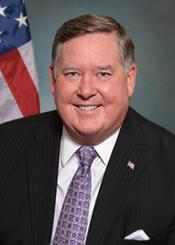
Ken Calvert
RCA-41 · Representative
Full Text
PAYING TRIBUTE TO WILLIAM B. ADKINS

Congressional Record, Volume 172 Issue 41 (Wednesday, March 4, 2026) [Congressional Record Volume 172, Number 41 (Wednesday, March 4, 2026)] [Extensions of Remarks] [Page E186] From the Congressional Record Online through the Government Publishing Office [ www.gpo.gov ] PAYING TRIBUTE TO WILLIAM B. ADKINS ______ HON. KEN CALVERT of california in the house of representatives Wednesday, March 4, 2026 Mr. CALVERT. Mr. Speaker, I rise to pay tribute to Mr. William ``Bill'' Adkins as he departs service to this body to assume the role of Principal Deputy Director for the National Reconnaissance Office. Over the past 40 years, Bill has honorably served the United States in both the executive and legislative branches as well as in the private sector, As we ``snap the chalk line'' on this chapter of Bill's service, I am pleased to honor his dedicated service as a professional staff member for the United States House of Representatives, Committee on Appropriations, Subcommittee on Defense. Bill's road to the House of Representatives began with completion of his undergraduate degree at The George Washington University here in Washington, D.C., where he majored in mechanical engineering. Bill worked for four years as a spacecraft systems engineer for the Naval Research Laboratory on various defense research space programs before joining the National Reconnaissance Office, for the first time, as a project manager and systems engineer in 1990. In these roles, Bill oversaw numerous classified research and development projects, matured technology across several intelligence methods or ``INTs'', including geospatial intelligence, signals intelligence, and measurement and signature intelligence. Perhaps as importantly, Bill learned firsthand that the Department of Defense and Intelligence Community are ``consistently inconsistent'' in the administration of policies and procedures, and that the legendary United States Navy Admiral Hyman Rickover may have been right when he testified that program managers, ``have only the shallowest knowledge of the theory of the techniques they much deal with and little experience with the practical problems involved.'' Bill culminated his initial tour at the National Reconnaissance Office with a fellowship in the United States Senate for Senator Spencer Abraham of Michigan. After overseeing defense and national security issues for the senator, in 2000 Bill joined the House of Representatives as the staff director for the Committee on Science, Subcommittee on Space and Aeronautics. It is in this capacity that Bill's path first crossed my own. As my principal advisor on all matters of civil space, Bill was my eyes, ears, and voice on the annual budget request for the National Aeronautic and Space Administration-- better known as NASA--and other civil space agencies, which totaled over $16 billion at the time. After six years of service to the Committee on Science, Bill ventured into the private sector and started a consulting business. For nearly a decade, he advised aerospace and defense chief executives on policy and legislative strategy, business development, and strategic planning. In 2016, Bill again heeded the call to service in the House of Representatives. This time for the Committee on Appropriations, where our paths would again cross. Bill began his tenure on Surveys and Investigations, a unique bipartisan team charged to deeply review topics raised by both the chair and ranking member of an appropriations subcommittee. In this role, Bill investigated several Department of Defense programs and drafted reports, recommendations, and studies based on the results, After two years, Bill was hired onto the Subcommittee on Defense. Over his eight years with the subcommittee, Bill oversaw an expansive and critical portfolio that included the United States Space Force, National Reconnaissance Office, National Security Agency, National Geospatial-Intelligence Agency, and United States Space Command. In total, these programs account for over $50 billion of the annual defense appropriations act. As the committee's subject matter expert on space, Bill provided me, and the chairs before me, with sage counsel on the creation and development of the Space Force. ``The problem with space is on the ground,'' was Bill's refrain at many a meeting with members of the committee and senior department officials alike, And as pithy as it sounds, Bill is right. The Space Force, or any department or agency, cannot adequately provide for the Nation's defense if it hasn't invested in the critical infrastructure and foundational capabilities necessary to ensure exquisite technologies actually work for the warfighter. As Bill begins his new role, I would be remiss if I did not note the tremendously positive impact he has had on me, other members of the committee, and the entire defense appropriations staff. Bill's positive attitude, infectious spirit, and deep knowledge have been critical to the committee over some of the most challenging appropriations cycles in recent memory. Bill has often said that there is nothing that cannot be accomplished in the Pentagon with the right memo over the right signature. I expect that Bill is now that ``right signature'' and I look forward to seeing what he will accomplish for the National Reconnaissance Office, the Department of Defense and Intelligence Community, and a grateful Nation. I join my colleagues today in recognizing and commending Bill for his service to our country and wish him the best in his new role. ____________________