Floor Speech2026-03-16
POST-DISASTER REFORESTATION AND RESTORATION ACT OF 2025
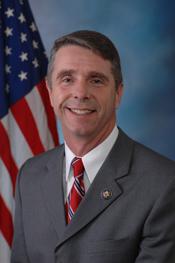
Robert J. Wittman
RVA-1 · Representative
Full Text
POST-DISASTER REFORESTATION AND RESTORATION ACT OF 2025

Congressional Record, Volume 172 Issue 47 (Monday, March 16, 2026) [Congressional Record Volume 172, Number 47 (Monday, March 16, 2026)] [House] [Pages H2524-H2525] From the Congressional Record Online through the Government Publishing Office [ www.gpo.gov ] POST-DISASTER REFORESTATION AND RESTORATION ACT OF 2025 Mr. WITTMAN. Madam Speaker, I move to suspend the rules and pass the bill (H.R. 528) to require the Secretary of the Interior to carry out a program for Post-Disaster Reforestation and Restoration Program, and for other purposes, as amended. The Clerk read the title of the bill. The text of the bill is as follows: H.R. 528 Be it enacted by the Senate and House of Representatives of the United States of America in Congress assembled, SECTION 1. SHORT TITLE. This Act may be cited as the ``Post-Disaster Reforestation and Restoration Act''. SEC. 2. POST-DISASTER REFORESTATION AND RESTORATION PROGRAM. (a) In General.--Not later than 1 year after the date of the enactment of this Act and annually thereafter, the Secretary, in coordination with the heads of the covered agencies, shall identify covered lands requiring reforestation and restoration following unplanned disturbances that are unlikely to experience natural regeneration without assistance. (b) Priority Projects.--In consultation with the heads of covered agencies, the Secretary-- (1) shall propose a list of priority projects for reforestation and restoration for each fiscal year; (2) may carry out priority projects through-- (A) competitively awarded grants; (B) contracts; (C) contracts established under the Indian Self- Determination and Education Assistance Act (25 U.S.C. 5301 et seq.); and (D) cooperative agreements, to be awarded in accordance with applicable requirements established by the Secretary; and (3) may support any grant contract or cooperative agreement that may be necessary to ensure adequate and appropriate seed and seedling availability to further the objectives of priority projects. (c) Outreach.--To fulfill requirements of this section the heads of covered agencies shall conduct outreach to-- (1) Indian Tribes; (2) States; (3) territories; (4) units of local government; (5) Alaska Native organizations; (6) Native Hawaiian organizations; (7) institutions of higher education; (8) Federal agencies with jurisdiction over Federal land adjoining or proximal to priority projects; and (9) other stakeholders as determined by the Secretary. (d) Reports and Recommendations.--Not later than 2 years after the date of the enactment of this Act, and annually thereafter, the Secretary shall submit to the relevant Congressional Committees a report that includes the following: (1) An accounting of all covered lands requiring reforestation and restoration. (2) A list of priority projects and implementation progress to address reforestation and restoration objectives identified. (3) An accounting of grants, contracts, and cooperative agreements established in furtherance of priority projects. (4) Outreach efforts by covered agencies to advance priority projects. (5) Assessments of, and recommendations relating to seed, seedling, and implementation gaps to advance priority projects and opportunities to establish dedicated funding necessary to address any backlog of reforestation and restoration needs. (e) Sunset.--The authority provided under this section shall terminate on the date that is 7 years after the date of enactment of this Act. (f) Definitions.--In this section: (1) Covered agency.--The term ``covered agency'' means the National Park Service, the United States Fish and Wildlife Service, the Bureau of Land Management, the Bureau of Reclamation, and the Bureau of Indian Affairs. (2) Covered lands.--The term ``covered lands'' means-- (A) any Federal land or interest in land administered by a covered agency; or (B) Indian Forest Land or Rangeland. (3) Indian forest land or rangeland.--The term ``Indian Forest Land or Rangeland'' means land that-- (A) is held in trust by, or with a restriction against alienation by, the United States for an Indian Tribe or a member of an Indian Tribe; and (B)(i)(I) is Indian forest land (as defined in section 304 of the National Indian Forest Resources Management Act (25 U.S.C. 3103)); or (II) has a cover of grasses, brush, or any similar vegetation; or (ii) formerly had a forest cover or vegetative cover that is capable of restoration. (4) Indian tribe.--The term ``Indian Tribe'' means any Indian or Alaska Native tribe, band, nation, pueblo, village, or community individually identified (including parenthetically) in the list published most recently as of the date of enactment of this Act pursuant to section 104 of the Federally Recognized Indian Tribe List Act of 1994 (25 U.S.C. 5131). (5) Natural regeneration.--The term ``natural regeneration'' has the meaning given the term in section (e)(4) of the Forest and Rangeland Renewable Resources Planning Act of 1974 (U.S.C. 36 1601). (6) Reforestation.--The term ``reforestation'' has the meaning given the term in section (e)(4) of the Forest and Rangeland Renewable Resources Planning Act of 1974 (U.S.C. 36 1601). (7) Restoration.--The term ``restoration'' means assisting the recovery of an ecosystem that has been degraded, damaged, or destroyed, including the reestablishment of appropriate plant species composition and community structure. (8) Secretary.--The term ``Secretary'' means the Secretary of the Interior. (9) Unplanned disturbance.--The term ``unplanned disturbance'' means any unplanned disturbance that disrupts ecosystem structure or composition and may include a wildfire, an infestation of insects or disease, or a weather event. The SPEAKER pro tempore. Pursuant to the rule, the gentleman from Virginia (Mr. Wittman) and the gentlewoman from Maryland (Ms. Elfreth) each will control 20 minutes. The Chair recognizes the gentleman from Virginia. General Leave Mr. WITTMAN. Madam Speaker, I ask unanimous consent that all Members may have 5 legislative days to revise and extend their remarks and include extraneous material on H.R. 528, the bill now under consideration. The SPEAKER pro tempore. Is there objection to the request of the gentleman from Virginia? There was no objection. Mr. WITTMAN. Madam Speaker, I yield myself such time as I may consume. Madam Speaker, I rise today in support of H.R. 528, the Post-Disaster Reforestation and Restoration Act, sponsored by Representative Pettersen. Madam Speaker, this bipartisan legislation, which is also part of the Fix Our Forests Act, would create a post-disaster reforestation and restoration program at the Department of the Interior. Across the country, catastrophic wildfires are burning hotter and more severely, turning once-pristine landscapes into charred moonscapes. Hurricanes, windstorms, mudslides, and other natural disasters can also leave behind millions of acres of land in need of reforestation. In many cases, if Federal land managers don't move quickly to replant and restore scorched or uprooted lands, once-lush forests can permanently decay into low-lying scrublands that are unproductive and vulnerable to future fire and erosion. When these forests disappear, they take with them clean water, wildlife habitat, and the livelihoods of communities that depend on them for recreation and employment. With millions of acres of forests lost to catastrophic wildfires and other disasters, our Federal agencies are bearing the strain of an enormous backlog of replanting and restoration work. In 2021, Congress passed legislation to partially address the Forest Service's priority reforestation needs, although no similar authority was included for the Department of the Interior. H.R. 528 offers a straightforward solution to tackle the crisis and provides consistency across all Federal land management agencies. This bill directs agencies within the Department of the Interior to identify priority landscapes most in need of reforestation and to proactively partner with States, Tribes, local communities, and institutions of higher learning to advance high-priority restoration projects. This bill is a practical, bipartisan way to prioritize vital restoration work that requires immediate action. By allowing Federal agencies to work with trusted partners, we can clear the way for reforestation, get to faster restoration, and serve the communities that rely on healthy, resilient forests. I thank Representative Pettersen for her work on this bill, as well as for her work on Fix Our Forests Act. Madam Speaker, I urge my colleagues to join me in supporting this bill, and I reserve the balance of my time. [[Page H2525]] House of Representatives, Committee on Agriculture, Washington, DC, September 5, 2025. Hon. Bruce Westerman, Chairman, Committee on Natural Resources, Washington, DC. Dear Mr. Chairman: This letter confirms our mutual understanding regarding H.R. 528, the ``Post-Disaster Reforestation and Restoration Act of 2025.'' Thank you for collaborating with the Committee on Agriculture on the matters within our jurisdiction. The Committee on Agriculture will forego any further consideration of this bill. However, by foregoing consideration at this time, we do not waive any jurisdiction over any subject matter contained in this or similar legislation. The Committee on Agriculture also reserves the right to seek appointment of an appropriate number of conferees, should it become necessary, and ask that you support such a request. We would appreciate a response to this letter confirming this understanding with respect to H.R. 528 and request a copy of our letters on this matter be published in the Congressional Record during Floor consideration Sincerely, Glenn ``GT'' Thompson, Chairman. ____ House of Representatives, Committee on Natural Resources, Washington, DC, September 8, 2025. Hon. Glenn Thompson, Chairman, Committee on Agriculture, Washington, DC. Dear Chairman Thompson: I write regarding H.R. 528. the ``Post-Disas

Referenced legislation: HR528, HR528