Floor Speech2026-03-09
Text of Senate Amendment 4382
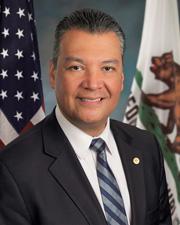
Alex Padilla
DCA · Senator
Full Text
Text of Senate Amendment 4382

Congressional Record, Volume 172 Issue 43 (Monday, March 9, 2026) [Congressional Record Volume 172, Number 43 (Monday, March 9, 2026)] [Senate] [Pages S933-S934] From the Congressional Record Online through the Government Publishing Office [ www.gpo.gov ] SA 4382. Mr. PADILLA submitted an amendment intended to be proposed by him to the bill H.R. 6644, a bill to increase the supply of housing in America, and for other purposes; which was ordered to lie on the table; as follows: At the appropriate place, insert the following: SEC. __. GRANT PROGRAM TO COORDINATE HEALTH CARE AND HOMELESSNESS SERVICES. (a) Definitions.--In this section: (1) Behavioral health.--The term ``behavioral health'' includes mental health and substance use. (2) Eligible entity.--The term ``eligible entity'' means an entity described in subsection (b)(3)(D) that is eligible for a competitive grant under subsection (b). (3) Indian tribe.--The term ``Indian Tribe'' has the meaning given the term in section 4 of the Indian Self- Determination and Education Assistance Act (25 U.S.C. 5304). (4) Person experiencing homelessness.--The term ``person experiencing homelessness'' has the same meaning as the terms ``homeless'', ``homeless individual'', and ``homeless person'', as defined in section 103 of the McKinney-Vento Homeless Assistance Act (42 U.S.C. 11302). (5) Public housing agency.--The term ``public housing agency'' has the meaning given the term in section 3(b)(6) of the United States Housing Act of 1937 (42 U.S.C. 1437a(b)(6)). (6) Secretary.--The term ``Secretary'' means the Secretary of Housing and Urban Development. (7) Substance use disorder.--The term ``substance use disorder'' means the disorder that occurs when the recurrent use of alcohol or drugs, or both, causes clinically significant impairment, including health problems, disability, and failure to meet major responsibilities at work, school, or home. (8) Tribal organization.--The term ``Tribal organization''-- (A) has the meaning given the term in section 4 of the Indian Self-Determination and Education Assistance Act (25 U.S.C. 3504); and (B) includes entities that serve Native Hawaiians, as defined in section 338K(c) of the Public Health Service Act (42 U.S.C. 254s(c)). (9) Tribally designated housing entity.--The term ``tribally designated housing entity'' has the meaning given the term in section 4 of the Native American Housing Assistance and Self-Determination Act of 1996 (25 U.S.C. 4103). (b) Establishment of Grant Program.-- (1) In general.--The Secretary, in coordination with the Secretary of Health and Human Services and in consultation with the working group established under paragraph (2), shall establish a grant program to award competitive grants to eligible entities in direct coordination with a continuum of care to build or increase capacity to coordinate the delivery of health care and homelessness services within the continuum of care. (2) Working group.-- (A) Establishment.--The Secretary, in coordination with the Secretary of Health and Human Services, shall establish an interagency working group to provide advice and coordinate along relevant existing working groups to the Secretary in carrying out the program established under paragraph (1). (B) Composition.--The working group established under subparagraph (A) shall include representatives from the Department [[Page S934]] of Health and Human Services, the Department of Housing and Urban Development, the United States Interagency Council on Homelessness, the Department of Agriculture, and the Bureau of Indian Affairs, to be appointed by the heads of such agencies. (C) Development of assistance tools.--Not later than 1 year after the date of enactment of this Act, the working group established under subparagraph (A) shall-- (i) develop training, tools, and other technical assistance materials that simplify homelessness services for providers of health care and simplify health care services for providers of homelessness services by identifying the basic elements the health and homelessness sectors need to understand about the other; and (ii) circulate the materials described in clause (i) to interested entities, particularly eligible entities that apply for grants awarded pursuant to this Act. (3) Capacity-building grants.-- (A) In general.--The Secretary shall award 5-year grants to eligible entities, which shall be used only to build or increase capacities to coordinate health care and homelessness services. (B) Prohibition.--None of the proceeds from the grants awarded pursuant to this Act may be used to pay for-- (i) health care, with the exception of efforts to increase the availability of Naloxone and provide training for the administration of Naloxone; or (ii) rent. (C) Amount.--The amount awarded to an eligible entity under a grant under this paragraph shall not exceed $500,000. (D) Eligibility.--To be eligible to receive a grant under this paragraph, an entity shall-- (i) be designated by a continuum of care to ensure coordination across the continuum of care geographic regions, and which may be-- (I) a governmental entity at the county, city, regional, or locality level; (II) an Indian Tribe, a tribally designated housing entity, a Tribal organization, or an urban Indian organization; (III) a public housing agency administering housing choice vouchers; or (IV) a nonprofit organization; (ii) be responsible for homelessness services; (iii) provide such assurances as the Secretary shall require that, in carrying out activities with amounts from the grant, the entity will ensure that services are culturally competent, meet the needs of the people being served, and follow trauma-informed best practices to address those needs using a harm reduction approach; and (iv) demonstrate how the capacity of the entity to coordinate health care and homelessness services to better serve people experiencing homelessness and significant behavioral health issues, including substance use disorder, can be increased through-- (I) the designation of a governmental official as a coordinator for making connections between health and homelessness services and developing a strategy for using those services in a holistic way to help people experiencing homelessness and behavioral health conditions such as substance use disorder, including those with co-occurring conditions; (II) improvements in infrastructure at the systems level; (III) improvements in technology for voluntary remote monitoring capabilities, including internet and video, which can allow for more home- and community-based behavioral health care services and ensure such improvements maintain effective communication requirements for persons with disabilities and program access for persons with limited English proficiency; (IV) improvements in connections to health care services delivered by providers experienced in behavioral health care and people experiencing homelessness; (V) efforts to increase the availability, and training for the administration, of opioid antagonists indicated for emergency treatment of opioid overdose; and (VI) any additional activities identified by the Secretary that will advance the coordination of homelessness assistance, housing, and behavioral health care services and other health care services. (E) Eligible activities.--An eligible entity receiving a grant under this paragraph may use the grant to cover costs related to-- (i) hiring system coordinators; and (ii) administrative costs, including staffing costs, technology costs, and other such costs identified by the Secretary. (F) Distribution of funds.--An eligible entity receiving a grant under this paragraph may distribute all or a portion of the grant amounts to private nonprofit organizations, other government entities, State, local, or Tribal public health departments, community health centers or organizations, public housing agencies, tribally designated housing entities, or other entities as determined by the Secretary to carry out programs and activities in accordance with this section. (G) Oversight requirements.-- (i) Annual reports.--Not later than 6 years after the date on which grant amounts are first received by an eligible entity, the eligible entity shall submit to the Secretary a report on the activities carried out under the grant, which shall include, with respect to activities carried out with grant amounts in the community served-- (I) measures of outcomes relating to whether people experiencing homelessness and significant behavioral health issues, including substance use disorder, who sought help from an entity that received a grant-- (aa) were housed and did not experience intermittent periods of homelessness; (bb) were voluntarily enrolled in treatment and recovery programs; (cc) experienced improvements in their health; (dd) obtained access to specific primary care providers; and (ee) have health care plans that meet their individual needs, including access to mental health and substance use disorder treatment and recovery services; (II) how grant funds were used; and (III) any other matters determined appropriate by the Secretary. (ii) Rule of construction.--Nothing in this paragraph may be construed to condition the receipt of future housing and other services by individuals assisted with activities and services provided with grant amounts on the outcomes detailed in the reports submitted under this subparagraph. (4) Administration.--The Secretary shall carry out the requirements under this section through the Office of Special Needs Assistance Programs within the Office of Community Planning and Development of the Department of Housing and Urban Development. (5) Authorization of appropriations.--There is authorized to be appropriated to carry out this section $20,000,000 for each of fiscal years 2027 through 2032, of which not less than 5 percent of such funds shall be awarded to Indian Tribes, tribally designated housing entities, and Tribal organiz