Floor Speech2026-03-18
Text of Senate Amendment 4646
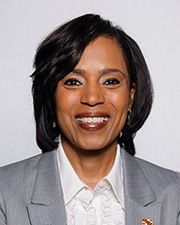
Angela D. Alsobrooks
DMD · Senator
Full Text
Text of Senate Amendment 4646

Congressional Record, Volume 172 Issue 49 (Wednesday, March 18, 2026) [Congressional Record Volume 172, Number 49 (Wednesday, March 18, 2026)] [Senate] [Pages S1303-S1305] From the Congressional Record Online through the Government Publishing Office [ www.gpo.gov ] SA 4646. Ms. ALSOBROOKS submitted an amendment intended to be [[Page S1304]] proposed by her to the bill S. 1383, to establish the Veterans Advisory Committee on Equal Access, and for other purposes; which was ordered to lie on the table; as follows: At the appropriate place, insert the following: SEC. __. PROHIBITION ON DECEPTIVE COMMUNICATIONS REGARDING FEDERAL ELECTIONS. (a) Prohibition.--Subsection (b) of section 2004 of the Revised Statutes (52 U.S.C. 10101(b)) is amended-- (1) by striking ``No person'' and inserting the following: ``(1) In general.--No person''; and (2) by adding at the end the following new paragraphs: ``(2) Prohibition on deceptive communications regarding federal elections.-- ``(A) False statements.--No person, whether acting under color of law or otherwise, shall, within 60 days before an election described in paragraph (4), by any means, including by means of written, electronic, or telephonic communications, communicate or cause to be communicated information described in subparagraph (C), or produce information described in subparagraph (C) with the intent that such information be communicated, if such person-- ``(i) knows such information to be materially false; and ``(ii) has the intent to impede or prevent another person from exercising the right to vote in an election described in paragraph (4). ``(B) Use of generative artificial intelligence.--No person, whether acting under color of law or otherwise, shall use an artificial intelligence system, including a generative artificial intelligence system, to produce information described in subparagraph (C) within 60 days before an election described in paragraph (4) if such person-- ``(i) has the intent to use the system to produce false information; and ``(ii) has the intent to use the system to impede or prevent another person from exercising the right to vote in an election described in paragraph (4). ``(C) Information described.--Information is described in this subparagraph if such information is regarding-- ``(i) the time, place, or manner of holding any election described in paragraph (4); or ``(ii) the qualifications for or restrictions on voter eligibility for any such election, including-- ``(I) any criminal, civil, or other legal penalties associated with voting in any such election; or ``(II) information regarding a voter's registration status or eligibility. ``(3) Hindering, interfering with, or preventing voting or registering to vote.--No person, whether acting under color of law or otherwise, shall intentionally hinder, interfere with, or prevent another person from voting, registering to vote, or aiding another person to vote or register to vote in an election described in paragraph (4), including by operating a polling place or ballot box that falsely purports to be an official location established for such an election by a unit of government. ``(4) Election described.--An election described in this paragraph is any general, primary, runoff, or special election held solely or in part for the purpose of nominating or electing a candidate for the office of President, Vice President, Presidential elector, Member of the Senate, Member of the House of Representatives, or Delegate or Commissioner from a Territory or possession. ``(5) Definitions.-- ``(A) Artificial intelligence.--The term `artificial intelligence' has the meaning given the term in section 5002 of the National Artificial Intelligence Initiative Act of 2020 (15 U.S.C. 9401). ``(B) Generative artificial intelligence.--The term `generative artificial intelligence' means the class of artificial intelligence models that emulate the structure and characteristics of input data in order to generate derived synthetic content. This can include images, videos, audio, text, and other digital content.''. (b) Private Right of Action.-- (1) In general.--Subsection (c) of section 2004 of the Revised Statutes (52 U.S.C. 10101(c)) is amended-- (A) by striking ``Whenever any person'' and inserting the following: ``(1) In general.--Whenever any person''; and (B) by adding at the end the following new paragraph: ``(2) Civil action.--Any person aggrieved by a violation of this section may institute a civil action for preventive relief, including an application in a United States district court for a permanent or temporary injunction, restraining order, or other order. In any such action, the court, in its discretion, may allow the prevailing party a reasonable attorney's fee as part of the costs.''. (2) Conforming amendments.--Section 2004 of the Revised Statutes (52 U.S.C. 10101) is amended-- (A) in subsection (e), by striking ``subsection (c)'' and inserting ``subsection (c)(1)''; and (B) in subsection (g), by striking ``subsection (c)'' and inserting ``subsection (c)(1)''. (c) Criminal Penalties.-- (1) Deceptive acts.--Section 594 of title 18, United States Code, is amended-- (A) by striking ``Whoever intimidates'' and inserting ``(a) In General.--Whoever intimidates''; (B) by striking ``at any election'' and inserting ``at any general, primary, runoff, or special election''; and (C) by adding at the end the following new subsections: ``(b) Deceptive Acts.-- ``(1) False statements regarding federal elections.-- ``(A) Prohibition.--It shall be unlawful for any person, whether acting under color of law or otherwise, within 60 days before an election described in subsection (d), by any means, including by means of written, electronic, or telephonic communications, to communicate or cause to be communicated information described in subparagraph (B), or produce information described in subparagraph (B) with the intent that such information be communicated, if such person-- ``(i) knows such information to be materially false; and ``(ii) has the intent to impede or prevent another person from exercising the right to vote in an election described in subsection (d). ``(B) Information described.--Information is described in this subparagraph if such information is regarding-- ``(i) the time or place of holding any election described in subsection (d); or ``(ii) the qualifications for or restrictions on voter eligibility for any such election, including-- ``(I) any criminal, civil, or other legal penalties associated with voting in any such election; or ``(II) information regarding a voter's registration status or eligibility. ``(2) Penalty.--Any person who violates paragraph (1) shall be fined under this title, imprisoned for not more than 1 year, or both. ``(c) Hindering, Interfering With, or Preventing Voting or Registering To Vote.-- ``(1) Prohibition.--It shall be unlawful for any person, whether acting under color of law or otherwise, to corruptly hinder, interfere with, or prevent another person from voting, registering to vote, or aiding another person to vote or register to vote in an election described in subsection (d). ``(2) Penalty.--Any person who violates paragraph (1) shall be fined under this title, imprisoned for not more than 1 year, or both. ``(d) Election Described.--An election described in this subsection is any general, primary, runoff, or special election held solely or in part for the purpose of nominating or electing a candidate for the office of President, Vice President, Presidential elector, Senator, Member of the House of Representatives, or Delegate or Resident Commissioner to the Congress.''. (2) Sentencing guidelines.-- (A) Review and amendment.--Not later than 180 days after the date of enactment of this Act, the United States Sentencing Commission, pursuant to its authority under section 994 of title 28, United States Code, and in accordance with this section, shall review and, if appropriate, amend the Federal sentencing guidelines and policy statements applicable to persons convicted of any offense under section 594 of title 18, United States Code, as amended by this section. (B) Authorization.--The United States Sentencing Commission may amend the Federal Sentencing Guidelines in accordance with the procedures set forth in section 21(a) of the Sentencing Act of 1987 (28 U.S.C. 994 note) as though the authority under that section had not expired. (3) Payments for refraining from voting.--Subsection (c) of section 11 of the Voting Rights Act of 1965 (52 U.S.C. 10307) is amended by striking ``either for registration to vote or for voting'' and inserting ``for registration to vote, for voting, or for not voting''. (d) Corrective Action.-- (1) Corrective action.-- (A) In general.--If the Attorney General receives a credible report that materially false information has been or is being communicated in violation of section 2004(b)(2) of the Revised Statutes (52 U.S.C. 10101(b)(2)), as added by subsection (a), and if the Attorney General determines that State and local election officials have not taken adequate steps to promptly communicate accurate information to correct the materially false information, the Attorney General shall, pursuant to the written procedures and standards under paragraph (2), communicate to the public, by any means, including by means of written, electronic, or telephonic communications, accurate information designed to correct the materially false information. (B) Communication of corrective information.--Any information communicated by the Attorney General under subparagraph (A)-- (i) shall-- (I) be accurate and objective; (II) consist of only the information necessary to correct the materially false information that has been or is being communicated; and (III) to the extent practicable, be by a means that the Attorney General determines will reach the persons to whom the materially false information has been or is being communicated; and (ii) shall not be design

Referenced legislation: S1383