Floor Speech2025-01-13
PROMOTING OPPORTUNITIES TO WIDEN ELECTRICAL RESILIENCE ACT OF 2025
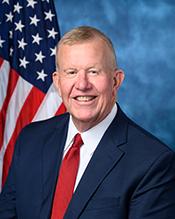
Mike Ezell
RMS-4 · Representative
Full Text
PROMOTING OPPORTUNITIES TO WIDEN ELECTRICAL RESILIENCE ACT OF 2025

Congressional Record, Volume 171 Issue 6 (Monday, January 13, 2025) [Congressional Record Volume 171, Number 6 (Monday, January 13, 2025)] [House] [Pages H103-H104] From the Congressional Record Online through the Government Publishing Office [ www.gpo.gov ] PROMOTING OPPORTUNITIES TO WIDEN ELECTRICAL RESILIENCE ACT OF 2025 Mr. GRAVES. Mr. Speaker, I move to suspend the rules and pass the bill (H.R. 164) to amend the Robert T. Stafford Disaster Relief and Emergency Assistance Act to authorize Federal agencies to provide certain essential assistance for hazard mitigation for electric utilities, and for other purposes. The Clerk read the title of the bill. The text of the bill is as follows: H.R. 164 Be it enacted by the Senate and House of Representatives of the United States of America in Congress assembled, SECTION 1. SHORT TITLE. This Act may be cited as the ``Promoting Opportunities to Widen Electrical Resilience Act of 2025'' or the ``POWER Act of 2025''. SEC. 2. ESSENTIAL ASSISTANCE. (a) In General.--Section 403 of the Robert T. Stafford Disaster Relief and Emergency Assistance Act (42 U.S.C. 5170b) is amended by adding at the end the following: ``(e) Electric Utilities.-- ``(1) Hazard mitigation activities.--An electric utility may carry out cost-effective hazard mitigation activities jointly or otherwise in combination with activities for the restoration of power carried out with assistance provided under this section. ``(2) Eligibility for additional assistance.-- In any case in which an electric utility facility receives assistance under this section for the emergency restoration of power, the receipt of such assistance shall not render such facility ineligible for any hazard mitigation assistance under section 406 for which such facility is otherwise eligible.''. (b) Applicability.--The amendment made by subsection (a) shall only apply to amounts appropriated on or after the date of enactment of this Act. The SPEAKER pro tempore. Pursuant to the rule, the gentleman from Missouri (Mr. Graves) and the gentlewoman from Oregon (Ms. Hoyle) each will control 20 minutes. The Chair recognizes the gentleman from Missouri. General Leave Mr. GRAVES. Mr. Speaker, I ask unanimous consent that Members have 5 legislative days in which to revise and extend their remarks and insert extraneous material into the Record on H.R. 164. The SPEAKER pro tempore. Is there objection to the request of the gentleman from Missouri? There was no objection. Mr. GRAVES. Mr. Speaker, I yield myself such time as I may consume. Mr. Speaker, following a natural disaster, electric utilities work tirelessly to restore power to their customers. However, because of FEMA's problematic interpretation of section 403 of the Stafford Act, once power is restored, even with temporary measures, electric utilities are deemed ineligible for reimbursement for permanent work and mitigation efforts. As a result, electric utilities are treated differently from all other critical infrastructure, even though building mitigation into our power systems reduces the costs of future disasters. H.R. 164 is going to address this by clarifying that electric utilities may build in mitigation measures that provide essential assistance and that it does not disqualify electric utilities from permanent work eligibility later in the disaster recovery process. Mr. Speaker, I urge support, and I reserve the balance of my time. Ms. HOYLE of Oregon. Mr. Speaker, I yield myself such time as I may consume. Mr. Speaker, I rise in support of H.R. 164, my legislation with Representative Ezell. This bill empowers publicly owned electric utilities to implement hazard mitigation improvements during disaster recovery. When disasters strike, they leave a trail of destruction, including damaged energy infrastructure that needs to be immediately repaired to restore power. At the same time, this can present an opportunity to improve the resilience of power infrastructure to reduce the risk of outages or fires in the future. I have spoken with many FEMA employees, and they feel like they have their hands tied because of rules that are in place that prevent them from being able to fund investments in resilience and infrastructure. As we are seeing more extreme weather because of climate change, we need to step up and spend taxpayer dollars more efficiently and better. That means that we have to change this law because the current law prevents FEMA from reimbursing utilities for hazard mitigation as they make temporary disaster repairs. This leads to wasted opportunities, more frequent power outages, and higher costs passed on to ratepayers. Commonsense solutions, like H.R. 164, are more critical than ever to keep energy costs low for American families. This bill maximizes FEMA's resources and helps communities protect critical infrastructure, leading to lower costs for utilities and families in the wake of future disasters. More importantly, it allows us to use taxpayer dollars to invest in resiliency as we are seeing more extreme weather coming at us every single day. Mr. Speaker, I urge my colleagues to support this legislation, and I reserve the balance of my time. Mr. GRAVES. Mr. Speaker, I want to publicly thank Representative Hoyle for her work on the bill. It is a great bill. Mr. Speaker, I yield 5 minutes to the gentleman from Mississippi (Mr. Ezell). Mr. EZELL. Mr. Speaker, I rise today to speak in favor of H.R. 164, the POWER Act, which would allow public electric utilities to implement cost-effective hazard mitigation activities as part of power restoration. Public power utilities are essential in ensuring our communities have access to reliable and resilient electricity, especially in the aftermath of major disasters. Current law says that if States and localities get cost reimbursements from FEMA for certain disaster recovery activities, like restoring power, then that could make them ineligible for future hazard mitigation funds. Our communities should not have to make either-or decisions when it comes to restoring critical infrastructure in the wake of natural disasters. Mr. Speaker, I am proud to co-lead this bill alongside Representative Hoyle, and I encourage my colleagues to support its passage. Ms. HOYLE of Oregon. Mr. Speaker, the costs of recovering from increasingly frequent severe weather events often raise the price of Americans' electric bills. This bill would help public power make their systems more resilient at the time of repair, increasing efficiency and cutting overall costs. I can't think of a more important set of bills to be passing at this time as the first bills coming up on suspension. These bills invest in our infrastructure and help FEMA be more transparent and utilize taxpayer dollars more efficiently. Again, I thank my colleague, Representative Ezell, for prioritizing and moving this bill forward. Mr. Speaker, I yield back the balance of my time. Mr. GRAVES. Mr. Speaker, in closing, this legislation is going to provide a whole lot of needed clarity to ensure that electric utilities are not penalized [[Page H104]] for acting quickly to restore power to those impacted by natural disasters. This legislation passed the Chamber under suspension of the rules by voice vote last December, and I look forward to the House approving it again. Mr. Speaker, I urge support for the bill, and I yield back the balance of my time. The SPEAKER pro tempore. The question is on the motion offered by the gentleman from Missouri (Mr. Graves) that the House suspend the rules and pass the bill, H.R. 164. The question was taken. The SPEAKER pro tempore. In the opinion of the Chair, two-thirds being in the affirmative, the ayes have it. Mr. GRAVES. Mr. Speaker, on that I demand the yeas and nays. The yeas and nays were ordered. The SPEAKER pro tempore. Pursuant to clause 8 of rule XX, further proceedings on this motion will be postponed. ____________________

Referenced legislation: HR164, HR164