Floor Speech2026-03-24
Introductory Statement on S. 4172
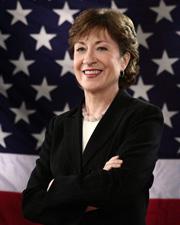
Susan M. Collins
RME · Senator
Full Text
Introductory Statement on S. 4172

Congressional Record, Volume 172 Issue 55 (Tuesday, March 24, 2026) [Congressional Record Volume 172, Number 55 (Tuesday, March 24, 2026)] [Senate] [Pages S1581-S1582] From the Congressional Record Online through the Government Publishing Office [ www.gpo.gov ] By Ms. COLLINS (for herself and Mr. Peters): S. 4172. A bill to amend the Animal Welfare Act to allow for the retirement of certain animals used in Federal research, and for other purposes; to the Committee on Agriculture, Nutrition, and Forestry. Ms. Collins. Mr. President, I am pleased to join my colleague from Michigan Senator Peters in introducing the Animal Freedom from Testing, Experiments, and Research Act, known as the AFTER Act, to promote the adoption or retirement of animals used for research by Federal Agencies. In fiscal year 2024, the Federal Government experimented on approximately 775,000 animals for research purposes. These experiments occurred across 12 different Federal Agencies. the animals used were mainly cats, dogs, monkeys, and rabbits. Tracking these animals following experimentation is challenging. In many instances, animals no longer needed for research are killed since many Agencies lack formal retirement or adoption policies. Peer-reviewed studies indicate that research animals that are adopted, however, often thrive in their new environments. In 2013, led by Senators Harkin, Alexander, Cantwell and myself, the Senate passed the CHIMP Act, which allowed for the retirement of hundreds of primates that were formerly used in National Institute of Health, NIH, experiments. In addition, the Departments of Defense, Veterans Affairs, [[Page S1582]] FDA, and NIH have already enacted successful animal retirement policies. While I am encouraged by the Senate's past work on primates and the policies developed by a few Federal Agencies, there are many other Federal Agencies, including the Agriculture Department, NASA, and the Environmental Protection Agency, that lack formal policies for animals used in experiments. Given the recent efforts at the Food and Drug Administration and the National Institutes of Health to phase out animal testing for certain research, we should make sure that every Federal Agency that utilizes laboratory animals establishes policies to ensure that such animals, whenever possible, are retired and not killed when they are no longer needed for research. The AFTER Act builds on successful policies at DOD, VA, and NIH by directing all Federal Agencies to promulgate regulations that would facilitate the retirement of laboratory animals. Additionally, the AFTER Act requires that animals be evaluated by a licensed veterinarian and pronounced both mentally and physically healthy before leaving an Agency. This will help ensure a smooth transition to a new environment. Our legislation also encourages Federal Agencies to work with nonprofit organizations to help place retired animals in sanctuaries and shelters across the country, not just those closest to the research facility. This would allow a State like Maine, which does not have Federal research labs that use animals, to play a role in retiring these animals and providing homes for them. Mr. President, animals that are suitable for adoption or retirement should not be killed by our Federal Government. The AFTER Act would provide the necessary direction Federal Agencies need in order to move forward with developing retirement policies. I urge all of my colleagues to join in support of this important bipartisan legislation, the Animal Freedom from Testing, Experiments, and Research Act. ______

Referenced legislation: S4172