Floor Speech2026-03-24
HONORING NATIONAL AREA HEALTH EDUCATION CENTERS WEEK 2026
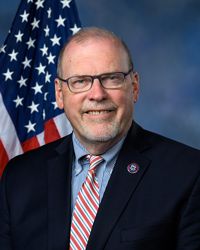
H. Morgan Griffith
RVA-9 · Representative
Full Text
HONORING NATIONAL AREA HEALTH EDUCATION CENTERS WEEK 2026

Congressional Record, Volume 172 Issue 55 (Tuesday, March 24, 2026) [Congressional Record Volume 172, Number 55 (Tuesday, March 24, 2026)] [Extensions of Remarks] [Pages E258-E259] From the Congressional Record Online through the Government Publishing Office [ www.gpo.gov ] HONORING NATIONAL AREA HEALTH EDUCATION CENTERS WEEK 2026 ______ HON. H. MORGAN GRIFFITH of virginia in the house of representatives Tuesday, March 24, 2026 Mr. GRIFFITH. Mr. Speaker, I rise today to recognize March 23, 2026 through March 27, 2026, as National AHEC (Area Health Education Centers) Week. The AHEC program was originally authorized in 1971 and worked in conjunction with other Health Resource Services Administration (HRSA) programs to provide health professionals to staff the brick-and mortar Community Health Centers. Today, Area Health Education Centers (AHECs) offer hands-on and innovative health career curriculums for pre-college level students, and are committed to continuing education, clinical training of health professionals and responding to community health needs. The Nation's 300 AHECs are in nearly every state and in multiple U.S. territories. Administered by HRSA, AHECs are federally funded, and many are also supported by state governments, foundations, or other partners. AHEC clinical training placements put health profession students in a variety of real-world settings, such as migrant, urban, and rural community health clinics and health departments that provide healthcare to rural and underserved populations. Connecting students to community populations helps facilitate future engagement and network alliance building for health career students to remain in their clinical practice regions and continue providing more sustainable healthcare in rural and underserved areas following their training. AHECs are also responsive to community priorities. They are dedicated to collaboratively developing community health education curriculums, for both online and face-to-face training programs, through unique partnerships that meet the broader range of public health needs of diverse and severely rural and underserved populations. The need to strengthen the healthcare workforce, particularly for the underserved, continues. According to new Association of American Medical Colleges, the U.S. could see a shortage of up to 124,000 physicians by 2034, and the American Hospital Association says more than 200,000 new registered nurses are needed each year to meet increasing health care needs and to replace nurses entering retirement. AHECs continue to be committed to addressing shortage areas and expanding the health care workforce, while maximizing and facilitating distribution, especially in rural and underserved communities. In the past 5 years, the AHEC program has trained 2 million healthcare professionals, who are prepared to deliver culturally appropriate, high-quality, team-based care, with an emphasis on primary care for rural and underserved populations I have had the opportunity to work closely with the Virginia AHEC and have witnessed the amazing work they are doing. The Virginia AHEC regions are made up of dedicated teams of professionals who collaborate with healthcare providers, educators, and community leaders, to create innovative programs and initiatives that address the evolving healthcare needs of our Commonwealth's underserved population. The mission of Virginia AHEC is to provide interprofessional and educational resources to motivate, recruit, train, and maintain a healthcare workforce dedicated to serving rural regions with the Commonwealth of Virginia. In 2024, they offered continuing education to over 1,000 health care workers, pipeline programming for over 900 high school students, and clinical training to over 1,800 health professional students to accomplish this mission. Virginia AHEC strives to provide experiential learning opportunities for health professional students in every region. In 2024, Virginia AHEC helped 1,844 students complete 4,668 hours of training at rural and medically underserved clinical training sites. Virginia AHEC provides specialized programming for health professional students who wish to work in Primary Care, specifically in rural and/or medically underserved areas in Virginia, called the VA AHEC Scholars Program. In 2024, Virginia AHEC had 224 active VA AHEC Scholars. Each Scholar completed [[Page E259]] 40 hours of education and 40 hours of clinical training through participation in the program. As a major component of the program, Virginia AHEC created a statewide, a synchronous Community Health Worker Training Program. Since the creation of the program three years ago, VA AHEC has trained over 300 Community Health Workers. The Southwest Virginia AHEC is located at the Bradley Free Clinic. The Bradley Free Clinic works with students from 28 academic programs spanning medicine, dentistry, residency training, counseling, and public health, providing hands-on clinical and community-based learning experiences. My son personally experienced the benefits of this hands- on learning environment to prepare him for a career in healthcare. On behalf of my constituents at Virginia AHEC program and the national AHEC program more broadly, I call on my colleagues to join me in recognizing March 23, 2026 through March 27, 2026, as National AHEC (Area Health Education Centers) Week. ____________________