Floor Speech2026-03-27
DEFENDING AMERICAN PROPERTY ABROAD ACT OF 2026
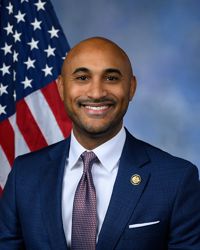
Shomari Figures
DAL-2 · Representative
Full Text
DEFENDING AMERICAN PROPERTY ABROAD ACT OF 2026

Congressional Record, Volume 172 Issue 58 (Friday, March 27, 2026) [Congressional Record Volume 172, Number 58 (Friday, March 27, 2026)] [House] [Pages H2782-H2788] From the Congressional Record Online through the Government Publishing Office [ www.gpo.gov ] DEFENDING AMERICAN PROPERTY ABROAD ACT OF 2026 Mr. EZELL. Mr. Speaker, pursuant to House Resolution 1131, I call up the bill (H.R. 7084) to amend title 46, United States Code, with respect to the types of vessels that may enter or operate in navigable waters of the United States or transfer cargo in any port or place under the jurisdiction of the [[Page H2783]] United States, and for other purposes, and ask for its immediate consideration in the House. The Clerk read the title of the bill. The SPEAKER pro tempore (Mr. Stutzman). Pursuant to House Resolution 1131, the amendment in the nature of a substitute recommended by the Committee on Transportation and Infrastructure printed in the bill is adopted and the bill, as amended, is considered read. The text of the bill, as amended, is as follows: H.R. 7084 Be it enacted by the Senate and House of Representatives of the United States of America in Congress assembled, SECTION 1. SHORT TITLE. This Act may be cited as the ``Defending American Property Abroad Act of 2026''. SEC. 2. CONDITION FOR ENTRY INTO PORTS IN THE UNITED STATES. Section 70022 of title 46, United States Code, is amended-- (1) in subsection (a)(2)(A)-- (A) in clause (i)-- (i) by striking ``subsection (b)(1)'' and inserting ``subsection (b)(1)(A)''; and (ii) in subclause (II) by striking ``; or'' and inserting a semicolon; (B) in clause (ii)-- (i) by striking ``subsection (b)(2)'' and inserting ``subsection (b)(1)(B)''; and (ii) by striking the period at the end and inserting ``; or''; and (C) by adding at the end the following: ``(iii) vessel described in subsection (b)(1) in the case of-- ``(I) an emergency being experienced by a vessel or an individual on the vessel; or ``(II) a vessel authorized by the owner, as described in subsection (b)(1)(C)(ii), to transit the facilities described in subsection (b)(1)(C).''; and (2) in subsection (b)-- (A) in paragraph (2) by striking the period at the end and inserting ``; or''; (B) by redesignating paragraphs (1) and (2) as subparagraphs (A) and (B) (and by moving the margins of such subparagraphs accordingly); (C) by striking ``A vessel referred'' and inserting the following: ``(1) In general.--A vessel referred''; and (D) by adding at the end the following: ``(C) a vessel that has transited a port, harbor, or marine terminal, that at the time of such transit-- ``(i) was located within the territory of a Western Hemisphere country that has in effect a free trade agreement with the United States; ``(ii) was accessible only through land that is owned, held, or controlled, directly or indirectly, by a United States person; and ``(iii) was designated by the President under paragraph (2), and has not had such designation removed under paragraph (3). ``(2) Designation.--The President may designate a port, harbor, or marine terminal under this subsection if an agency or official of the government of the Western Hemisphere foreign trade partner has-- ``(A) nationalized, or expropriated the port, harbor, or marine terminal, owned, held, or controlled, directly or indirectly, by a United States person; or ``(B) taken any other action that has the effect of expropriating or nationalizing that port, harbor, or marine terminal, or land providing the exclusive access to that port, harbor, or marine terminal, as described in paragraph (1)(C)(ii), as long as the matter is not the subject of a currently pending arbitration under a free trade agreement described in paragraph (1)(C)(i). ``(3) Removal of designation.--The President shall remove the designation of a port, harbor, or marine terminal made under paragraph (2) if the President determines that-- ``(A) the conditions set forth in paragraph (2) are no longer met; ``(B) the Western Hemisphere country has restored ownership of the property of the United States person and terminated any measures that had the effect of seizing ownership or possession of that property; ``(C) the Western Hemisphere country has provided adequate and effective compensation for such property in convertible foreign exchange or other mutually acceptable compensation equivalent to the full value thereof, as required by international law; or ``(D) the dispute has otherwise been resolved to the satisfaction of the President.''. The SPEAKER pro tempore. The bill, as amended, shall be debatable for 1 hour equally divided and controlled by the chair and ranking minority member of the Committee on Transportation and Infrastructure or their respective designees. The gentleman from Mississippi (Mr. Ezell) and the gentleman from Washington (Mr. Larsen) each will control 30 minutes. The Chair recognizes the gentleman from Mississippi (Mr. Ezell). General Leave Mr. EZELL. Mr. Speaker, I ask unanimous consent that all Members may have 5 legislative days to revise and extend their remarks and include extraneous materials on H.R. 7084. The SPEAKER pro tempore. Is there objection to the request of the gentleman from Mississippi? There was no objection. Mr. EZELL. Mr. Speaker, I yield myself such time as I may consume. Mr. Speaker, I rise in support of H.R. 7084, the Defending American Property Abroad Act of 2026. This bill provides the President with the authority to effectively address an unlawful taking of a United States citizen-owned port, harbor, or marine terminal by another government in the Western Hemisphere. United States companies operate maritime facilities throughout North and South America. Their investments must be protected. It is essential that the United States President be able to act quickly and decisively in response to another government expropriating or nationalizing a United States citizen-owned port, harbor, or marine terminal. This bill establishes a new, narrowly constructed authority for a President to impose a consequence on a foreign government that illegally takes a maritime facility. Sanctions are an accepted tool used in diplomacy and economic statecraft. The authorities that H.R. 7084 establishes are completely complementary to similar authorities that Congress has already granted the President. Nothing in this bill precludes or preempts any other option for dispute resolution. It simply gives the President another meaningful, targeted tool that can encourage negotiations and resolution. The Defending American Property Abroad Act builds on sanctions, legislation previously passed over the past six decades, and provides the President with one or more options in a continuum for protecting overseas American investments. Mr. Speaker, I urge support of this legislation and reserve the balance of my time. Mr. LARSEN of Washington. Mr. Speaker, I yield myself such time as I may consume. Mr. Speaker, today I rise in opposition to H.R. 7084, the Defending American Property Abroad Act of 2026. As we have seen with recent vessel boardings and border operations, the Coast Guard has broad authority to enforce American laws on the water. The Coast Guard routinely interdicts drugs and migrants, enforces fisheries laws, and ensures the safety of property and life at sea. In fiscal year 2025, the Coast Guard set record breaking numbers. The service seized over 510,000 pounds of cocaine in the maritime domain, over triple its yearly average. Even more impressively, the Coast Guard saved over 2,200 lives and over $40 million of property by running over 6,700 search and rescue cases. They do all this while protecting global fish stocks and by enforcing domestic and international fisheries laws. H.R. 7084 does not help the Coast Guard address violations of the law at sea. Instead, the bill inserts the Coast Guard into what is a property dispute between a U.S. company and the Mexican Government that, if anything, will only add to the Coast Guard's burden. The Coast Guard is already strained in its ability to effectively conduct its missions. Just last week, the Vice Commandant testified before the Committee on Transportation and Infrastructure that the Coast Guard is a $20 billion organization operating on a $13 billion budget. H.R. 7084 prohibits vessels, commercial shipping or cruise vessels, from entering or operating in U.S. waters if that vessel made a port of call at a port that was nationalized or expropriated by another company from a U.S. citizen or company. Now, requiring the service to identify and prohibit vessels from entering U.S. waters due to an international property dispute further strains the service's resources. This legislation is meant to only apply to one port in Mexico, but it is written so broadly it could encompass disputes in other countries and with other companies both today and in the future. Now, Congress has many pressing issues that we should be considering today. The President himself has promised less war and lower prices. Instead, the American public is getting more war and higher prices. I wish we were taking time today to discuss those lower costs for my constituents. [[Page H2784]] {time} 0920 I wish we were taking time today to discuss those lower costs for my constituents. Instead, we are interjecting Congress into an international land dispute. Now, I want to be really clear. I am sympathetic to the plight of this particular U.S. company involved in this dispute. This legislation doesn't solve their problem. That solution can be found, and opportunities are available through diplomacy and even trade agreements but not really legislation. For those reasons I will be voting ``no'' on this legislation. Mr. Speaker, I reserve the balance of my time. Mr. EZELL. Mr. Speaker, I yield 5 minutes to the gentleman from Texas (Mr. Pfluger), the bill's sponsor. Mr. PFLUGER. Mr. Speaker, I rise today in strong support of H.R. 7084, the Defending American Property

Referenced legislation: HRES1131, HRES1131, HR7084