Floor Speech2026-03-19
Text of Senate Amendment 4705
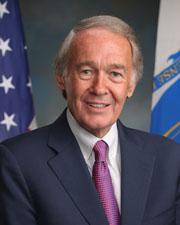
Edward J. Markey
DMA · Senator
Full Text
Text of Senate Amendment 4705

Congressional Record, Volume 172 Issue 50 (Thursday, March 19, 2026) [Congressional Record Volume 172, Number 50 (Thursday, March 19, 2026)] [Senate] [Pages S1407-S1408] From the Congressional Record Online through the Government Publishing Office [ www.gpo.gov ] SA 4705. Mr. MARKEY submitted an amendment intended to be proposed by him to the bill S. 1383, to establish the Veterans Advisory Committee on Equal Access, and for other purposes; which was ordered to lie on the table; as follows: At the appropriate place, insert the following: SEC. __. RIGHT TO CONTRACEPTION ACT. (a) Definitions.--In this section: (1) Contraception.--The term ``contraception'' means an action taken to prevent pregnancy, including the use of contraceptives or fertility-awareness-based methods and sterilization procedures. (2) Contraceptive.--The term ``contraceptive'' means any drug, device, or biological product intended for use in the prevention of pregnancy, whether specifically intended to prevent pregnancy or for other health needs, that is approved, cleared, authorized, or licensed under section 505, 510(k), 513(f)(2), 515, or 564 of the Federal Food, Drug, and Cosmetic Act (21 U.S.C. 355, 360(k), 360c(f)(2), 360e, 360bbb-3) or section 351 of the Public Health Service Act (42 U.S.C. 262). (3) Government.--The term ``government'' includes each branch, department, agency, instrumentality, and official of the United States or a State. (4) Health care provider.--The term ``health care provider'' means any entity or individual (including any physician, certified nurse-midwife, nurse, nurse practitioner, physician assistant, and pharmacist) that is licensed or otherwise authorized by a State to provide health care services. (5) State.--The term ``State'' includes each of the 50 States, the District of Columbia, the Commonwealth of Puerto Rico, each territory and possession of the United States, and each Indian Tribe (as defined in section 4 of the Indian Self-Determination and Education Assistance Act (25 U.S.C. 5304)), and any political subdivision of any of the foregoing, including any unit of local government, such as a county, city, town, village, or other general purpose political subdivision of a State. (b) Permitted Services.-- (1) In general.--An individual has a statutory right under this section to obtain contraceptives and to voluntarily engage in contraception, free from coercion, and a health care provider has a corresponding right to provide contraceptives, contraception, and information, referrals, and services related to contraception. (2) Limitations or requirements.--The statutory rights specified in paragraph (1) shall not be limited or otherwise infringed through any limitation or requirement that-- (A) expressly, effectively, implicitly, or as-implemented singles out-- (i) the provision of contraceptives, contraception, or contraception-related information; (ii) health care providers who provide contraceptives, contraception, or contraception-related information; or (iii) facilities in which contraceptives, contraception, or contraception-related information is provided; and (B) impedes access to contraceptives, contraception, or contraception-related information. (3) Exception.--To defend against a claim that a limitation or requirement violates a health care provider's or individual's statutory rights under paragraph (2), a party must establish, by clear and convincing evidence, that-- (A) the limitation or requirement significantly advances access to contraceptives, contraception, and information related to contraception; and (B) access to contraceptives, contraception, and information related to contraception or the health of patients cannot be advanced by a less restrictive alternative measure or action. (4) Rule of construction.--Nothing in this subsection shall be construed to limit the authority of the Secretary of Health and Human Services, acting through the Commissioner of Food and Drugs, to approve, clear, authorize, or license contraceptives under section 505, 510(k), 513(f)(2), 515, or 564 of the Federal Food, Drug, and Cosmetic Act (21 U.S.C. 355, 360(k), 360c(f)(2), 360e, 360bbb-3) or section 351 of the Public Health Service Act (42 U.S.C. 262), or for the Federal Government to enforce such approval, clearance, authorization, or licensure. (c) Applicability and Preemption.-- (1) General application.-- (A) In general.--Except as provided in paragraph (3), this section supersedes and applies to the law of the Federal Government and each State, and the implementation of such law, whether statutory, common law, or otherwise, and whether adopted before or after the date of enactment of this Act. (B) Prohibition.--Neither the Federal Government nor any State may administer, implement, or enforce any law, rule, regulation, standard, or other provision having the force and effect of law in a manner that-- (i) prohibits or restricts the sale, provision, or use of any contraceptives; (ii) prohibits or restricts any individual from aiding another individual in voluntarily obtaining or using any contraceptives or contraceptive methods; or (iii) exempts any contraceptives or contraceptive methods from any other generally applicable law in a way that would make it more difficult to sell, provide, obtain, or use such contraceptives or contraceptive methods. (C) Relationship with other laws.--This section applies notwithstanding any other provision of Federal law, including the Religious Freedom Restoration Act of 1993 (42 U.S.C. 2000bb et seq.). (2) Subsequently enacted federal legislation.--Federal law enacted after the date of enactment of this Act is subject to this section, unless such law explicitly excludes such application by reference to this section. (3) Limitations.--The provisions of this section shall not supersede or otherwise affect any provision of Federal law relating to coverage under (and shall not be construed as requiring the provision of specific benefits under) group health plans or group or individual health insurance coverage or coverage under a Federal health care program (as defined in section 1128B(f) of the Social Security Act (42 U.S.C. 1320a-7b(f))), including coverage provided under section 1905(a)(4)(C) of the Social Security Act (42 U.S.C. 1396d(a)(4)(C)) and section 2713 of the Public Health Service Act (42 U.S.C. 300gg-13). (4) Defense.--In any cause of action against an individual or entity who is subject to a limitation or requirement that violates this section, in addition to the remedies specified in subsection (e), this section shall also apply to, and may be raised as a defense by, such an individual or entity. (5) Effective date.--This section shall take effect immediately upon the date of enactment of this Act. (d) Rules of Construction.-- (1) In general.--Nothing in this section shall be construed-- (A) to authorize any government to interfere with a health care provider's ability to provide contraceptives or information related to contraception or a patient's ability [[Page S1408]] to obtain contraceptives or to engage in contraception; or (B) to permit or sanction the conduct of any sterilization procedure without the patient's voluntary and informed consent. (2) Other individuals considered as government officials.-- Any individual who, by operation of a provision of Federal or State law, is permitted to implement or enforce a limitation or requirement that violates subsection (b) shall be considered a government official for purposes of this section. (e) Enforcement.-- (1) Attorney general.--The Attorney General may commence a civil action on behalf of the United States against any State that violates, or against any government official (including an individual described in subsection (d)(2)) that implements or enforces a limitation or requirement that violates, subsection (b). The court shall hold unlawful and set aside the limitation or requirement if it is in violation of this section. (2) Private right of action.-- (A) In general.--Any individual or entity, including any health care provider or patient, adversely affected by an alleged violation of this section, may commence a civil action against any State that violates, or against any government official (including an individual described in subsection (d)(2)) that implements or enforces a limitation or requirement that violates, subsection (b). The court shall hold unlawful and set aside the limitation or requirement if it is in violation of this section. (B) Health care provider.--A health care provider may commence an action for relief on its own behalf, on behalf of the provider's staff, and on behalf of the provider's patients who are or may be adversely affected by an alleged violation of this section. (3) Equitable relief.--In any action under this subsection, the court may award appropriate equitable relief, including temporary, preliminary, and permanent injunctive relief. (4) Costs.--In any action under this subsection, the court shall award costs of litigation, as well as reasonable attorney's fees, to any prevailing plaintiff. A plaintiff shall not be liable to a defendant for costs or attorney's fees in any nonfrivolous action under this subsection. (5) Jurisdiction.--The district courts of the United States shall have jurisdiction over proceedings under this section and shall exercise the same without regard to whether the party aggrieved shall have exhausted any administrative or other remedies that may be provided for by law. (6) Abrogation of state immunity.--Neither a State that enforces or maintains, nor a government official (including an individual described in subsection (d)(2)) who is permitted to implement or enforce any limitation or requirement that violates subsection (b) shall be immune under the Tenth Amendment to the Constitution of the United States, the Eleventh Amendment to the Constitution of the United States, or any other source of law, from an action in a Federal or State