Floor Speech2026-03-05
FOOD IS NATIONAL SECURITY
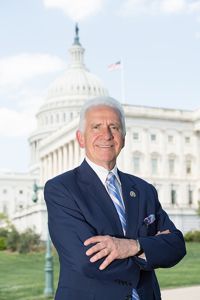
Jim Costa
DCA-21 · Representative
Full Text
FOOD IS NATIONAL SECURITY

Congressional Record, Volume 172 Issue 42 (Thursday, March 5, 2026) [Congressional Record Volume 172, Number 42 (Thursday, March 5, 2026)] [House] [Page H2427] From the Congressional Record Online through the Government Publishing Office [ www.gpo.gov ] FOOD IS NATIONAL SECURITY (Mr. Costa of California was recognized to address the House for 5 minutes.) Mr. COSTA. Mr. Speaker, before I make my comments on a very important issue facing our country, let us all pause for a moment to recognize those six Americans who have lost their lives this week and their families, realizing that they have given their all. God bless them, and our thoughts and prayers are with their loved ones. Mr. Speaker, I rise today to talk about something that touches every family, as well, and every community, and that is hunger. Food, as I always say in the House Agriculture Committee, of which I am a member, is a national security issue. Food is a national security issue. Yet, we too often fail to treat it that way. When families cannot access healthy, affordable food, our communities are weaker, our economy is weaker, and our Nation is weaker. If we are a forced to import essential foods rather than grow them here in America, that leaves our Nation more vulnerable in an increasingly unstable world that we live in today. In our San Joaquin Valley, which I represent, one of the most productive agricultural regions in the country, farmers rise early in the morning to put food on America's dinner table. I know. I am a third-generation farmer and proud of it. California produces over 400 commodities, including more than 60 percent of the Nation's fruits and vegetables. Over 80 percent of the citrus in the Nation is produced in California, along with 75 percent of the world's almonds and pistachios. Think about that: 75 percent in California. Yet, even communities that grow so much of our food, like in my district, nearly 30 percent of the households rely on food assistance. It is an interesting dichotomy. We have incredible food production that puts food on every American's dinner table every night with the help of farmworkers, yet a majority of those households, 30 percent of them in my district, require food assistance. It is sad. They depend upon food support for their food. Nationwide, 48 million people face food insecurity in our country, including 14 million children--14 million children--in the richest Nation in the world. This is unacceptable. At the same time, we know that grocery costs are up by as much as $400 a month for so many of our families throughout the country. Egg prices rose 53 percent over the year from January 2024 to January 2025. In 2025, a gallon of whole milk averaged $4. Ground beef prices have risen 15 percent recently and are up 63 percent since 2020. Americans who purchase their groceries every week know that the affordability of their food continues to become more challenging and more difficult. Last year, the United States Department of Agriculture canceled-- canceled--$1 billion in funding that schools and local food banks use to purchase food directly from local farmers. It was a great program and had a lot of merit. Why they canceled it, I do not know. Congress also enacted cuts totaling $186 billion in food assistance that resulted in more than 3 million people losing their food support entirely. That is disgraceful. Soon after, the United States Department of Agriculture terminated the annual Household Food Security report, the very report that told us that nearly 48 million Americans face food insecurity. What is that about? Without reliable data, we are left without a clear picture on who is struggling the most in our communities throughout our country. This week, the House marked up the farm bill, an important effort that we are supposed to do every 4 years. We are now into 5.5 years. We tried to strengthen the nutrition programs through amendments and legislation, but the Republicans defeated our efforts, sadly. We must stabilize farm income, or we will allow our producers to fall behind. Whether we invest in local food systems or just let them disappear, food is a national security issue. The farm bill affects grocery prices, crop insurance, school lunches, and rural economies. Mr. Speaker, we must pass a bipartisan farm bill this year, and I am doing everything I can by working with my colleagues across the aisle and the Senate because food is a national security issue. That is the bottom line. In the Central Valley that I represent, the San Joaquin Valley, families are spending over $1,000 a month on groceries. The affordability question is real. Farmers are navigating misguided tariffs policy, volatile markets, and disease outbreaks. In the richest country in the world, we should not accept a system where the hardest-working farmers see shrinking margins while families struggle to afford their groceries. Let's support our farmers. Let's feed our families. Let's feed our children. ____________________