Floor Speech2026-03-03
VERMONT STATE OF THE UNION ESSAY WINNERS
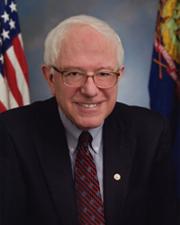
Bernard Sanders
IVT · Senator
Full Text
VERMONT STATE OF THE UNION ESSAY WINNERS

Congressional Record, Volume 172 Issue 40 (Tuesday, March 3, 2026) [Congressional Record Volume 172, Number 40 (Tuesday, March 3, 2026)] [Senate] [Pages S756-S757] From the Congressional Record Online through the Government Publishing Office [ www.gpo.gov ] VERMONT STATE OF THE UNION ESSAY WINNERS Mr. SANDERS. Mr. President, since 2010, I have sponsored a State of the Union essay contest for Vermont high school students. This contest gives students in my State the opportunity to articulate what issues they would prioritize if they were President of the United States. This is the contest's 16th year, and I would like to congratulate the 418 students who participated. It is truly heartening to see so many young people engaged in finding solutions for the problems that face our country. To my mind, this is what democracy is all about. A volunteer panel of Vermont educators reviewed the essays and chose Saralynn Anderson as this year's winner. Saralynn, a junior at Essex High School, proposed legislation to improve mental health care for adolescents. Max Clegg, a junior at Mount Mansfield Union High School, was the second place winner. Max wrote about corporate concentration of economic power. Ada Allen, a sophomore at Craftsbury Academy, was the third place winner, with an essay on the importance of afterschool programs. I am very proud to enter into the Congressional Record the essays submitted by Saralynn, Max, and Ada: Winner, Saralynn Anderson, Essex High School, Junior Mental health affects how people think, act, and feel every day, yet millions of Americans, especially adolescents, are unable to access the care they need. In classrooms across the United States, students struggle silently with anxiety, depression, and overwhelming pressure, often long before adults [[Page S757]] notice. While mental health care is just as essential as physical health care, it remains underfunded and inaccessible for many young people. According to the National Institute of Mental Health, 23.1% of adults in the United States experience some form of mental illness, yet only 50.6% received treatment. This means nearly half of those affected are left without care. Barriers such as high costs, lack of insurance coverage, and shortages of mental health professionals prevent individuals from getting help, worsening long-term outcomes and quality of life. These same barriers affect adolescents even more severely, as young people are dependent on adults, schools, or insurance plans to access care. This problem is even more alarming among adolescents. Mental Health America reports that nearly three million adolescents experience frequent thoughts of suicide. Along with this, over seven million adolescents did not receive a preventive health visit. Without early intervention, mental health challenges can negatively affect academic performance, relationships, and future stability. Data from the National Institute of Health show that the primary reasons adolescents do not receive care include a lack of awareness, social stigma, and financial barriers; problems that can and should be addressed through policy. To confront this issue, I propose the BRIDGE Act: Building Resilience, Intervention, Development, and Guidance for Every Youth Act. This legislation would provide federal funding to schools to expand mental health resources. Schools could hire mental health professionals and offer free counseling, as well as create safe spaces where students can seek help without fear. The act would also support a required mental health education course, equipping students with tools to recognize symptoms, seek help, and challenge harmful stereotypes surrounding mental illness. While some may argue that expanding mental health services in schools would be too expensive, intervening early can significantly reduce long- term healthcare expenses, as well as prevent academic failure, making this investment both practical and financially responsible. Improving adolescent mental health must start where students spend much of their time: in schools. Regular mental health check-ins, increased counselor availability, and preventative education can address problems early rather than waiting for crises to occur. By investing in youth mental health now, we can improve long-term outcomes, lower future healthcare costs, and foster a healthier generation. Mental health care is a right, not a privilege. By prioritizing access for adolescents today, the United States can create a future where both adolescents and adults are supported, resilient, and able to thrive. Second Place, Max Clegg, Mount Mansfield Union High School, Junior Currently in the United States, three asset management companies wield unprecedented and dangerous economic power that endangers the democratic and fair state that are bedrock principles to America. Together, Blackrock, Vanguard, and Statestreet manage over $22 trillion of assets within global corporations. Such substantial power over our free market threatens the economy as we know it, and takes away the voice of the people of America that this country was built on. What makes this mass concentration of power matter is the large control over corporate decisions. An article from Dr. Reeves Knyght reveals that, ``The Big Three,'' are the largest shareholders within 88% of S&P 500 companies, with the other two firms being consistently among the other top shareholders. This gives them an unprecedented 25% total ownership of the voting shares within corporate America. They also have large voting control globally. Within the markets of the U.K., Australia, and Japan, they control over 10%. This is a major issue. They are quietly being allowed to sway the decisions of companies that directly affect every single person's lives. Another significant concern inherent in this issue is that the largest owners of Blackrock are Statestreet and Vanguard, and vice versa. This means that three small boards are allowed to silently sway the decision of the everyday companies that we rely on for personal gain. They get to decide environmental policies, economic choices, and the labor conditions of the most influential companies in the world. Lucian Bebchuk and Scott Hirst, analysts from the Boston University Law Review estimates that within two decades, these three companies could control over 40% of the shareholder votes within the S&P 500. This subsequently means that our lives, our decisions, and how the world operates around us, will be controlled by a small concentration of people that we have never heard of, or voted for. That is unquestionably not the ideals that this country was built on. These ideals are not an example of freedom. We must act. To protect fair competition, and pure American Democracy, we have to make change. I insist that we must increase transparency within these companies, and reform the ways that corporations act. Congress must further strengthen the Securities Exchange Act of 1934, which gives authority to the SEC to regulate proxy solicitations and require disclosure of voting practices. They also must enact the Sherman Antitrust Act of 1890, which bans monopolistic behavior and must be further enforced against these anticompetitive concentrations of shareholder voting power. The economy should not be silently run by opaque governing boards, that the general public has no ability to see. If these three companies are allowed to gain further power, they could be bordering on full monopolized control over every decision we make. To me, that sounds like the dictatorship and oligarchies of Russia and North Korea. We must further increase the power of laws against this ``oligopoly'' to ensure the democratic and economic safety and freedom that this country was built upon. Third Place, Ada Allen, Craftsbury Academy, Sophomore In a time when America faces political polarization, economic instability, national security threats, as well as social and environmental issues, our citizens are feeling vast pessimism. The nation's future is uncertain, but that doesn't mean it is negative. If we start investing in today's youth, we will foster the future of America. A meaningful education is the most integral step in students progressing into capable adults. Our youth are detached from their education, as they feel it is irrelevant to them. Standardized test scores provide one snapshot of an educational system failing its youth. According to a 2024 study from the Nation's Report Card on mathematics, 45% of high school seniors received scores below basic, and 33% were at the basic level. For reading, 32% of students were below basic, and 33% were at the basic level. Another disturbing trend is rising truancy rates, with many students not attending class. Additionally, in one 2024 National Education Association survey, it was cited that ``74 percent of members said students are acting out and misbehaving,'' another telling sign that students need stronger educational support. A key missing piece of the American education system is after-school programs. While some programming is available in U.S. schools, the quality and overall abundance is lacking, leaving students adrift. According to a 2024 survey from the Afterschool Alliance, only 37% of public schools offering any afterschool programming reported that they can accommodate all students who want to participate because of a lack of funding and staff; further, only 28% of schools reported offering any academic enrichment after-school programs. Rather than enriching their school day with meaningful opportunities, students are left isolated. While these bleak facts may seem insurmountable, schools, communities, and students can work together to create a different world--and I believe our shared American future depends on it. I propose that our government invest in a transformational change, the American Student Community Corps (ASCC). Similar to our investment in the Civilian Conservation Corps (C