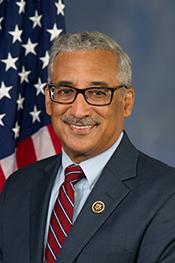
Robert C. "Bobby" Scott
DemocratVA-3 · Representative
In the 2024 House race for VA-3, Robert C. "Bobby" Scott (D) won with 70.0% of the vote, defeating John Sitka III (R) who received 29.8%. A third candidate also appeared on the ballot. Robert C. "Bobby" Scott's 40.1-point advantage over the runner-up confirmed a comfortable win.
As the incumbent, Robert C. "Bobby" Scott benefited from name recognition, established constituent services, and the roughly 2-3 point advantage that sitting members typically enjoy. The 2024 presidential election drove higher voter turnout, which can help or hurt down-ballot candidates depending on the top of the ticket. The wide margin suggests this district is firmly in the Democrat column for the foreseeable future.
In the 2022 House race for VA-3, Robert C. "Bobby" Scott (D) won with 67.2% of the vote, defeating Terry T. Namkung (R) who received 32.6%. A third candidate also appeared on the ballot. Robert C. "Bobby" Scott's 34.6-point advantage over the runner-up confirmed a comfortable win.
As the incumbent, Robert C. "Bobby" Scott benefited from name recognition, established constituent services, and the roughly 2-3 point advantage that sitting members typically enjoy. As a Democrat, Robert C. "Bobby" Scott won despite the historical midterm penalty against the president's party (Democrat Biden was in office). The wide margin suggests this district is firmly in the Democrat column for the foreseeable future.
In the 2020 House race for VA-3, Robert C. "Bobby" Scott (D) won with 68.3% of the vote, defeating John W. Collick (R) who received 31.4%. A third candidate also appeared on the ballot. Robert C. "Bobby" Scott's 36.9-point advantage over the runner-up confirmed a comfortable win.
This was an open-seat race. Open seats typically attract stronger candidates and heavier spending from both parties. The 2020 presidential election drove higher voter turnout, which can help or hurt down-ballot candidates depending on the top of the ticket. The wide margin suggests this district is firmly in the Democrat column for the foreseeable future.
In the 2018 House race for VA-03, Robert C. Bobby Scott (D) ran unopposed and received 198,615 votes. Running without a challenger is rare and usually indicates either a safe party stronghold or that the opposition could not field a candidate.
As the incumbent, Robert C. Bobby Scott benefited from name recognition, established constituent services, and the roughly 2-3 point advantage that sitting members typically enjoy. As a Democrat, Robert C. Bobby Scott benefited from the historical midterm penalty against the president's party — with a Republican in the White House, the opposition typically gains seats.
In the 2016 House race for VA-03, Robert C. Bobby Scott (D) defeated M. L. Marty Williams (R) 66.7% to 33.1%. Robert C. Bobby Scott received 208,337 votes compared to 103,289 for M. L. Marty Williams, a dominant 33.6-point margin reflecting a safely partisan district.
As the incumbent, Robert C. Bobby Scott benefited from name recognition, established constituent services, and the roughly 2-3 point advantage that sitting members typically enjoy. The 2016 presidential election drove higher voter turnout, which can help or hurt down-ballot candidates depending on the top of the ticket.
In the 2014 House race for VA-03, Robert C. Bobby Scott (D) ran unopposed and received 139,197 votes. Running without a challenger is rare and usually indicates either a safe party stronghold or that the opposition could not field a candidate.
As the incumbent, Robert C. Bobby Scott benefited from name recognition, established constituent services, and the roughly 2-3 point advantage that sitting members typically enjoy. As a Democrat, Robert C. Bobby Scott won despite the historical midterm penalty against the president's party (Democrat Obama was in office).
In the 2012 House race for VA-03, Robert C. Bobby Scott (D) defeated Dean J. Longo (R) 81.3% to 18.5%. Robert C. Bobby Scott received 259,199 votes compared to 58,931 for Dean J. Longo, a dominant 62.8-point margin reflecting a safely partisan district.
This was an open-seat race. Open seats typically attract stronger candidates and heavier spending from both parties. The 2012 presidential election drove higher voter turnout, which can help or hurt down-ballot candidates depending on the top of the ticket.