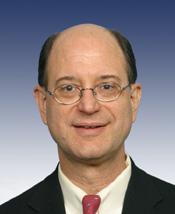
Brad Sherman
DemocratCA-32 · Representative
In the 2024 House race for CA-32, Brad Sherman (D) defeated Larry Thompson (R) 66.2% to 33.8%. Brad Sherman received 212,934 votes compared to 108,711 for Larry Thompson, a dominant 32.4-point margin reflecting a safely partisan district.
As the incumbent, Brad Sherman benefited from name recognition, established constituent services, and the roughly 2-3 point advantage that sitting members typically enjoy. The 2024 presidential election drove higher voter turnout, which can help or hurt down-ballot candidates depending on the top of the ticket. The wide margin suggests this district is firmly in the Democrat column for the foreseeable future.
In the 2022 House race for CA-32, Brad Sherman (D) defeated Lucie Lapointe Volotzky (R) 69.2% to 30.8%. Brad Sherman received 167,411 votes compared to 74,618 for Lucie Lapointe Volotzky, a dominant 38.3-point margin reflecting a safely partisan district.
This was an open-seat race with no incumbent running — Grace F. Napolitano (D) previously held the seat. Open seats typically attract stronger candidates and heavier spending from both parties. As a Democrat, Brad Sherman won despite the historical midterm penalty against the president's party (Democrat Biden was in office). The wide margin suggests this district is firmly in the Democrat column for the foreseeable future.
In the 2018 House race for CA-30, Brad Sherman (D) defeated Mark S. Reed (R) 73.4% to 26.6%. Brad Sherman received 383,146 votes compared to 138,840 for Mark S. Reed, a dominant 46.8-point margin reflecting a safely partisan district.
As the incumbent, Brad Sherman benefited from name recognition, established constituent services, and the roughly 2-3 point advantage that sitting members typically enjoy. As a Democrat, Brad Sherman benefited from the historical midterm penalty against the president's party — with a Republican in the White House, the opposition typically gains seats.
In the 2016 House race for CA-30, Brad Sherman (D) defeated Mark Reed (R) 72.6% to 27.4%. Brad Sherman received 205,279 votes compared to 77,325 for Mark Reed, a dominant 45.3-point margin reflecting a safely partisan district.
As the incumbent, Brad Sherman benefited from name recognition, established constituent services, and the roughly 2-3 point advantage that sitting members typically enjoy. The 2016 presidential election drove higher voter turnout, which can help or hurt down-ballot candidates depending on the top of the ticket.
In the 2014 House race for CA-30, Brad Sherman (D) defeated Mark S. Reed (R) 65.6% to 34.4%. Brad Sherman received 86,568 votes compared to 45,315 for Mark S. Reed, a dominant 31.3-point margin reflecting a safely partisan district.
As the incumbent, Brad Sherman benefited from name recognition, established constituent services, and the roughly 2-3 point advantage that sitting members typically enjoy. As a Democrat, Brad Sherman won despite the historical midterm penalty against the president's party (Democrat Obama was in office).
In the 2012 House race for CA-30, Brad Sherman (D) defeated Howard L. Berman (D) 60.3% to 39.7%. Brad Sherman received 149,456 votes compared to 98,395 for Howard L. Berman, a dominant 20.6-point margin reflecting a safely partisan district.
This was an open-seat race. Open seats typically attract stronger candidates and heavier spending from both parties. The 2012 presidential election drove higher voter turnout, which can help or hurt down-ballot candidates depending on the top of the ticket.