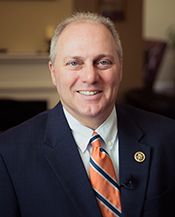
Steve Scalise
RepublicanLA-1 · Representative
In the 2018 House race for LA-01, Steve Scalise (R) won with 71.5% of the vote, defeating Tammy M. Savoie (D) who received 16.4%. 4 additional candidates split the remaining vote. Steve Scalise's 55.1-point advantage over the runner-up confirmed a comfortable win.
As the incumbent, Steve Scalise benefited from name recognition, established constituent services, and the roughly 2-3 point advantage that sitting members typically enjoy. As a Republican, Steve Scalise won despite the historical midterm penalty against the president's party (Republican Trump was in office).
In the 2016 House race for LA-01, Steve Scalise (R) won with 74.6% of the vote, defeating Lee Ann Dugas (D) who received 12.8%. 5 additional candidates split the remaining vote. Steve Scalise's 61.8-point advantage over the runner-up confirmed a comfortable win.
As the incumbent, Steve Scalise benefited from name recognition, established constituent services, and the roughly 2-3 point advantage that sitting members typically enjoy. The 2016 presidential election drove higher voter turnout, which can help or hurt down-ballot candidates depending on the top of the ticket.
In the 2014 House race for LA-01, Steve Scalise (R) won with 77.6% of the vote, defeating M. V. Vinny Mendoza (D) who received 10.2%. 2 additional candidates split the remaining vote. Steve Scalise's 67.4-point advantage over the runner-up confirmed a comfortable win.
As the incumbent, Steve Scalise benefited from name recognition, established constituent services, and the roughly 2-3 point advantage that sitting members typically enjoy. As a Republican, Steve Scalise benefited from the historical midterm penalty against the president's party — with a Democrat in the White House, the opposition typically gains seats.
In the 2012 House race for LA-01, Steve Scalise (R) won with 66.6% of the vote, defeating M. V. Vinny Mendoza (D) who received 21.3%. 3 additional candidates split the remaining vote. Steve Scalise's 45.4-point advantage over the runner-up confirmed a comfortable win.
This was an open-seat race. Open seats typically attract stronger candidates and heavier spending from both parties. The 2012 presidential election drove higher voter turnout, which can help or hurt down-ballot candidates depending on the top of the ticket.